Author: Odyssean Journey

  • Simplon Car Train: When Chetak Took the Train Through the Alps

    Simplon Car Train: When Chetak Took the Train Through the Alps

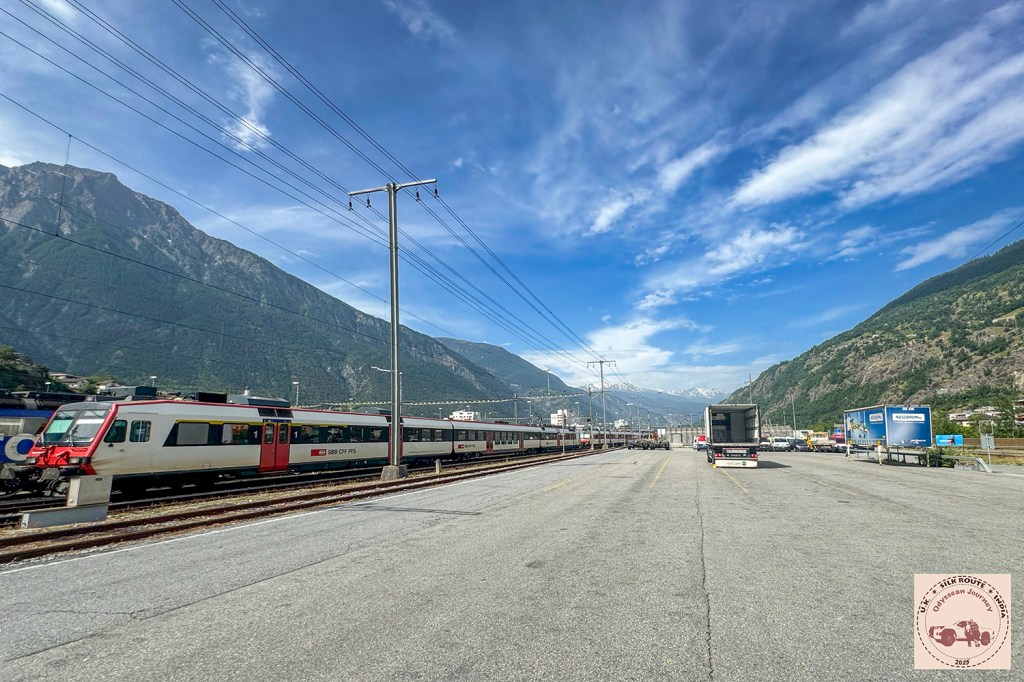
    Landborder between Brig (Switzerland) & Islle (Italy)

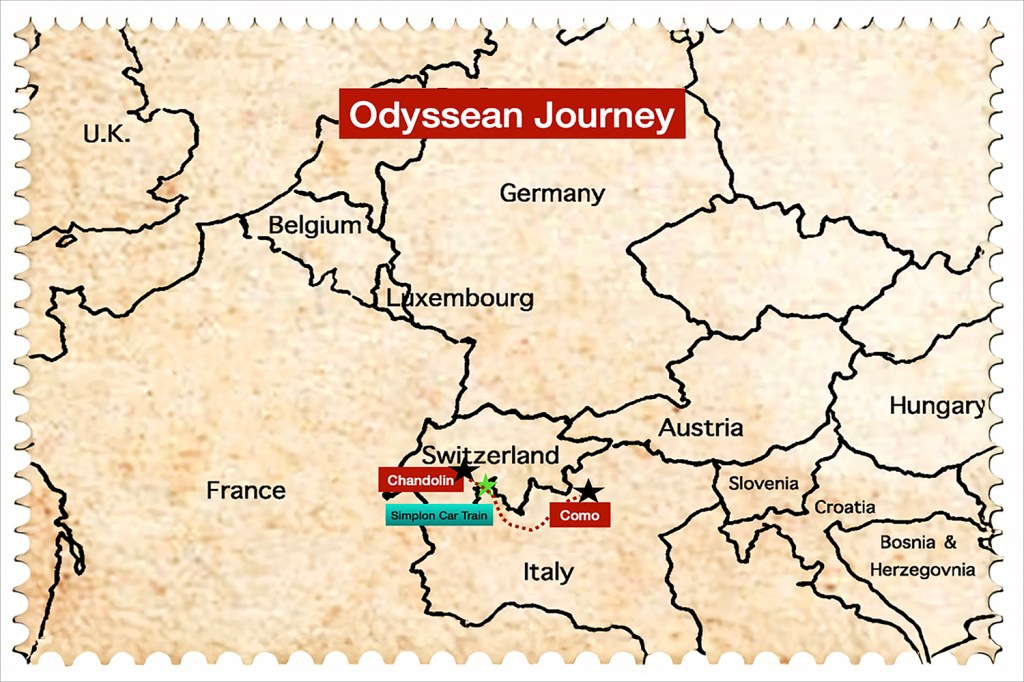
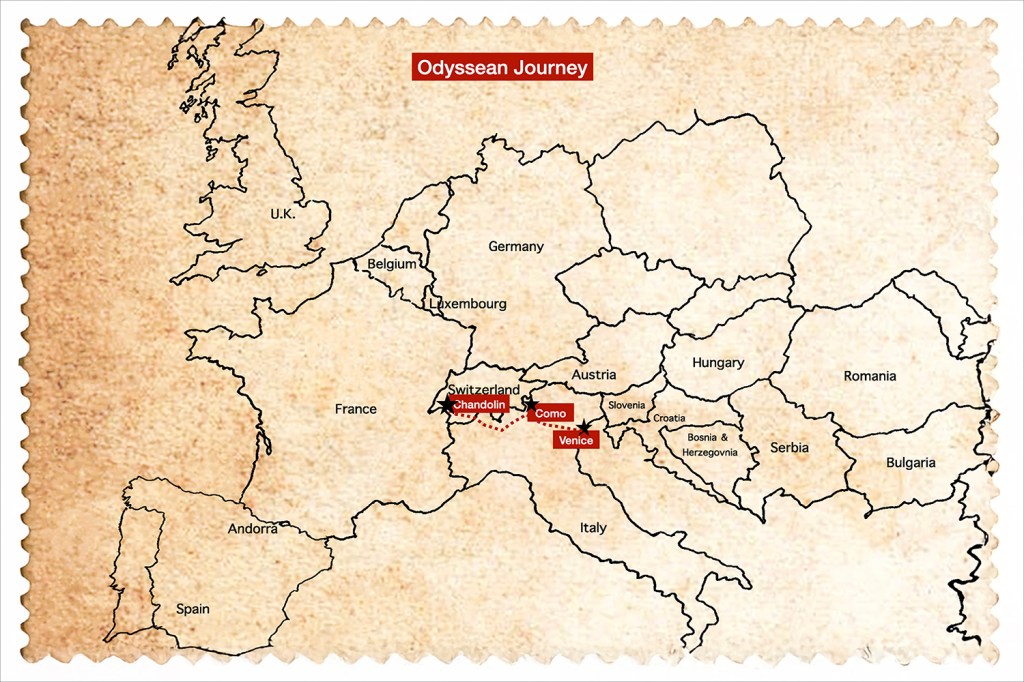
    On Day 8 of the Odyssean Journey, we left Chandolin with Lake Como in our sights. Switzerland had already given us more than enough drama: mountain roads and impossible views, but somewhere between the valleys of Valais and the promise of Italy, the Alps had one more surprise for us.

    The Simplon Car Train.

    Of course, like many great discoveries on the road, we first missed it.

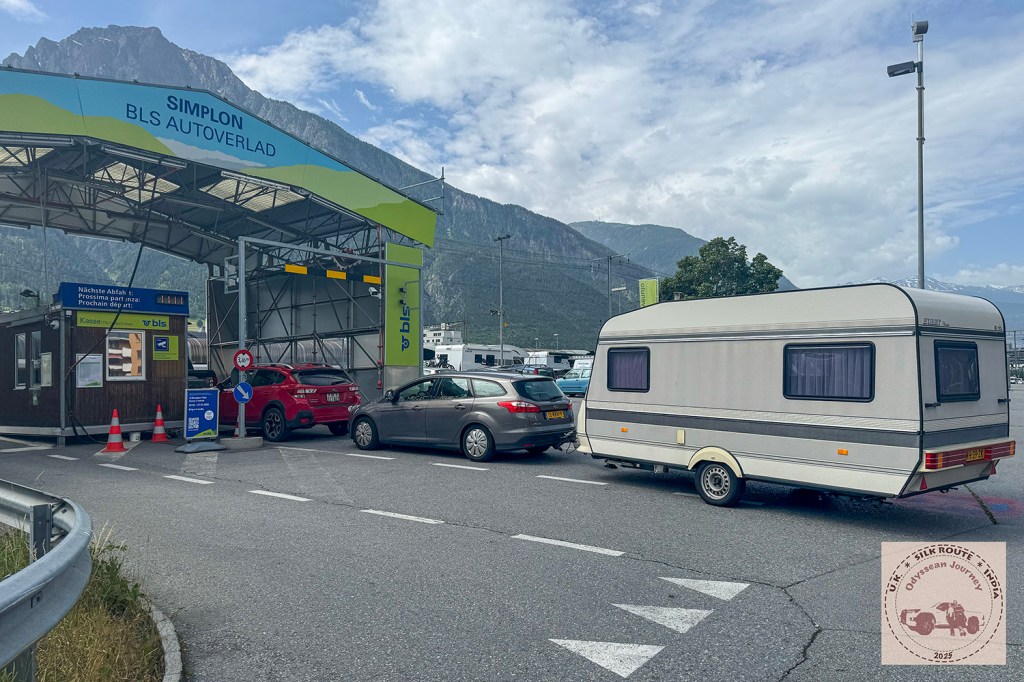
    Google Maps, with its usual confidence and occasional mischief, had us driving along Route 9. We passed what looked suspiciously like the car train station, continued for a bit, then had that familiar travelling conversation:

    “Was that it?”

    “No, surely not.”

    “Actually… maybe that was it.”

    So, we turned around, slightly sheepish, slightly amused, and very grateful that in Switzerland even confusion tends to happen in scenic surroundings.

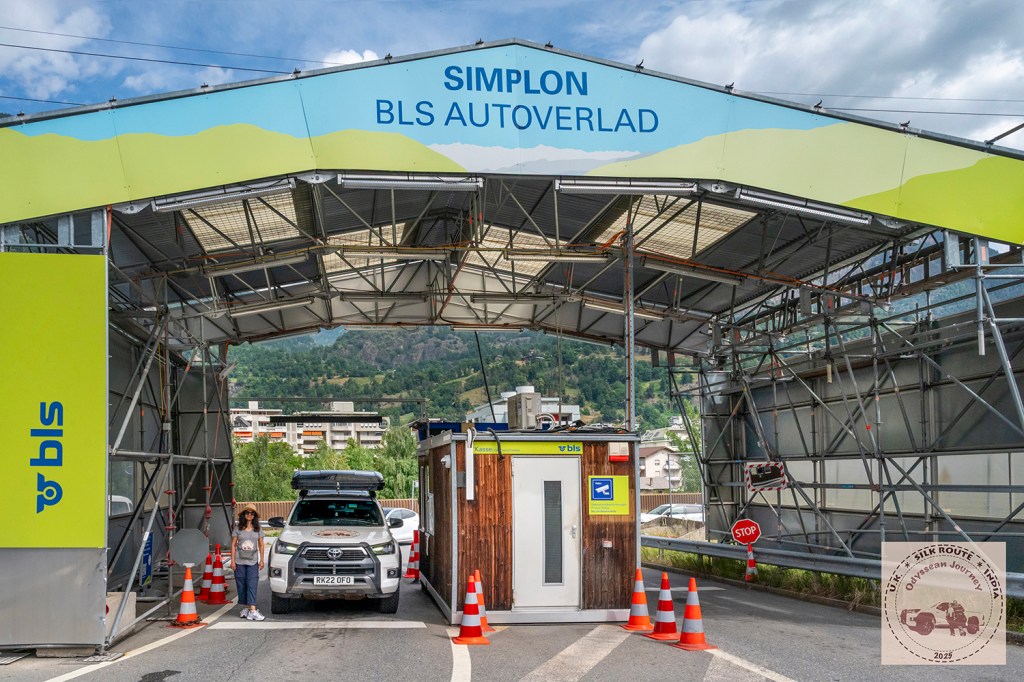
    After a brief argument with Google Maps, we found the Simplon car train station.

    The Simplon route itself is no ordinary crossing. For centuries, this has been one of the great north–south passages through the Alps. In earlier days it was a mule track and trade route; later, Napoleon saw its military value and commissioned a proper road over the Simplon Pass to connect France with northern Italy. The road from Brig towards Domodossola opened in the early 19th century and became one of Europe’s great Alpine routes.

    But modern Switzerland, being modern Switzerland, found a more elegant solution than asking every driver to wrestle with the mountains: put the car on a train and send the whole lot under the Alps.

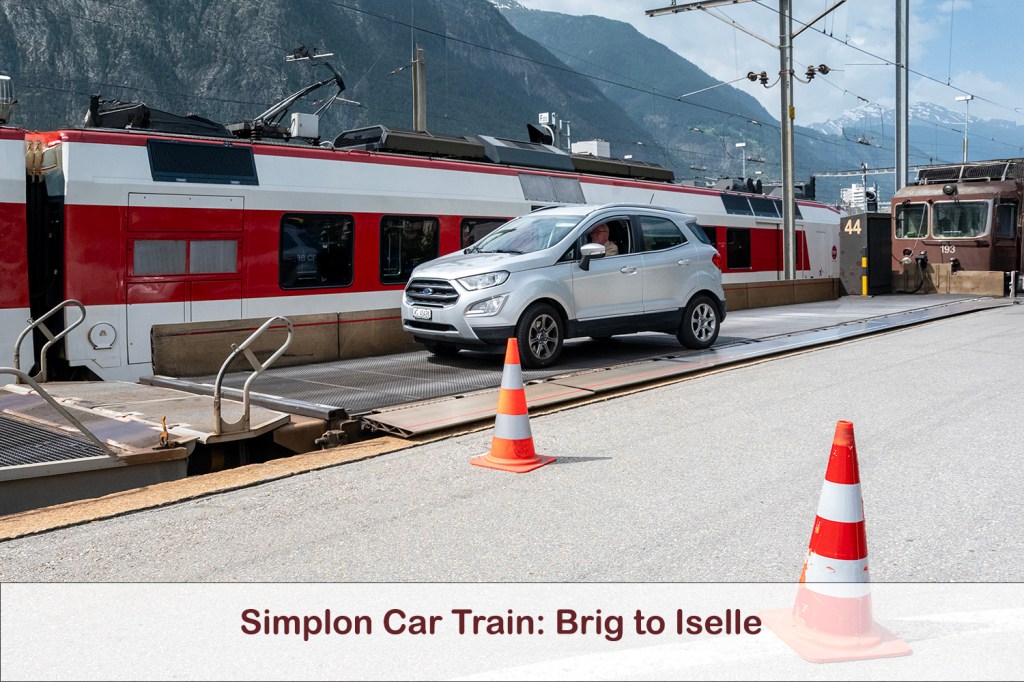
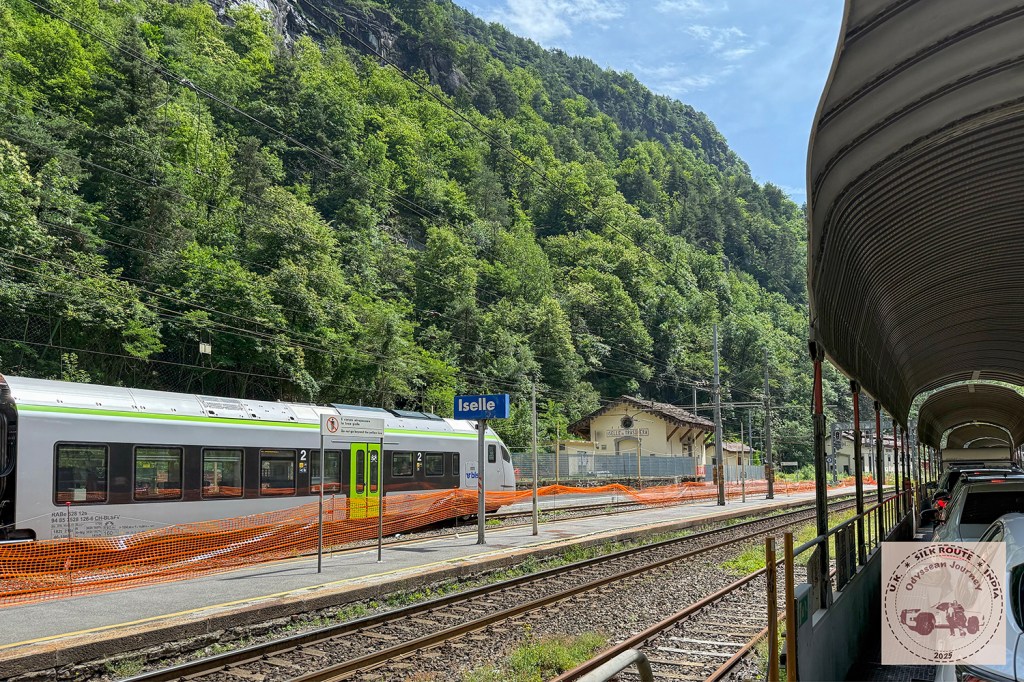
    The Simplon Tunnel, connecting Brig in Switzerland with Iselle in Italy, opened in 1906. At nearly 20 kilometres long, it was an astonishing engineering achievement for its time, cutting through the mountains rather than climbing over them. Today, the BLS car transport service carries vehicles between Brig and Iselle, allowing drivers to remain with their cars while being transported through the tunnel. The crossing takes about 20 minutes.

    There was something wonderfully odd about the whole experience. One moment we were road travellers, masters of our own steering wheel. The next, Chetak was being lined up like a well-behaved schoolchild, waiting to board a train. The train times were well structured (At Brig we were told the next one to Iselle would be in 2 hours, exactly), the attendants were extremely helpful in helping us load our cars in the correct way and the journey cost us £23.80 (26.00 CHF)

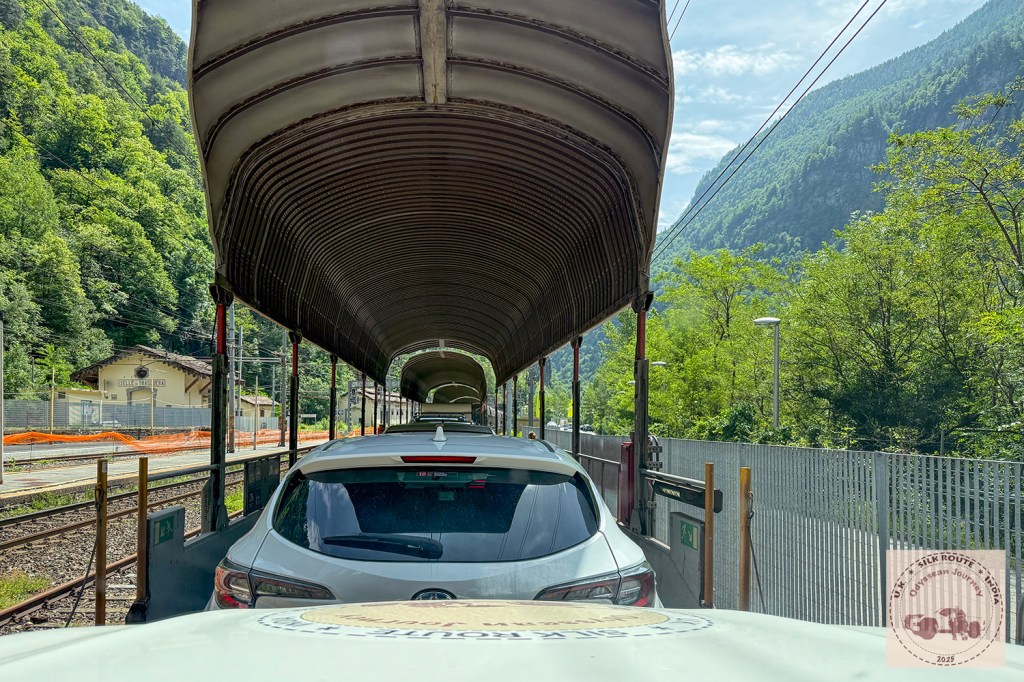
    Driving onto the flat wagon felt a little like entering a mechanical ark. Cars ahead, cars behind, all of us packed neatly into place, engines quietened, drivers pretending to look confident. Chetak, who had crossed cities, plains, ferries, borders and campsites, now stood still — as if enjoying his own well-earned Alpine spa treatment. This was Chetak’s turn to be the passenger!

    Chetak takes the train: crossing beneath the Alps from Brig to Iselle.

    Inside the car, we sat and waited. There was no dramatic mountain pass to conquer, no steering correction, no braking for hairpins, no sudden gasp from the passenger seat. Instead, there was darkness, steel, rhythm, and that faintly childlike thrill of being transported while still sitting inside your own vehicle. It was travel within travel — a journey folded inside another journey.

    And then, almost before the novelty had worn off, daylight returned.

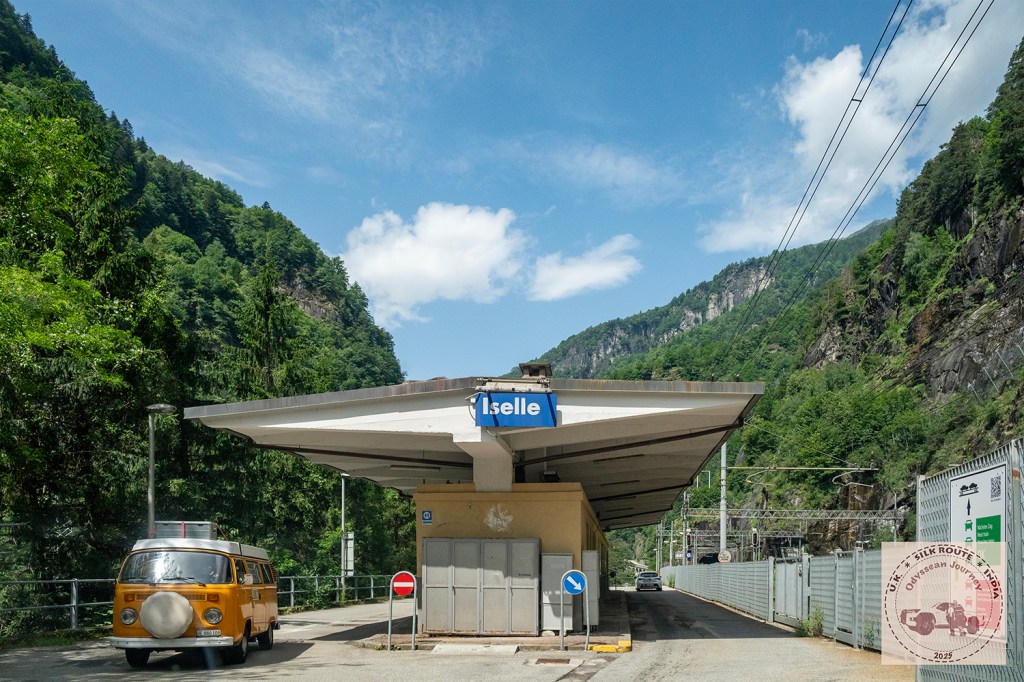
    After crossing-over to Italy.
    Simplon Car Train from Chetak.

    We emerged at Iselle, on the Italian side, with the quiet satisfaction of people who had crossed the Alps without actually having to cross the Alps. Switzerland had slipped behind us; Italy was ahead. The road began to soften, the signs changed, and the mood changed with them. There is always a small magic in crossing borders by land — the gradual shift of language, food, architecture, temperament. But crossing by car train made it feel even more theatrical, as if the Alps had drawn a curtain and raised it again on a new act.

    From there, we continued towards Lake Como, carrying with us another small story from the road: how Google Maps made us overshoot the station, how Chetak took a train under the Alps, and how one of Europe’s greatest mountain barriers became, for 20 minutes, a dark tunnel filled with cars and quiet wonder.

    The Simplon Car Train was a reminder that travel is often at its best when it surprises you. The memorable part of a day was when a road journey suddenly became a railway journey, and your car, your companion, your beast of burden, is carried through the heart of the mountains like precious cargo.

    We had set out to follow roads, rivers, trade routes and old histories across continents. And here, between Chandolin and Lake Como, we found all of that compressed into one Alpine crossing: ancient passage, Napoleonic ambition, Swiss engineering, Italian promise — and one slightly embarrassed U-turn back to the correct station.

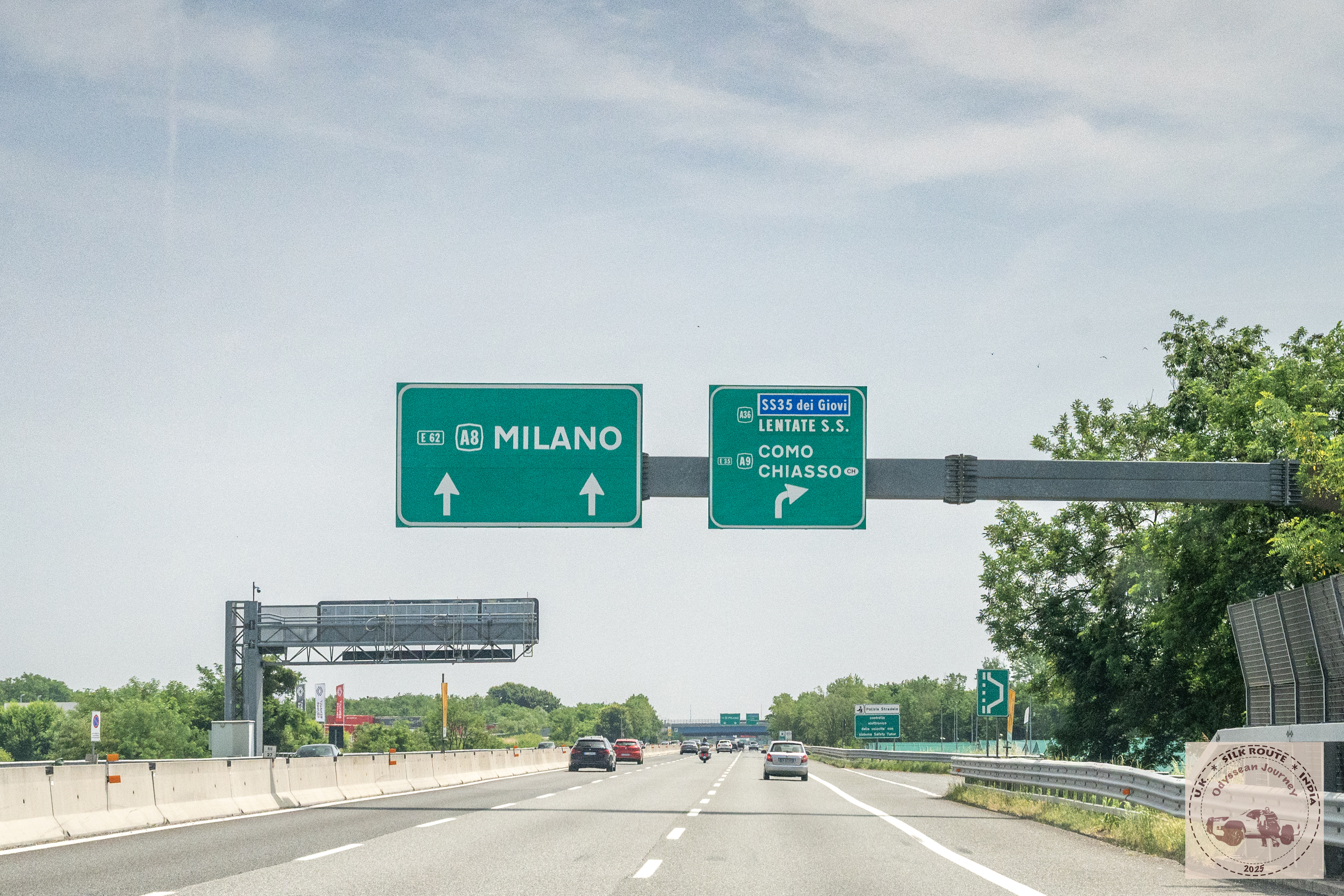
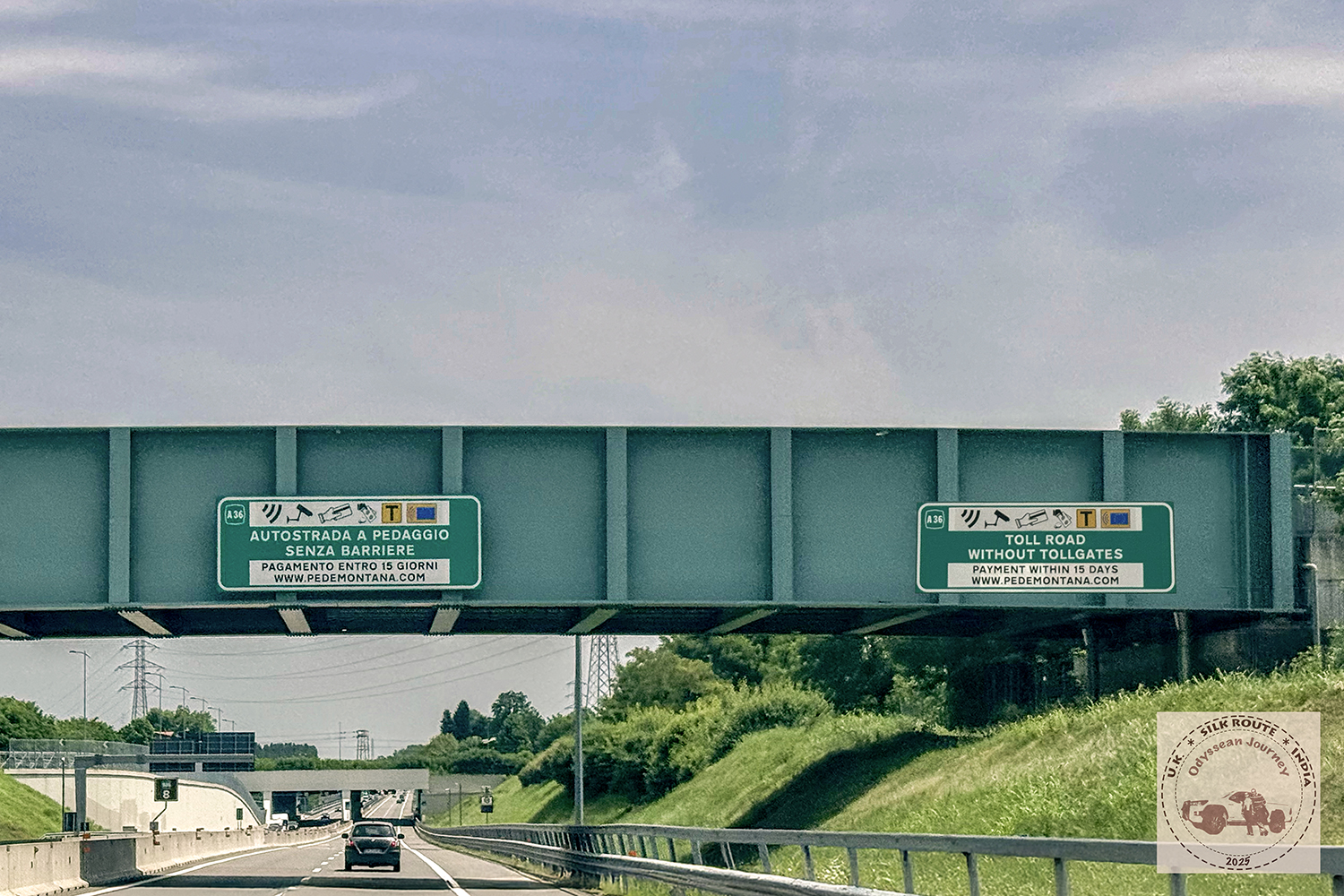
    Once in Italy, so as the Italians do. We were cursing nicely along E62, then along A9. Then came A36 – “Toll Road without Toll Gates” – it was not easy to catch the signboards on display but managed to take a photo of one of the many signs – that allowed us to avoid the hefty fine by paying £4.47 (5.23 EUR) only.

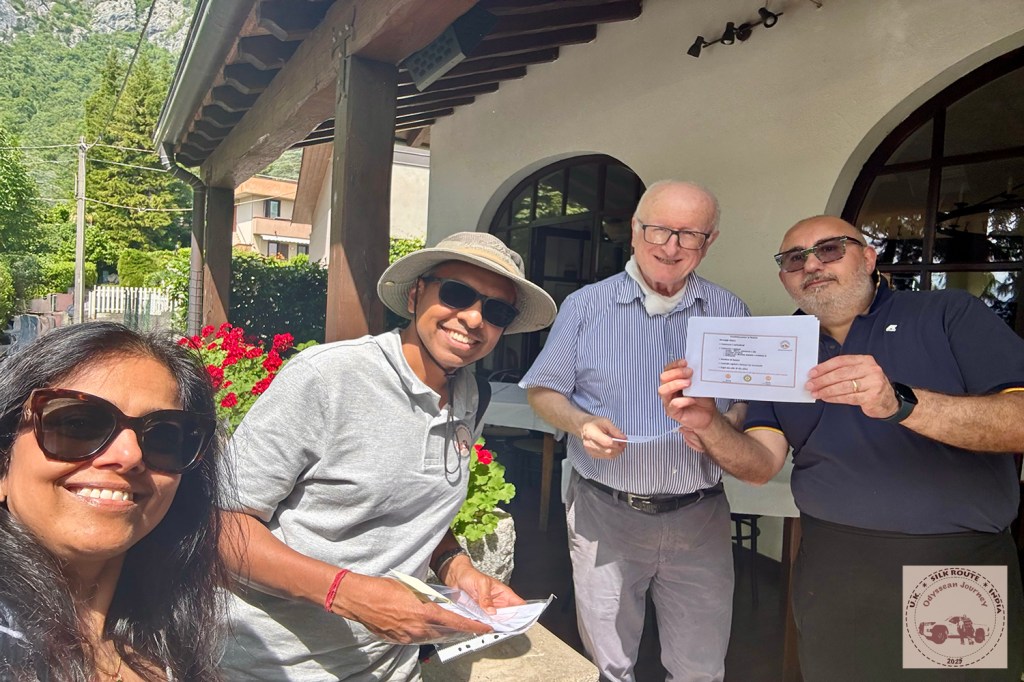
    Discussing Diabetes Awareness @Crotto di Lierna

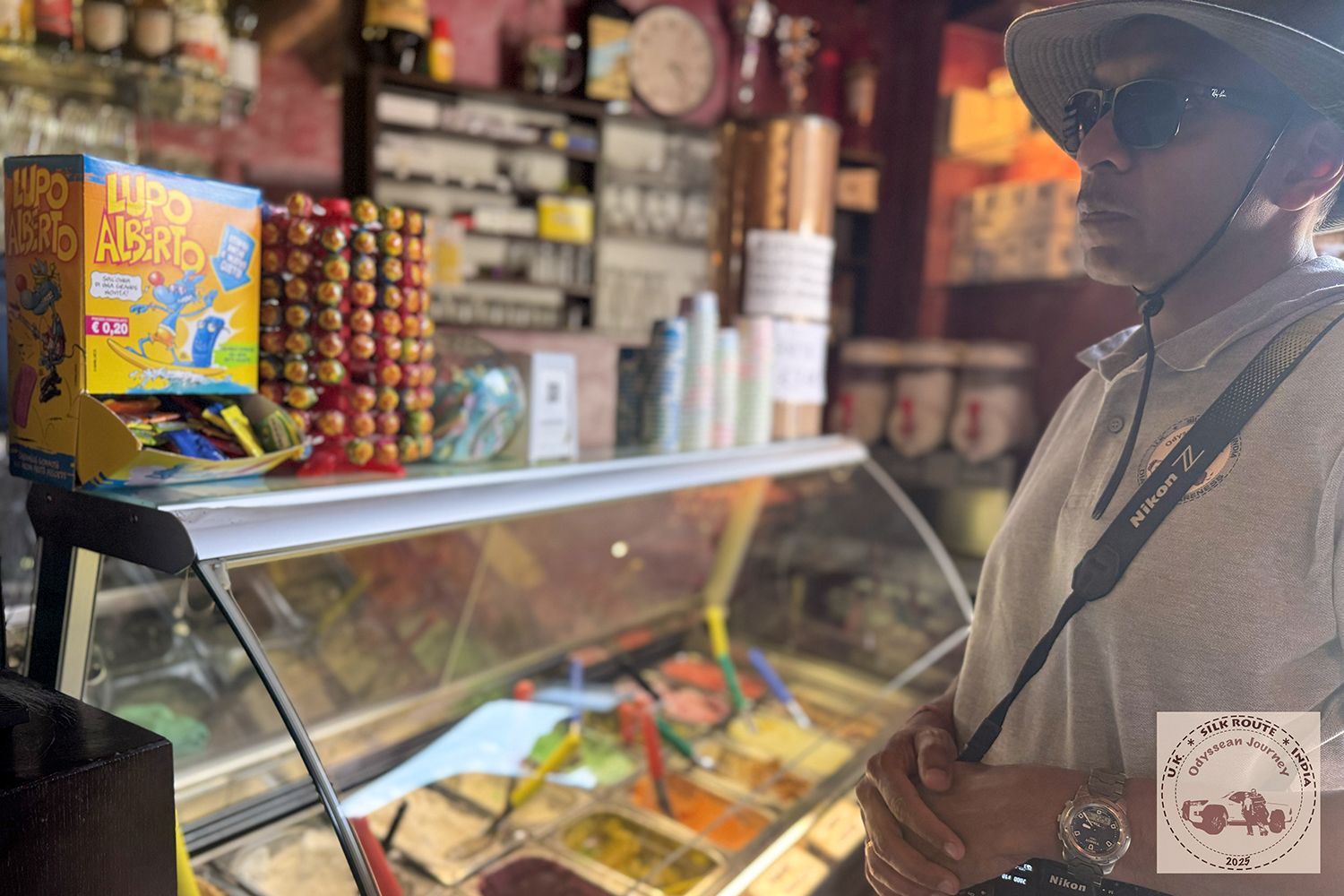
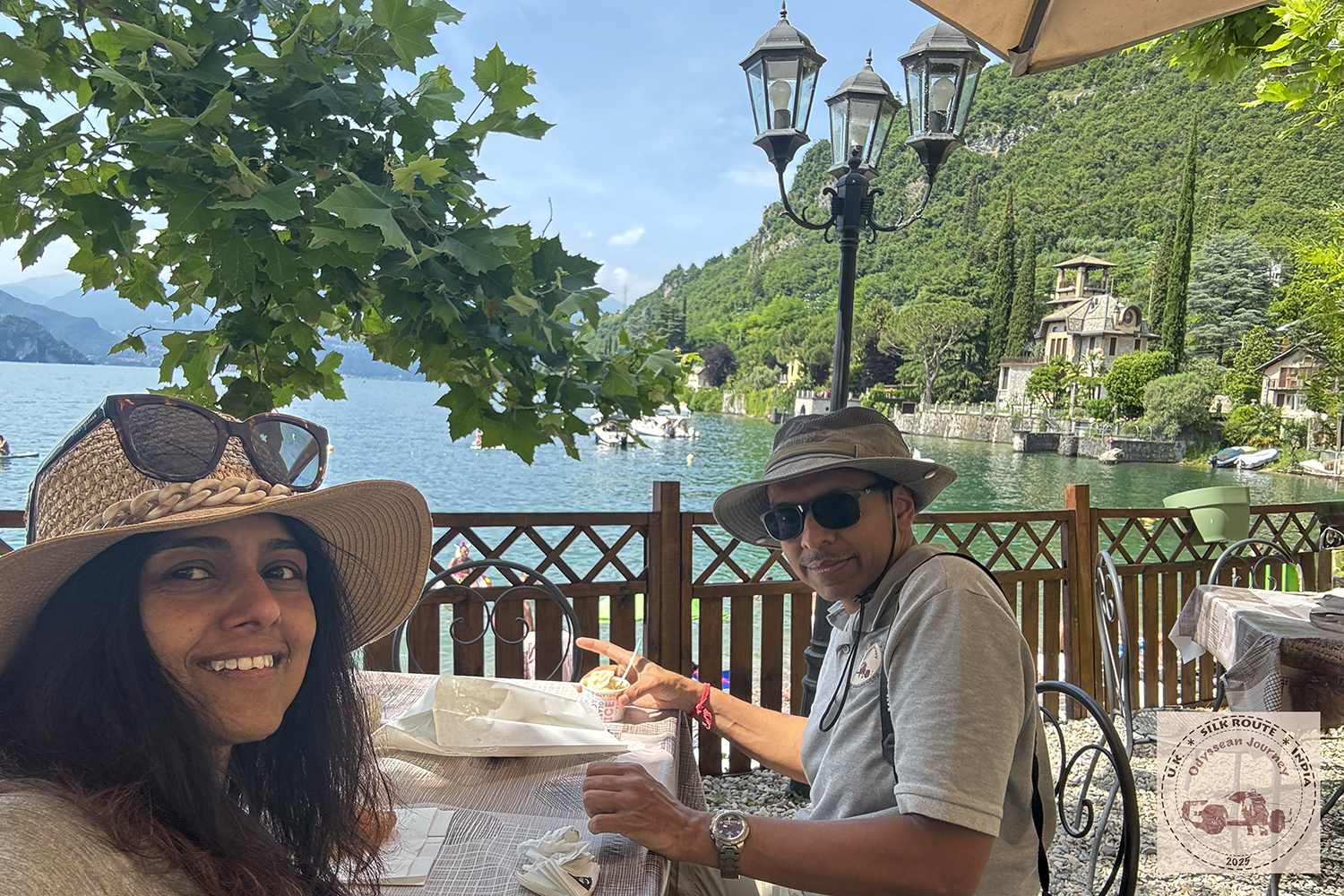
    We wanted to stop over on the side of Lake Como for a photographic opportunity- we could not have found a better place than the village of Lierna. The Crotto di Lierna, which locals say, have been making the best grilled meat since 1892, indeed served us with extraordinary food. The warmth of Guiseppie, the owner added an extra flavour, and we engaged in a deeper discussion that included diabetes awareness, food, life in Italy vs. life in England – to name a few. Following our late lunch we could not resist the temptation of local ice-creams by the side of Lake Como, before hitting the road again.

    For Odyssean Journey, this day was perfect. Not everything goes to plan. Sometimes you miss the turning. Sometimes you come back. And sometimes, if you are lucky, you are greeted by lovely experience, lovely food and lovely people.

    Before we knew, we were driving out of this beautiful area for our next destination.

    Guess where?

  • Chandolin: In the Footsteps of Ella Maillart

    Chandolin: In the Footsteps of Ella Maillart

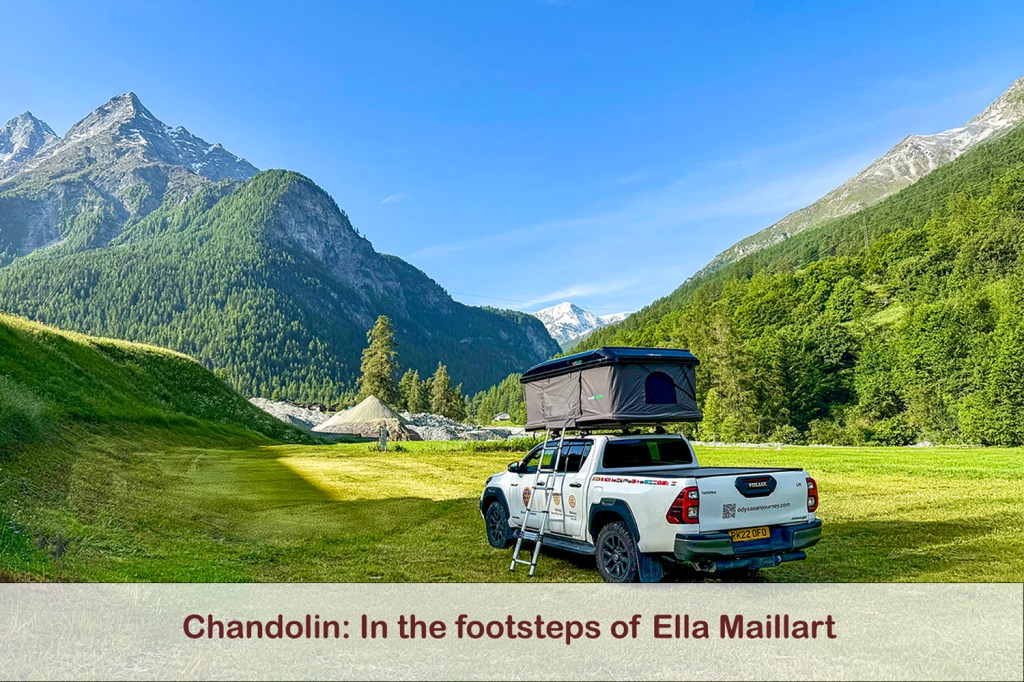
    Overlanding to Chandolin

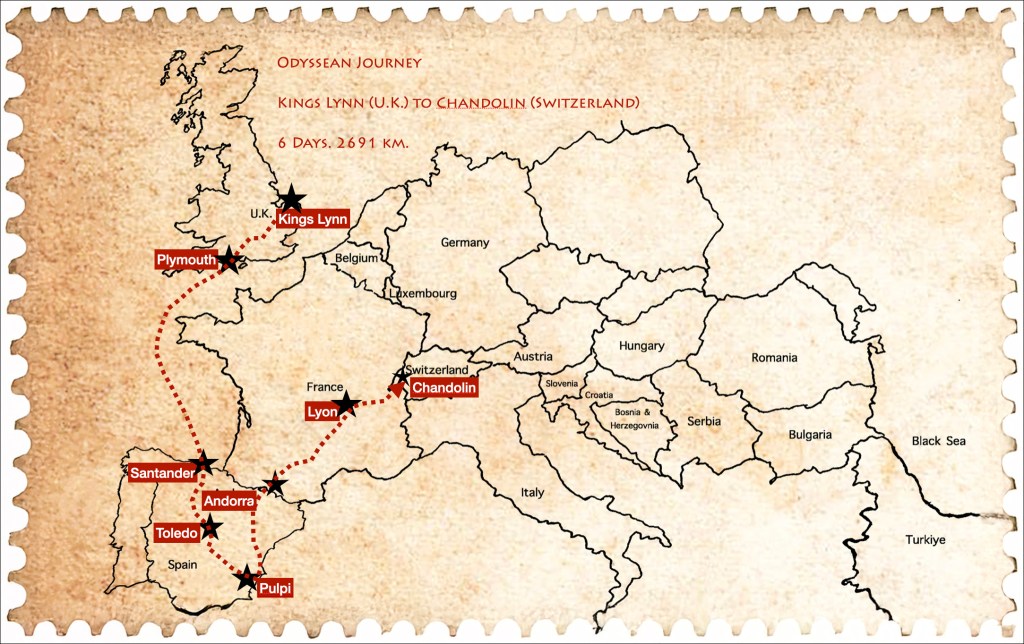
    Day 6 of Odyssean Journey brought us from Lyon to the Camping de Molignon, in the district of Anniviers, Switzerland. We drove along A40 and then on E62 by the side of the beautiful Lake Geneva for a total of 335 km for just over 3.5 hours.

    There are places we visit because they are beautiful. Then there are places we visit because they mean something. Chandolin was both.

    High in the Swiss Alps, surrounded by pine forests, wooden chalets, church bells and snow-marked peaks, this little village could easily have been just a scenic stop on our Odyssean Journey from the UK to Kolkata. But for us, Chandolin had a deeper pull. We had come here because of Ella Maillart.

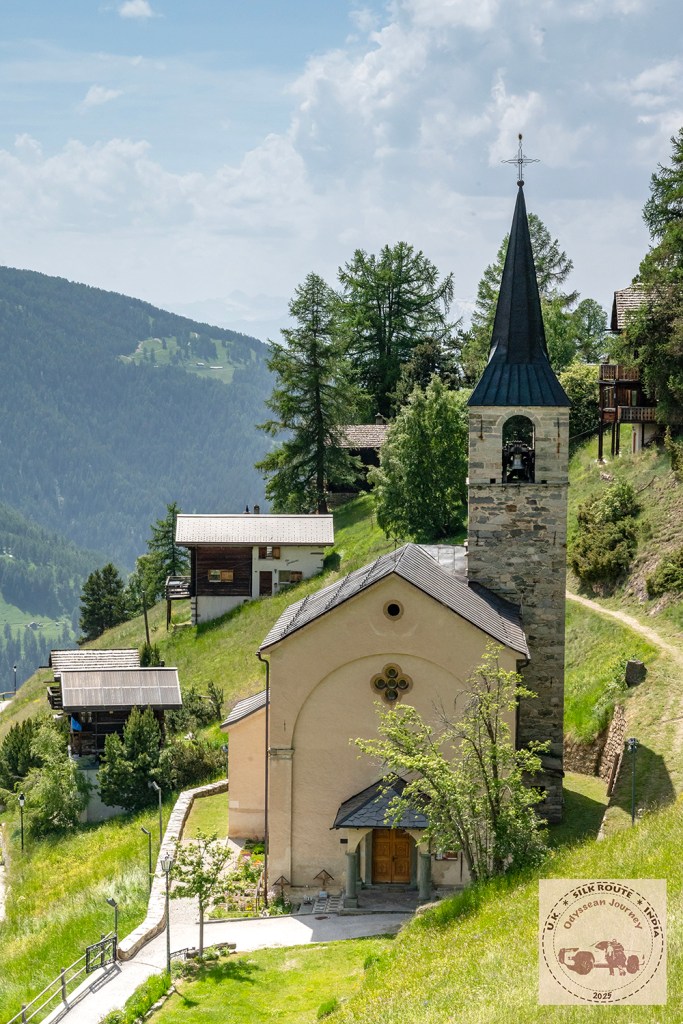
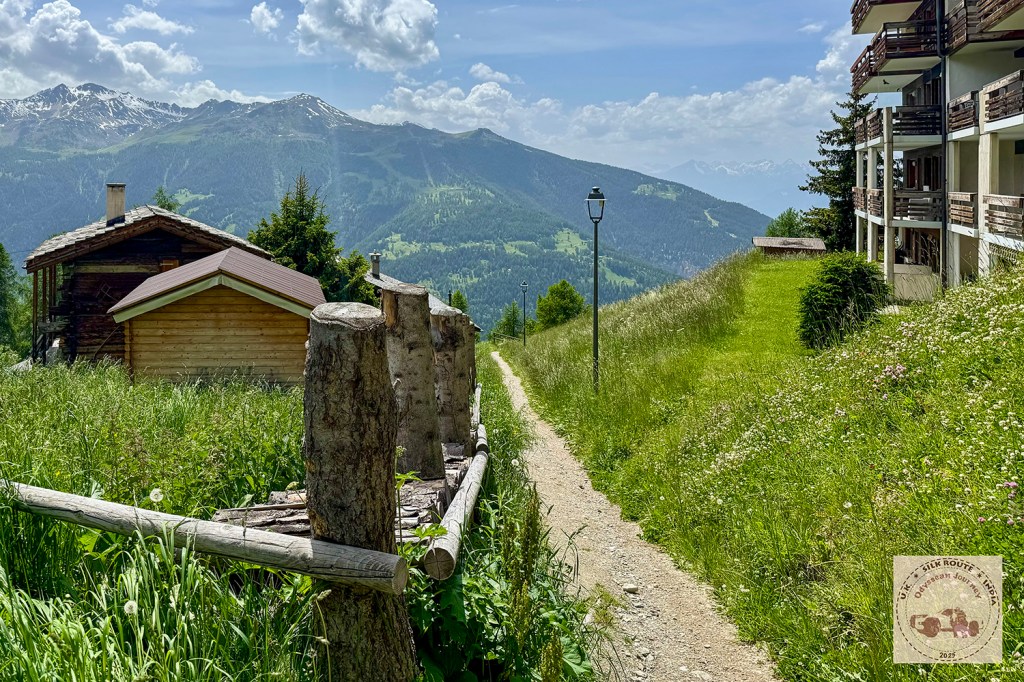
    Chandolin, a quiet Alpine village that became one of the emotional halts of our journey.

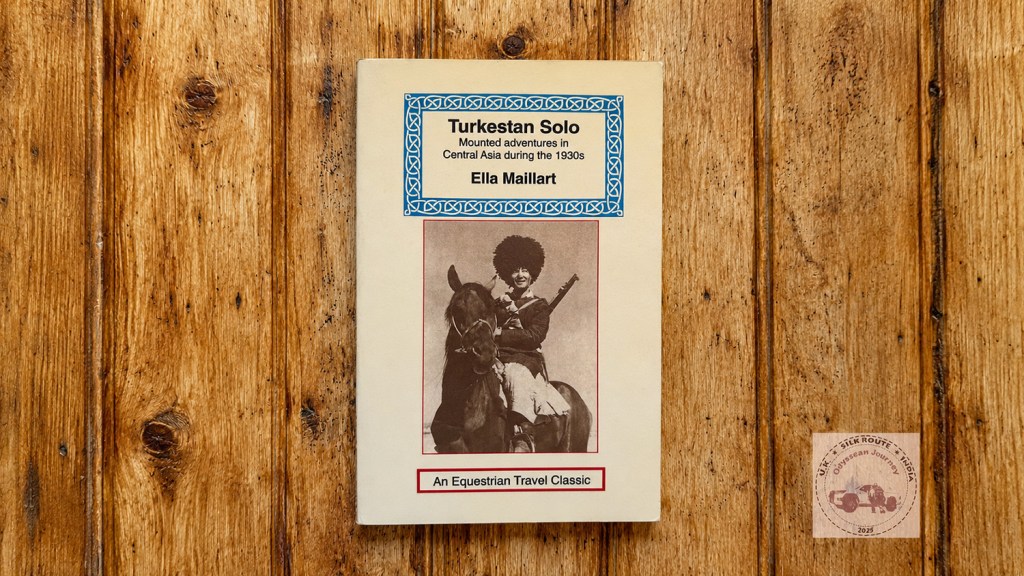
    Ella Maillart was one of the great traveller-writers of the 20th century — Swiss, adventurous, fiercely independent, and far ahead of her time. She had been an Olympic sailor, a skier, a photographer, and above all, a woman who refused to live within the limits expected of her. Her journeys took her across Central Asia, China, Kashmir, Tibet, Nepal and India. In the 1930s, when such travel was difficult for anyone and almost unthinkable for a woman travelling alone, she crossed vast landscapes by horse, camel, car and sheer determination.

    For a journey like ours, following the spirit of the old Silk Roads, Ella Maillart felt like a quiet guide. Long before we reached Central Asia ourselves, we had read about her travels through Turkestan, about the mountains and deserts, the nomads and borderlands, the mystery of places that still pull travellers eastwards.

    Ella Maillart’s Turkestan Solo — a book that made Central Asia feel like both history and invitation.

    Switzerland was more like a pilgrimage, and not merely a detour for Odyssean Journey.

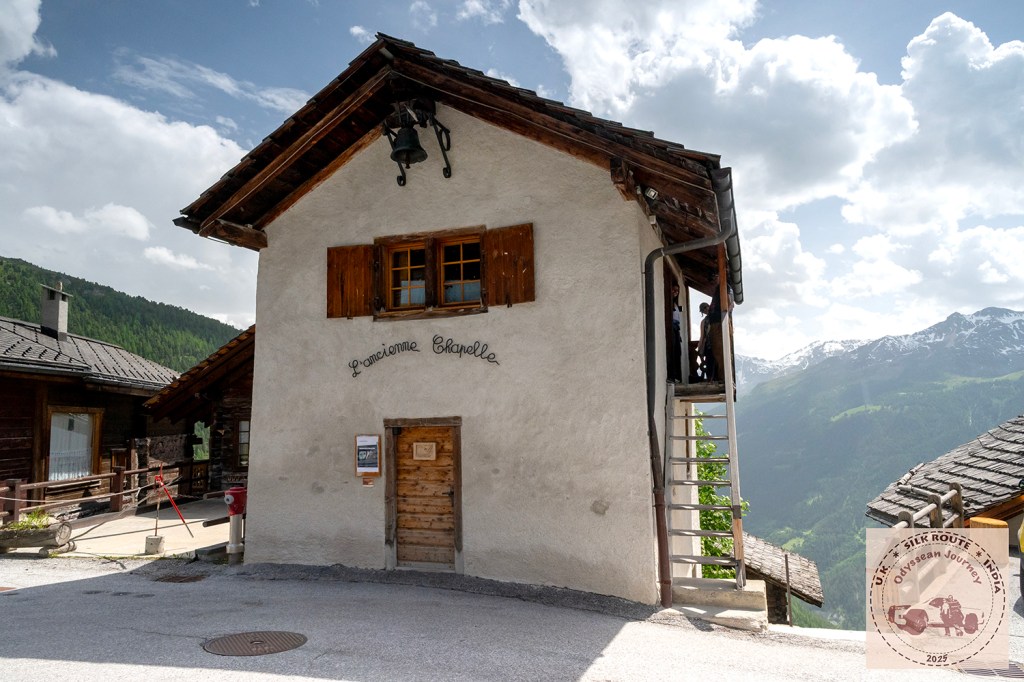
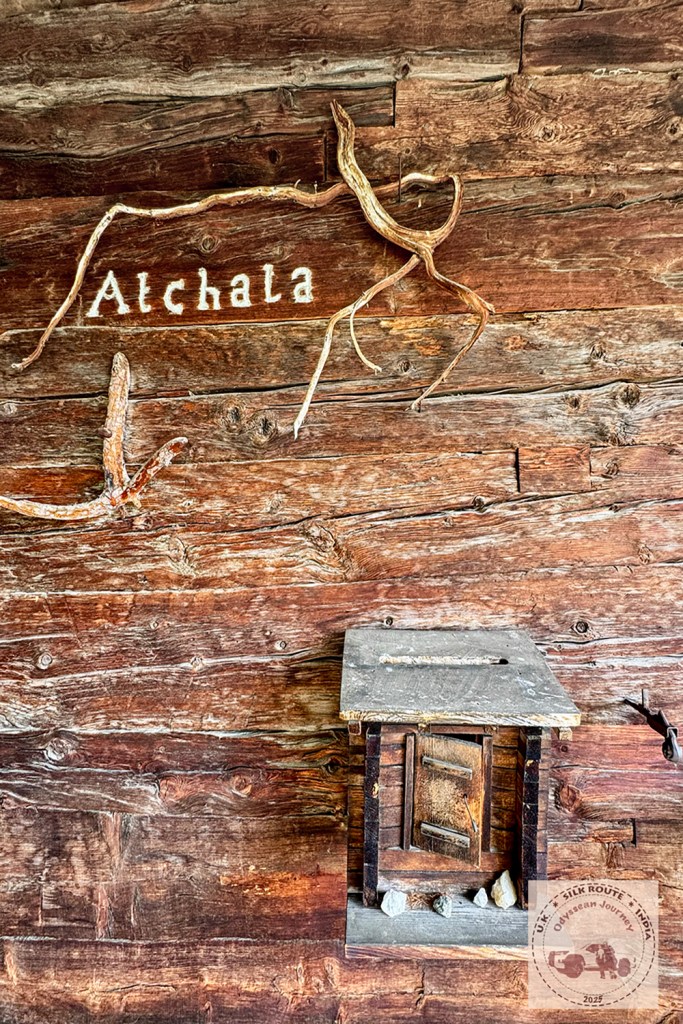
    In Chandolin, Ella built her chalet, Atchala, and spent many years returning to this mountain village after travelling across the world. Standing outside that simple wooden house, we felt something difficult to describe. It was not grand or dramatic. But it had a presence. Here was a woman who had crossed deserts, sailed seas, photographed distant cultures and written about the world with rare honesty — and yet she had chosen this quiet Alpine slope as her place of return.

    Atchala — Ella Maillart’s mountain home in Chandolin.

    The name of her house, Atchala, stayed with us. In Sanskrit, it suggests something “immovable” or “constant” — a name with a quiet sense of permanence. In Bengal, at-chala also refers to a traditional architectural style, often seen in temples and mosques, especially among the terracotta temples of West Bengal. This layered meaning made the name feel both personal and deeply rooted in history.

    Museum dedicated to Ella Maillart

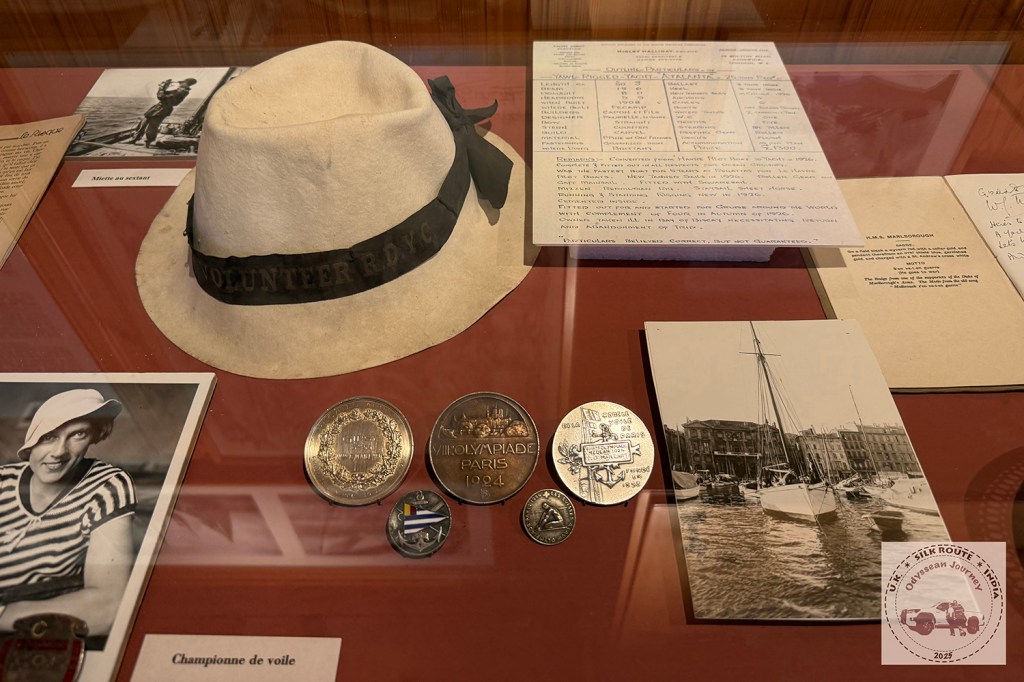
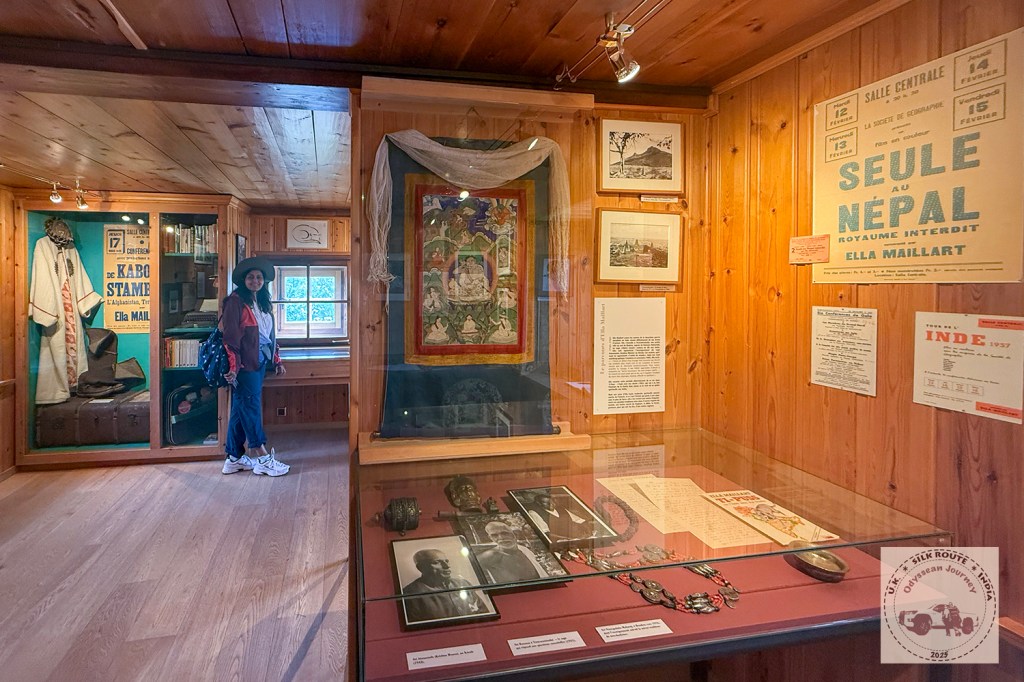
    The small museum dedicated to her felt intimate. There were photographs, books, posters, maps, letters and personal objects. A hat. Sailing medals. Images from her younger years. Posters from talks on Nepal and India. These were not just museum pieces. We could almost feel the essence of a life lived with courage, curiosity and discipline.

    Inside the Ella Maillart exhibition — objects from a life of movement, courage and curiosity.

    What moved us most was not simply that Ella had travelled far. Many people travel far. What made her remarkable was the way she travelled —observing and questioning. She was not ticking off countries. She was trying to understand lives of people she encountered. Perhaps that is why her story still feels so relevant. At its best, travel is not about escape. It is about seeing the world more clearly and perhaps seeing oneself more honestly too.

    The small museum in Chandolin brings Ella’s extraordinary journeys back into a quiet Alpine room.

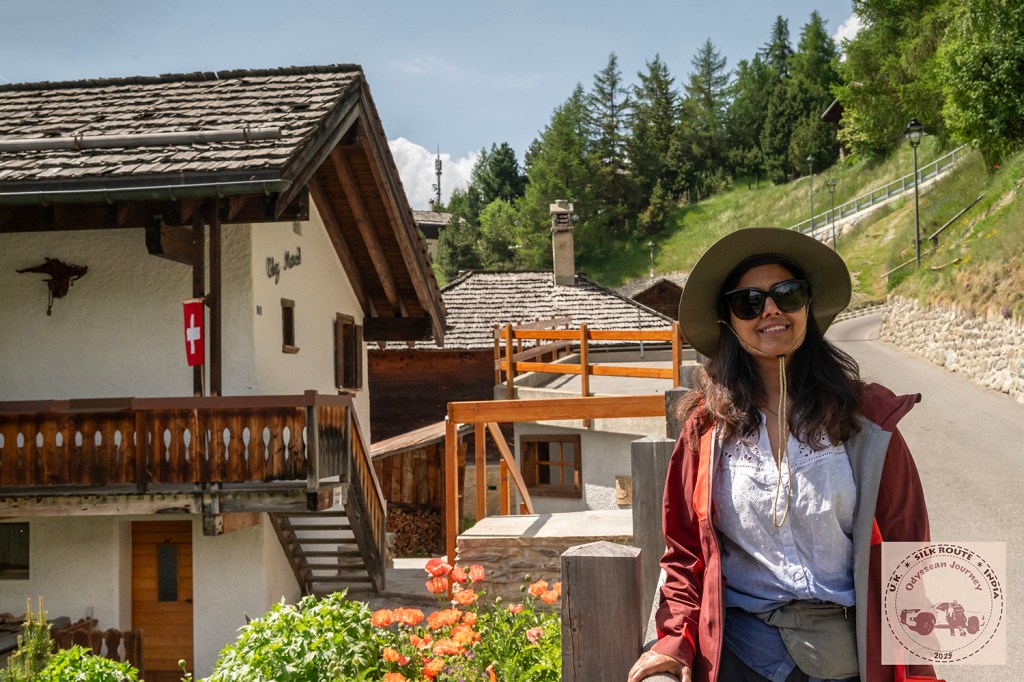
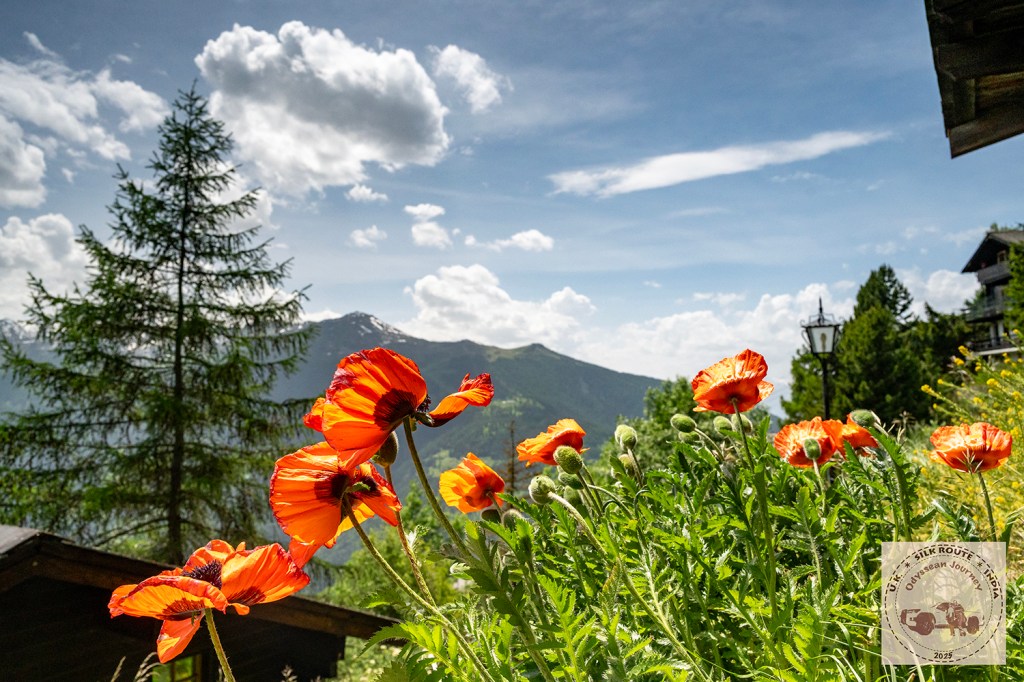
    After visiting the museum, we walked through Chandolin with a different feeling. The flowers, the old chalets, the church tower, the mountain air — everything seemed connected to her story. This was not just a beautiful Swiss village anymore. It was the place where a life of great movement had found stillness.

    Alpine flowers and mountain light — Chandolin at its most delicate and beautiful.

    There was also something personal in that moment. We were travelling in Chetak, our Toyota Hilux, carrying maps, camera gear, diabetes-awareness leaflets, hopes, anxieties and a roof tent. Our journey was very different from Ella’s, of course. The world has changed. Roads, phones and border systems have made some things easier. But the old impulse remains the same: to leave the familiar, to cross boundaries, to meet people, and to return with stories larger than oneself.

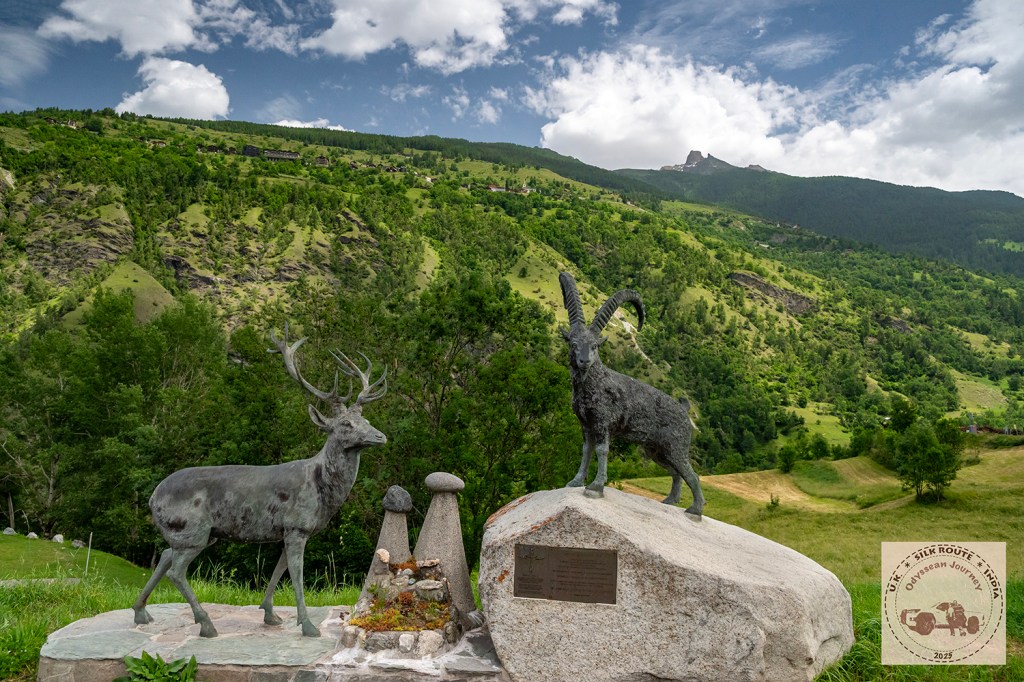
    Chandolin | Val d’Anniviers | Switzerland

    That evening, beneath the mountains, our roof tent became our little chalet on wheels. The valley grew quiet. The clouds moved over the peaks. Somewhere above us was Chandolin; somewhere behind us was Ella’s Atchala; and somewhere ahead lay the long road east.

    From the Swiss Alps, the road would soon turn east again — towards the Silk Roads and Asia.

    We came to Chandolin because of Ella Maillart.

    We left with the feeling that she had quietly blessed the journey ahead.

    Stay tuned :)

  • Lyon:Threads of Silk and Light

    Lyon:Threads of Silk and Light

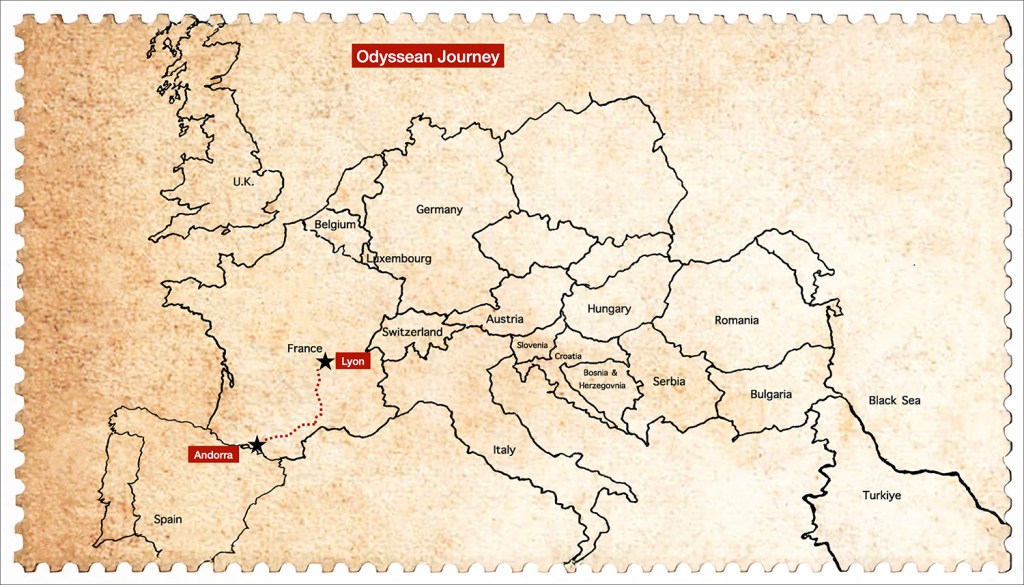
    Andorra to Lyon

    On Day 5 of our Odyssean Journey, we reached Lyon from Andorra along A9 and then A7 covering about 650km over 8 hours. We were carrying the usual signs of a long road journey: tired legs, hungry stomachs and half-folded maps. We decided to stay off the city in the pleasant Camping Des Eydoches, a mere 80 odd km from the Maison des Canuts, the museum and a workshop, which shares and continues the proud history of silk making in Lyon, our prime destination for Day 6.

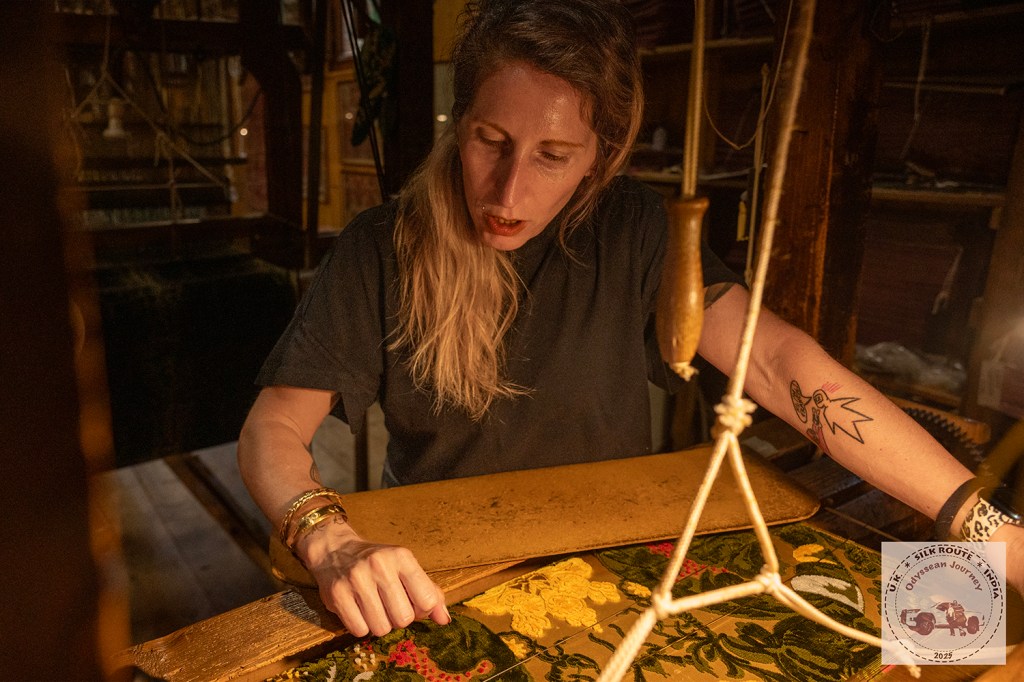
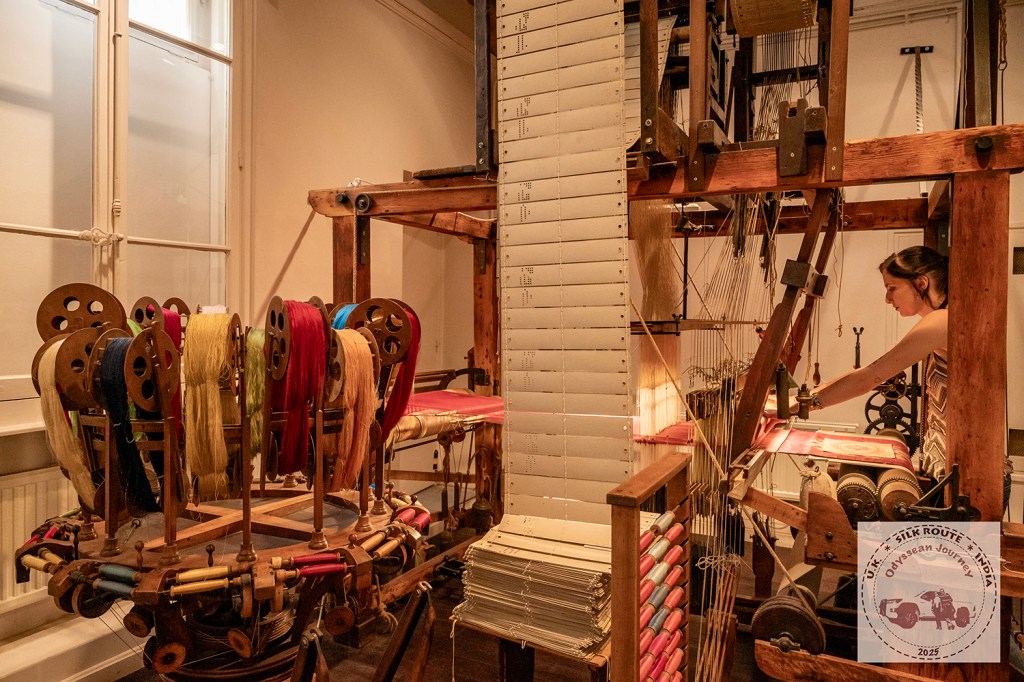
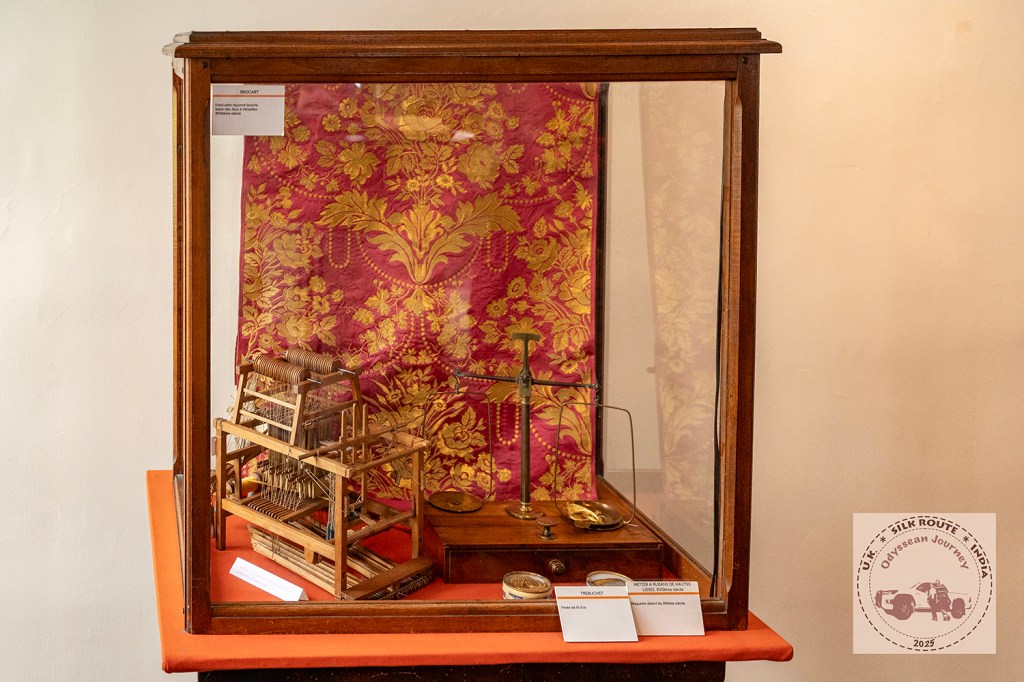
    The silk museum is intimate, wooden, and quietly moving but not grand in the loud, marble-floored sense. It. The looms stand like old witnesses. Spools of thread, punched cards, tools and silk samples fill the rooms. It feels less like a museum and more like a preserved workshop, where the workers have just stepped out for lunch and might return at any moment.

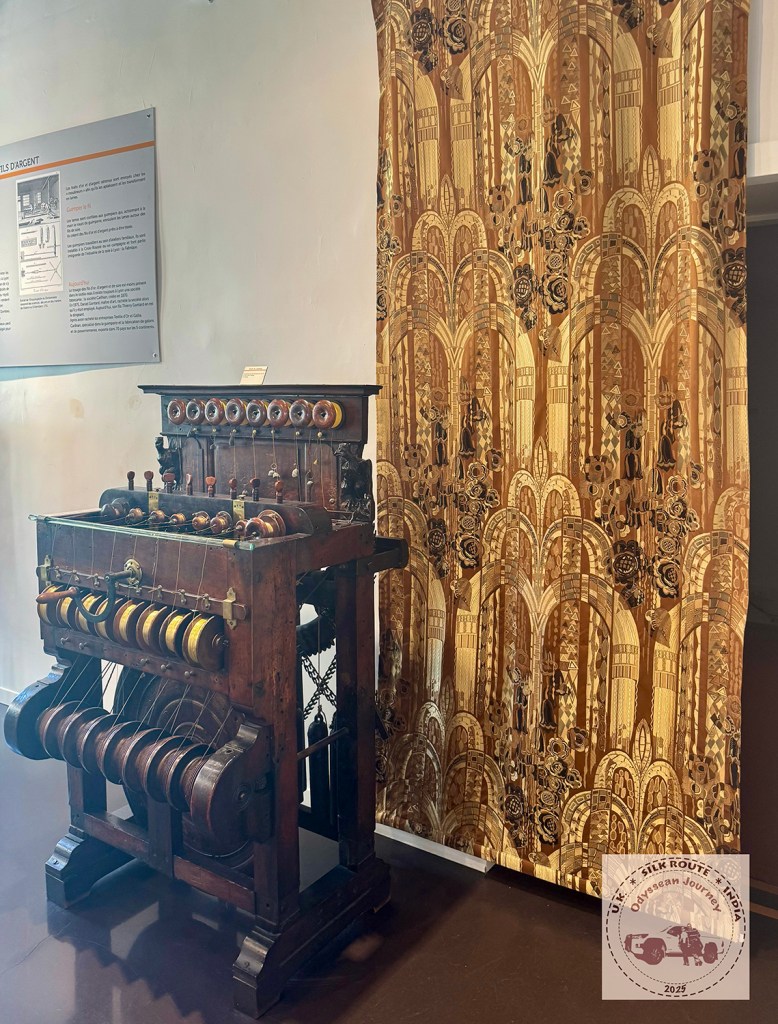
    The Jacquard loom: part machine, part memory, and one of the ancestors of modern computing.

    Lyon’s silk story began in 1536, when King Francis I granted the city the privilege of weaving silk and other noble materials. Over time, Lyon became one of Europe’s great silk capitals. Its silk industry, known as La Fabrique, involved merchants, designers, dyers, spinners, weavers, apprentices and thousands of looms.

    At the heart of this world were the canuts — Lyon’s master silk weavers. Many worked from home, with their families and apprentices, living and labouring in the same space. Their tools were simple but precise: shuttles, combs, bobbins, scissors, oil lamps, tweezers and measuring instruments. Looking at them, one realises that silk was never just “made”. It was calculated, threaded, watched, corrected and patiently brought into being.

    Behind the luxurious Silk lay tools, discipline and immense patience.

    The great figure in the museum is Joseph-Marie Jacquard, born in Lyon in 1752, the son of a master weaver. His famous loom used punched cards to control complex patterns. A hole meant one instruction; no hole meant another. In that simple logic lay the early idea of programmability.

    Standing beside the Jacquard loom, it is striking to think that the digital world has one of its ancestors in the textile world. Before computers had code, looms had cards and silk carried patterns way before screens started displaying patterns.

    Entirely manually-created silk patterns

    But Lyon’s silk history is not only about beauty and is also about labour. The canuts worked hard, often under difficult financial pressure. Payment depended on the type of weave, the difficulty of the pattern and agreements with the silk merchants, known as soyeux.

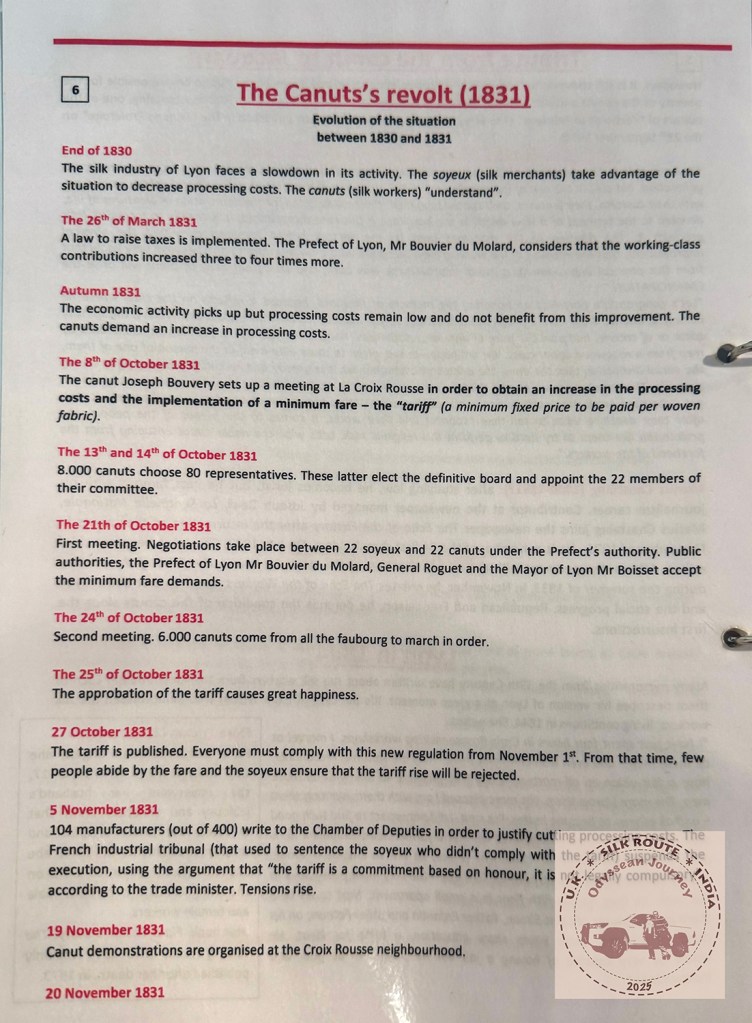
    In 1831, after falling wages and disputes over a minimum tariff, the canuts rose in revolt. Their motto became famous: “Live working, or die fighting.” A second revolt followed in 1834, known as the “bloody week”. The museum tells this story with quiet seriousness. Silk may look soft and elegant, but in Lyon it also carries the memory of struggle and one of the earliest workers’ uprisings of the industrial age.

    The canuts’ revolts of 1831 and 1834 remind us that silk was also a story of labour and dignity. © Museum Archive

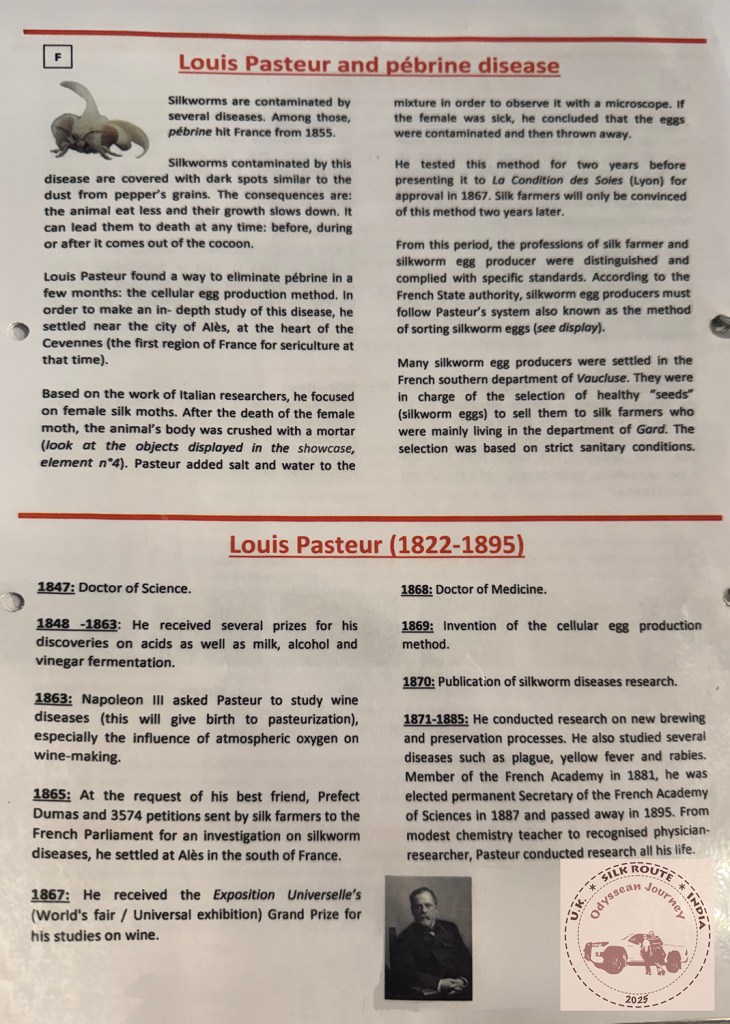
    There is also a scientific thread to the story. In the 19th century, French silkworms were devastated by pébrine disease. Louis Pasteur helped save sericulture by developing a method to identify healthy silkworm eggs. The museum also explains how silk was carefully weighed and conditioned, because silk absorbs water and was sold by weight. Even romance, it seems, required regulation.

    From silkworm eggs to woven fabric, Lyon’s silk industry depended on science as much as craft. © Museum Archive

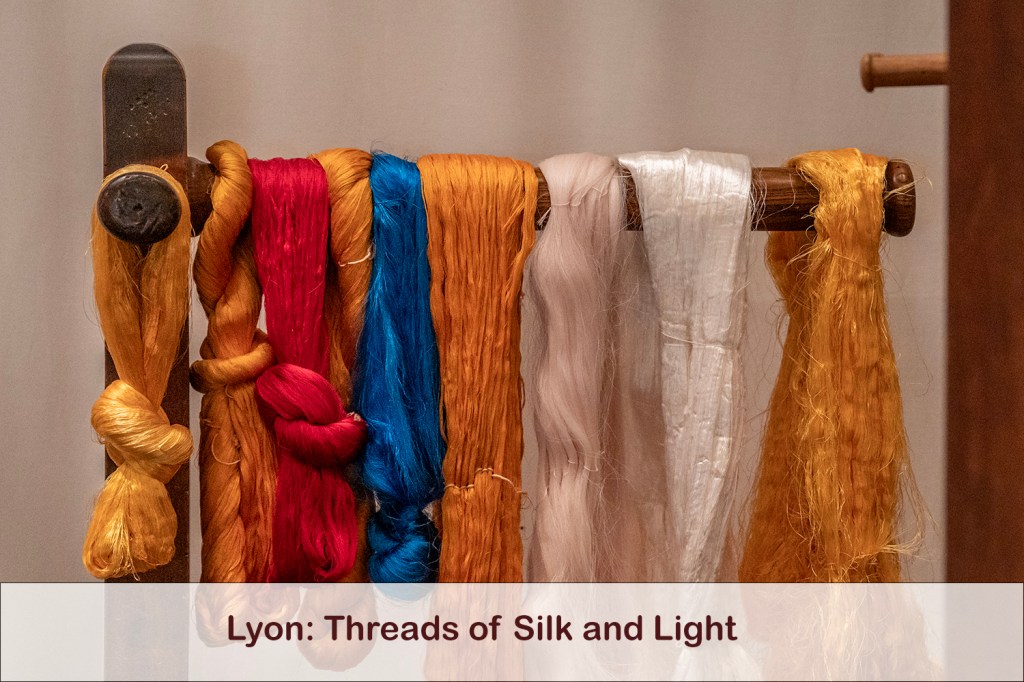
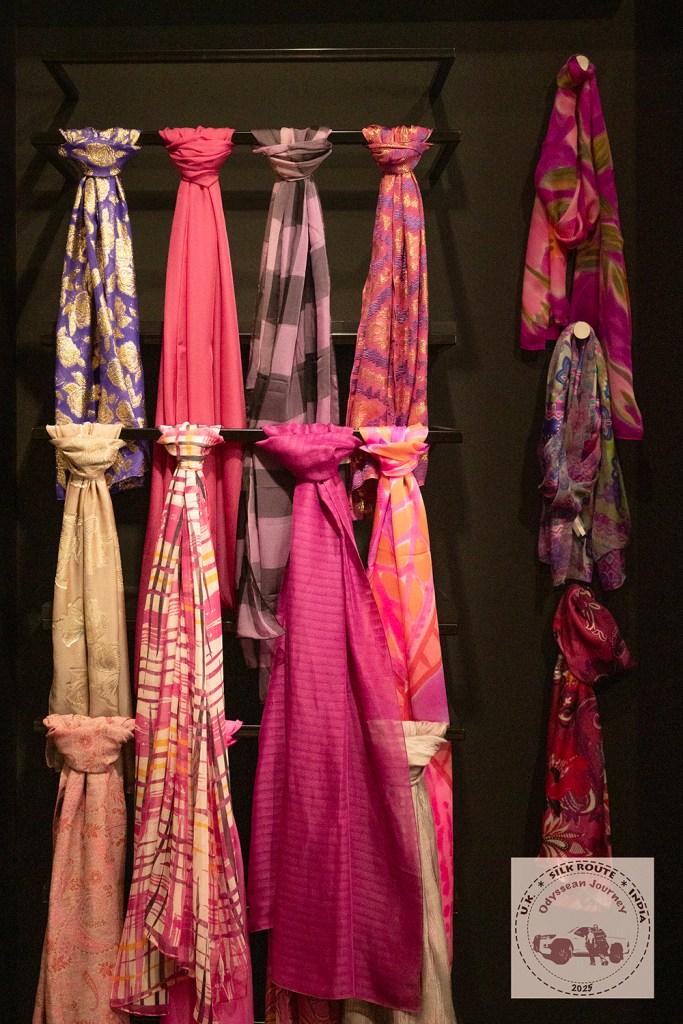
    The silk shop brought the story into the present. Shelves of scarves glowed in pink, orange, green and gold. These were not museum relics but living descendants of Lyon’s textile imagination. Modern production may be digital, global and faster than ever, but the essential questions remain the same: pattern, texture, colour, quality, and the human desire to turn thread into beauty.

    Modern Lyon silk: colour and elegance.

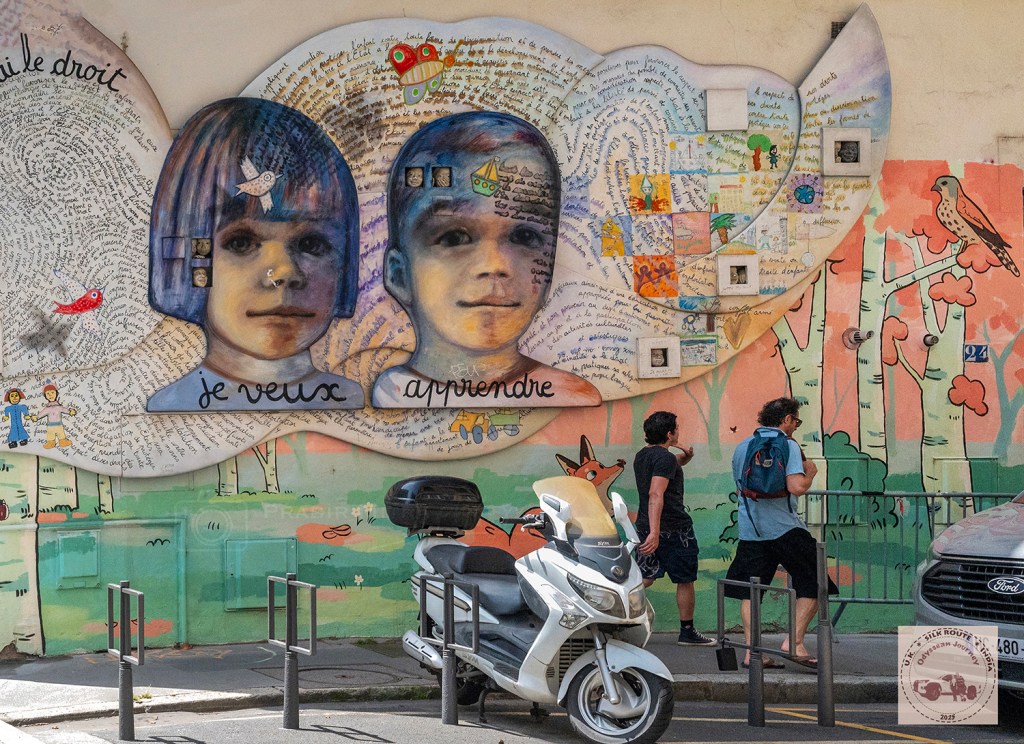
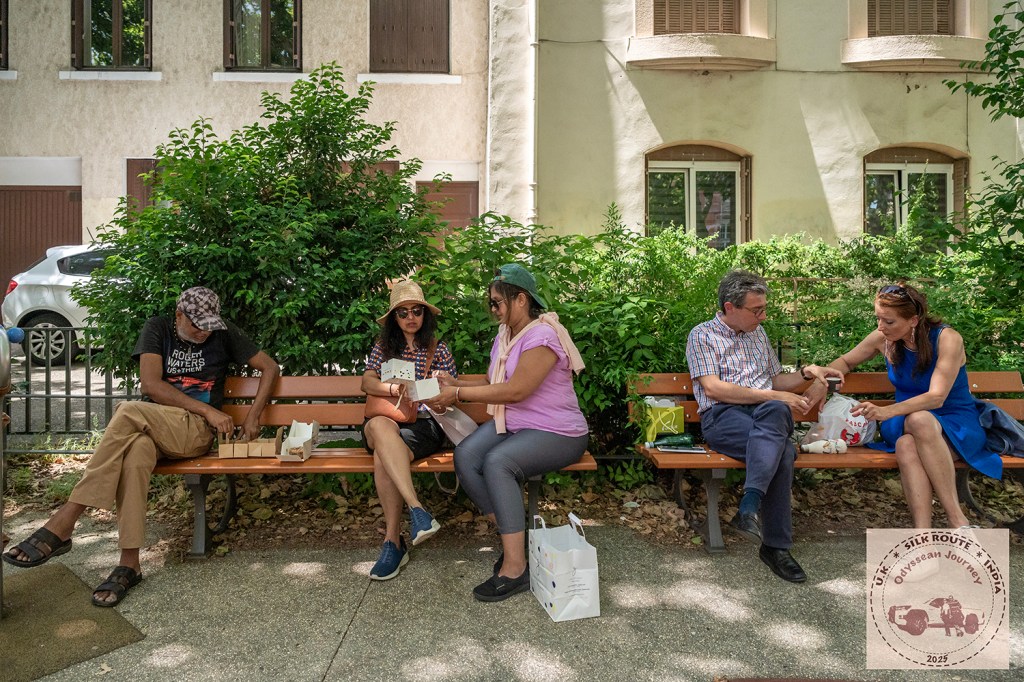
    What made the visit especially memorable was how the old silk world spilled naturally into modern Lyon. After the museum, we stepped into the sunshine, sat on a bench, opened our little packets of food and watched the city go by. Around us were murals, scooters, shop windows and people getting on with their ordinary day.

    The contrast was lovely. Inside, there had been looms, revolts and centuries of craft. Outside, there was a red scooter glowing in the street, a mural saying “je veux apprendre”I want to learn — and four travellers happily surrendering to lunch.

    A traveller’s pause after the museum: shade, snacks and the luxury of sitting down.

    For us, Lyon’s silk museum became more than a stop on the itinerary. It connected many strands of our journey: the Silk Road, European craft, labour history, technology, science and the simple pleasure of travelling together.

    We entered expecting to see silk. We left having seen a city through its threads — its elegance, its hardship, its invention and its pride.

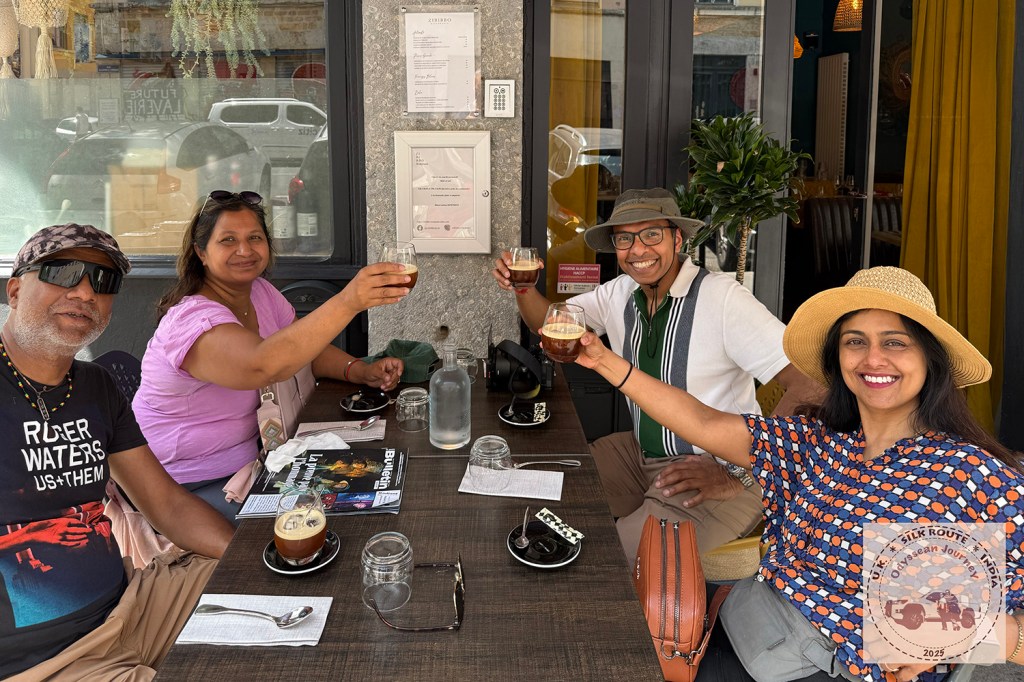
    Later, over coffee, we raised our glasses to Lyon. Not dramatically, not ceremonially, but with the quiet satisfaction of travellers who had found something richer than expected.

    Silk, after all, is never only fabric. It is memory woven into light.

    A toast to Lyon — a city where silk, history and friendship met on a summer afternoon.

    Our journey would lead us from the annals of the silk trade into the remarkable story of an extraordinary woman. Guess where ??

  • Historic Toldeo

    Historic Toldeo

    Day 2 of Odyssean Journey.

    We drove Chetak a total of 546 km to reach Toledo from Santander Port.

    After a quick lunch break, we put the necessary “Headlight Deflector Stickers” (a mandatary requirement for any U.K. vehicle to be able to drive in EU- we got these from A .T. Johnson, a friendly local shop in our hometown Kings Lynn).

    Thereafter we headed southwards along A-67. We wanted to avoid the E-5, which would invariably be slower due to the heavy traffic of Madrid.  The aim was to reach Camping El Greco before 8pm as the caretaker would be not available beyond that point in time.

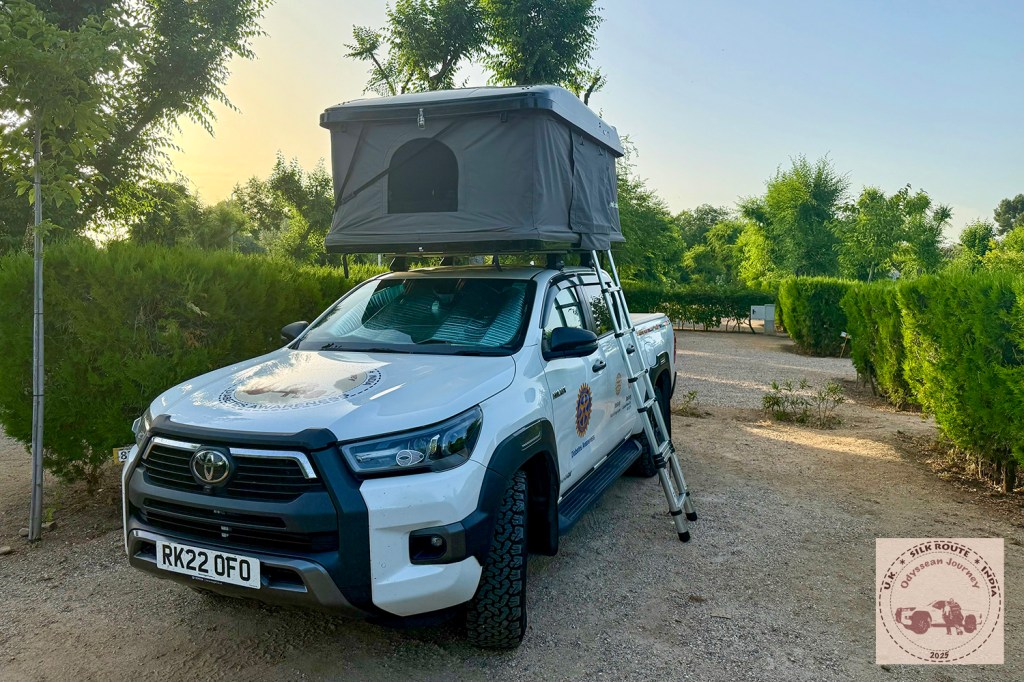
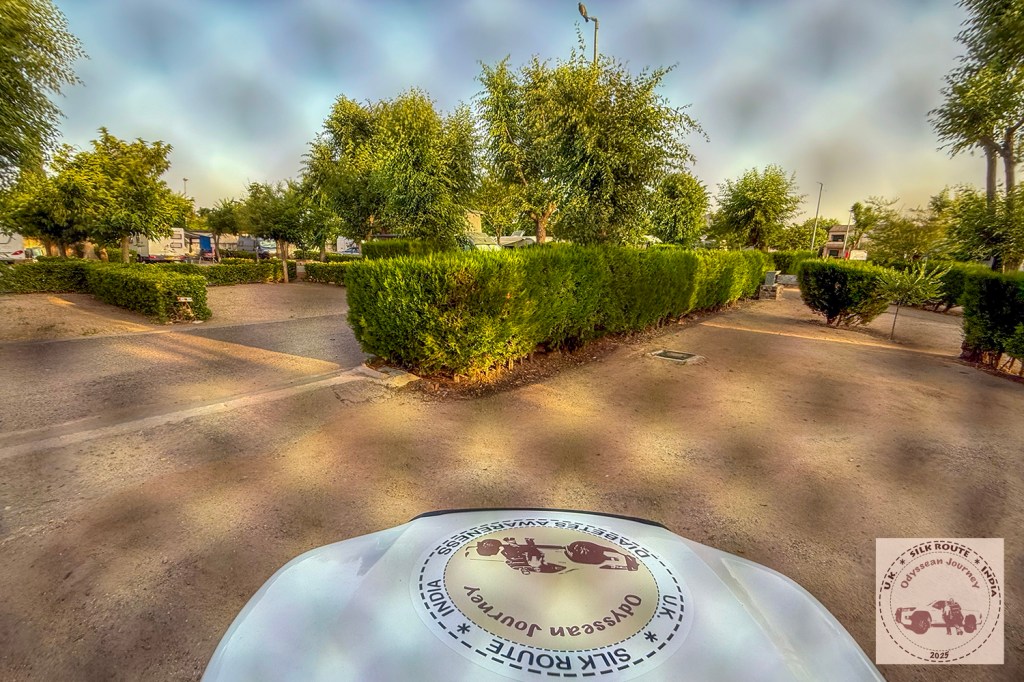
    Chetak @ Camping El Graco, Toledo.

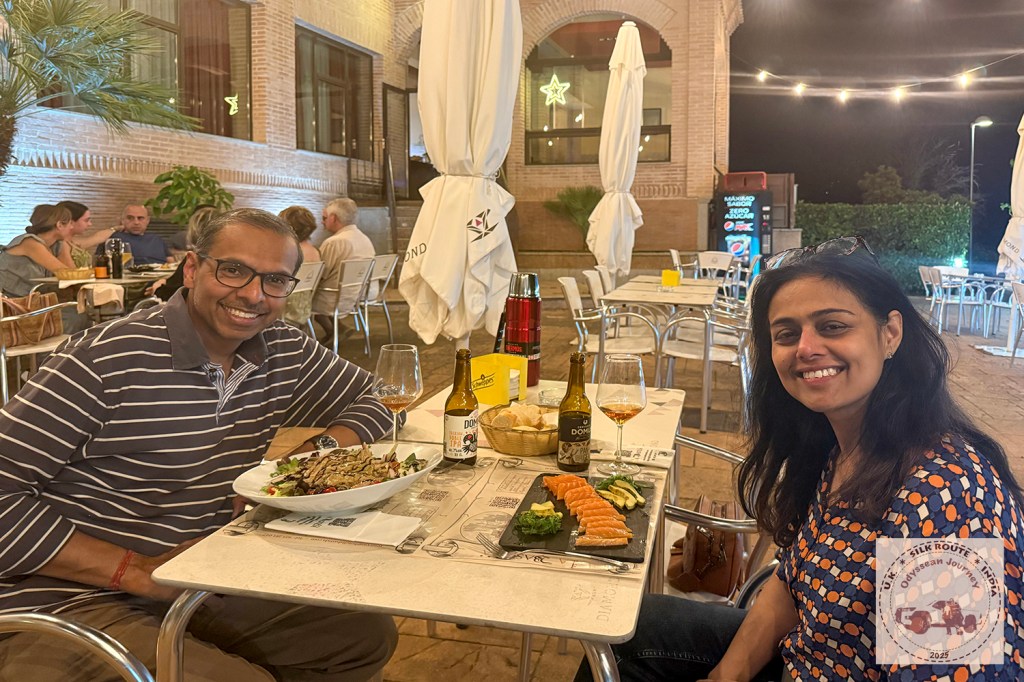
    Our 1st European camping experience of this trip. It was a great location, clean facilities and a fantastic local La Bastida Hotel (a merely 10 minutes’ walk from our campsite) which served excellent food- complimented each other. The night breeze was cool, and our roof tent was comfortable enough for a nice sleep.

    Traditional meal at Hotel La Bastida
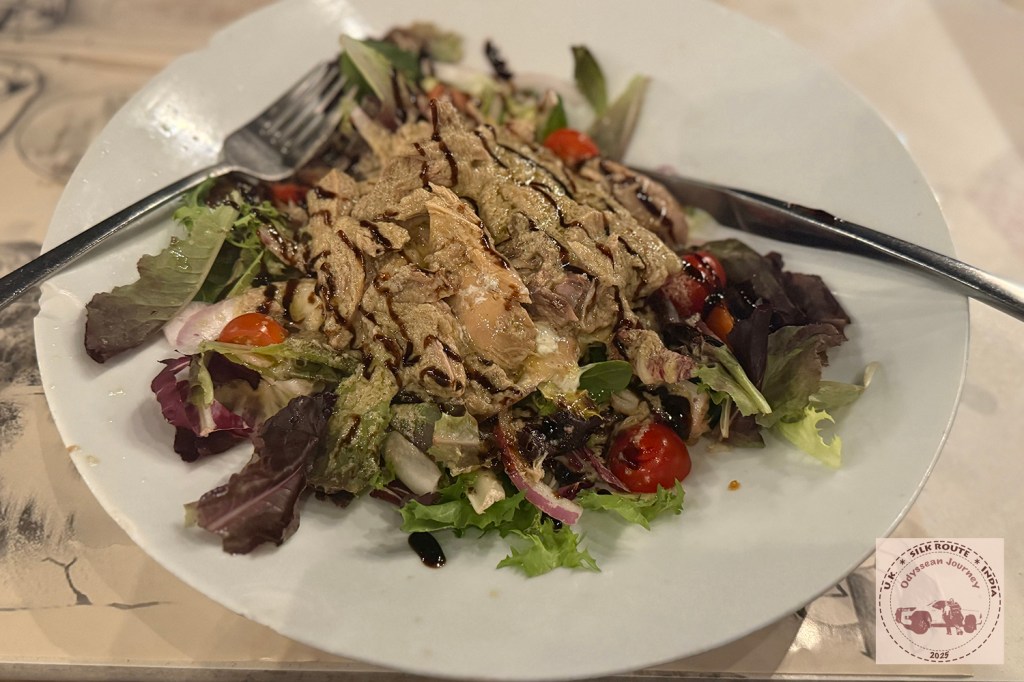
    Tender Lamb Dish
    Morning view from our Roof Tent

    Day 3 -Our day to see the magic of Toledo.

    For centuries, Toledo was one of Spain’s great cultural and spiritual centres. It was once the capital of Visigothic Spain, later an important city under Muslim rule, and then a powerful Christian city after its reconquest by Alfonso VI in 1085. Its history is often described through the phrase the city of three cultures — Christian, Muslim and Jewish — because all three communities shaped its architecture, learning, craftsmanship and identity.

    That layered past is visible everywhere. Churches stand beside former mosques and synagogues. Horseshoe arches, Gothic towers, Mudéjar brickwork and Renaissance façades appear within minutes of each other.

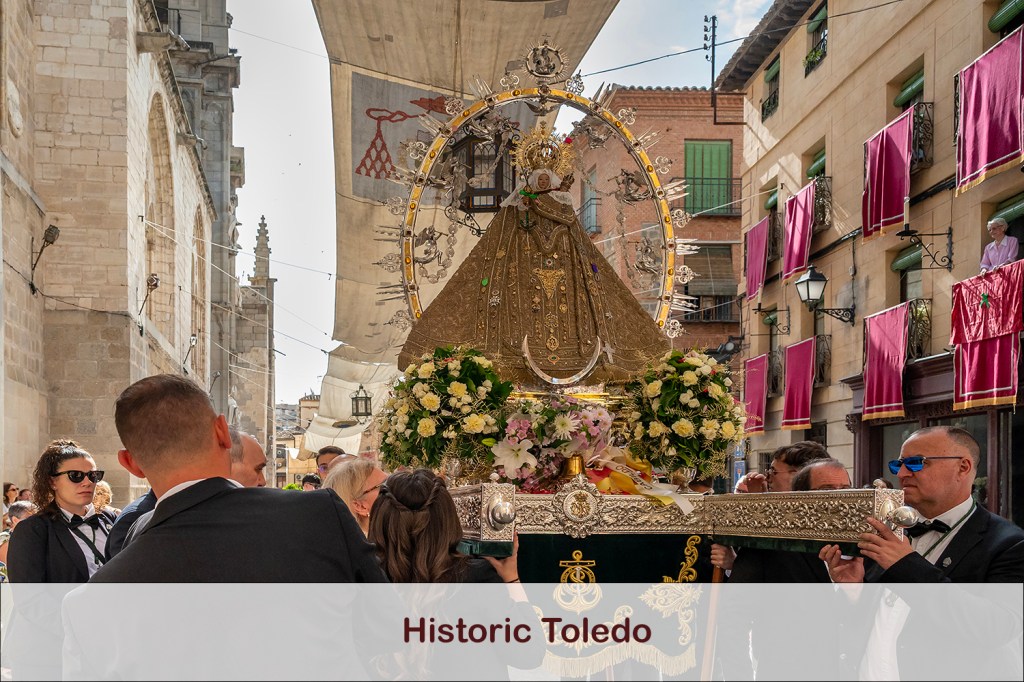
    La Virgen de la Esperanza

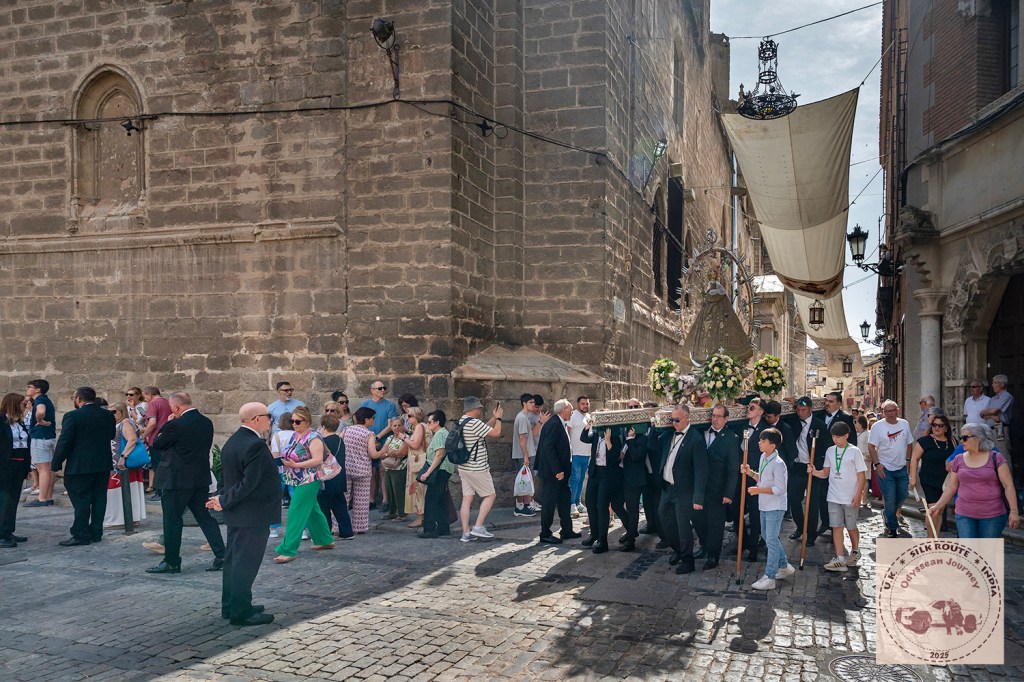
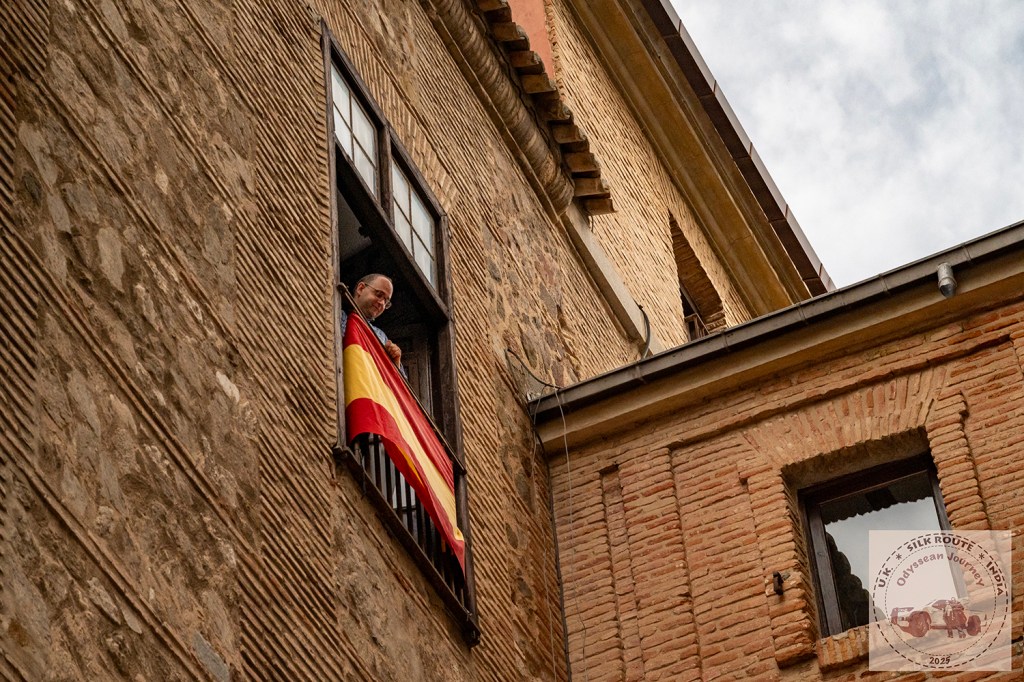
    One of the most moving ways to experience Toledo is through one of its religious processions. During our visit, we witnessed the procession of La Virgen de la Esperanza — the Virgin of Hope — being carried through the old streets with great devotion and ceremony.

    What struck me most was the atmosphere around the procession. People watched from windows. Others stood proudly in the street. The bearers moved with concentration and dignity. The old stones of Toledo seemed to become part of the ritual itself. This event felt like a living expression of faith and community.

    Reveller at the procession of La Virgen de la Esperanza

    Toledo is also closely associated with the great feast of Corpus Christi, one of the most important celebrations in the city’s calendar. Corpus Christi, meaning the “Body of Christ”, is a Catholic festival honouring the Eucharist. In Toledo, it has been celebrated with exceptional splendour for centuries. The streets are decorated with awnings, flowers, banners and tapestries, and the great procession moves through the historic centre with solemnity and grandeur.

    Seeing La Virgen de la Esperanza in procession helped us understand Toledo in a way that monuments alone could not. The city’s history is magnificent, of course — its cathedral, synagogues, monasteries, bridges and viewpoints are unforgettable. But Toledo’s true magic lies in the way the past continues to breathe through everyday life.

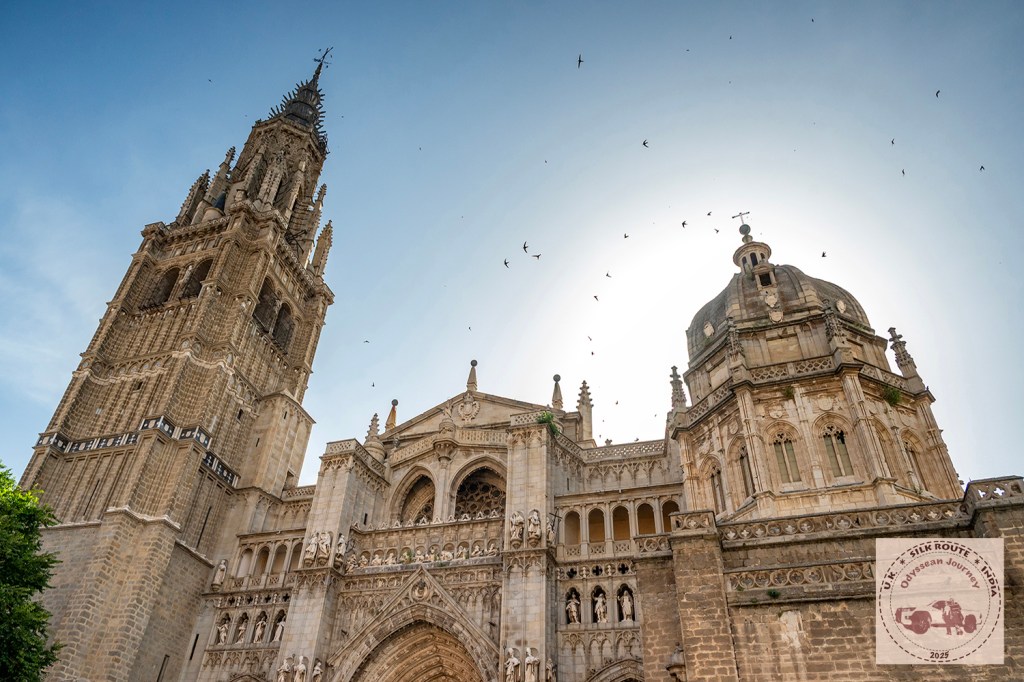
    Toledo Cathedral

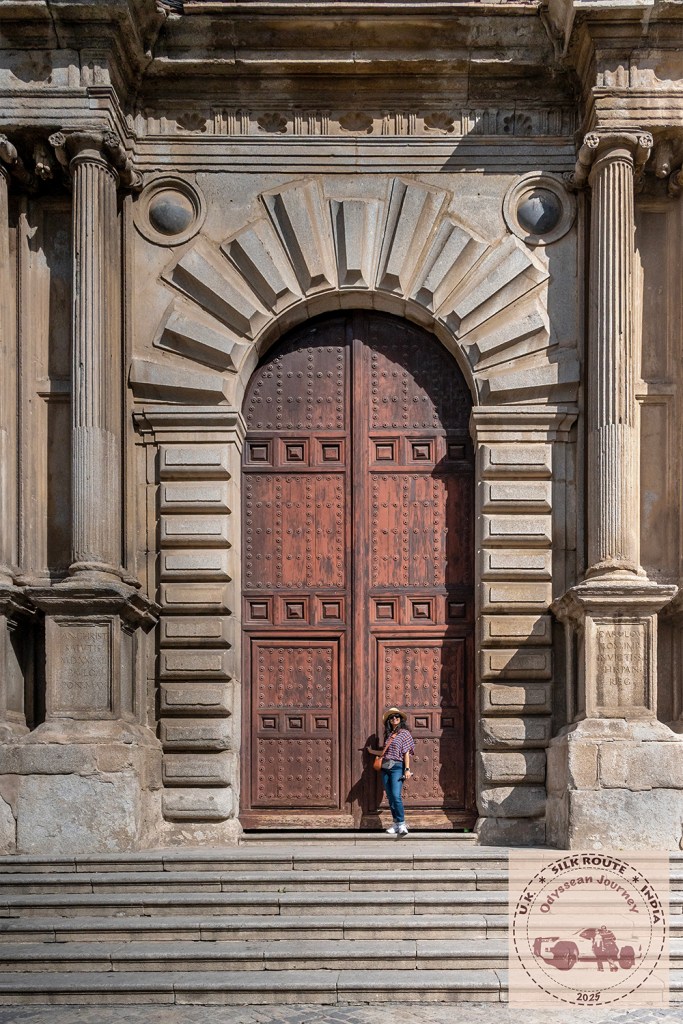
    Without much of a preparation, I was happy with some of the “Street Shots”. My Nikon Z6 with 24-120mm Z f/4 lens delivered, once again.

    Street Life: Nikon Z6 with NIKKOR Z 24–120mm f/4 S lens. Exposure: 1/2000 sec at f/7.1, ISO 2000.

  • Odyssean Journey – It has Officially Started

    Odyssean Journey – It has Officially Started

    08.06.2025

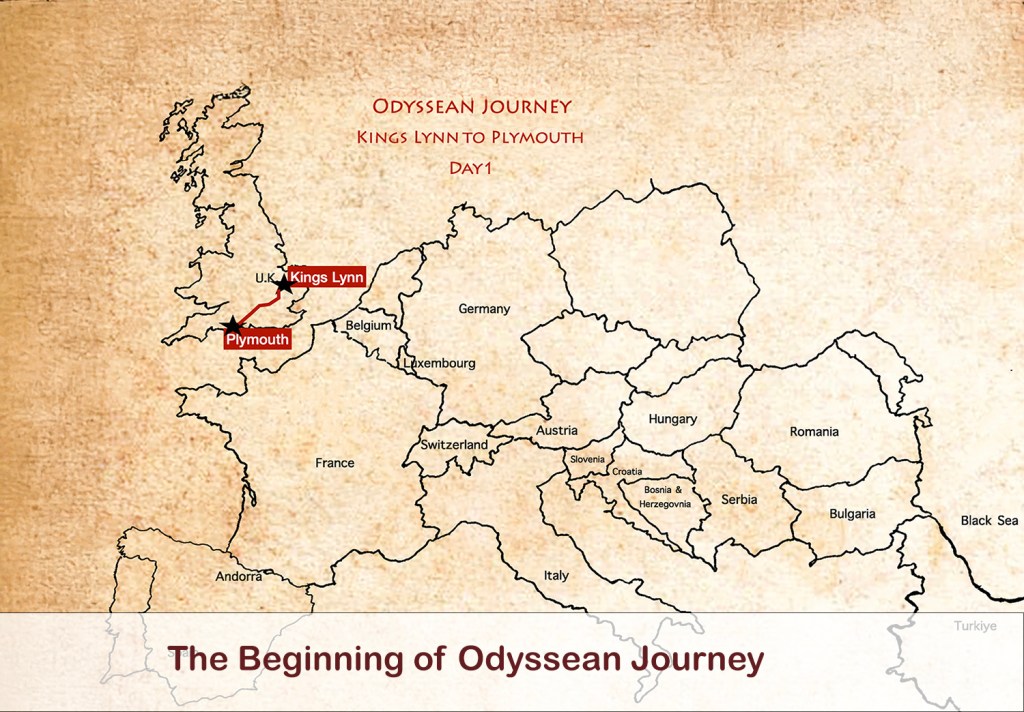
    @ 7:40 we waved goodbye to our daughter and son, and the three of us, Sanjukta, Prabir & Chetak started for Plymouth. Today’ s journey is of 321 miles and we had planned it over 6 hours of driving with an hour’s break

    Watch us as we start our venture….

    Odyssean Journey from King’s Lynn to Toledo

  • Preparing for Odyssean Journey

    Preparing for Odyssean Journey

    17 May, 2025

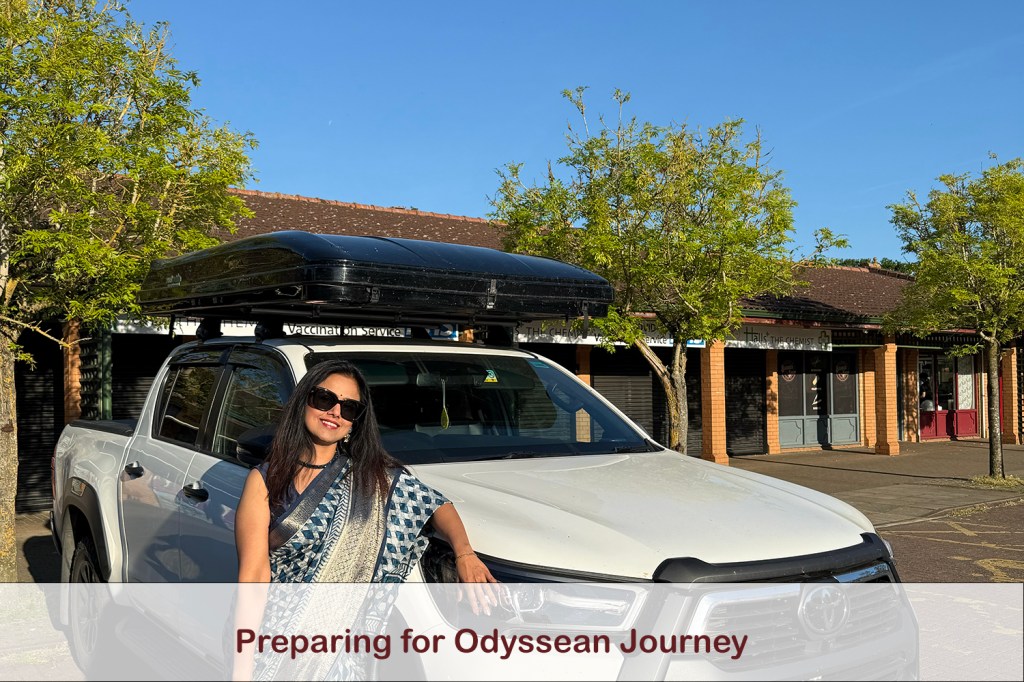
    3 weeks to go and then we would be on the road for more than 3 months.

    Sometimes we feel that we could do with a project manager. Examining the route and re-routing is a continuous and time consuming process, that is taking a lot of our time and effort. Wish the world were a more peaceful place!

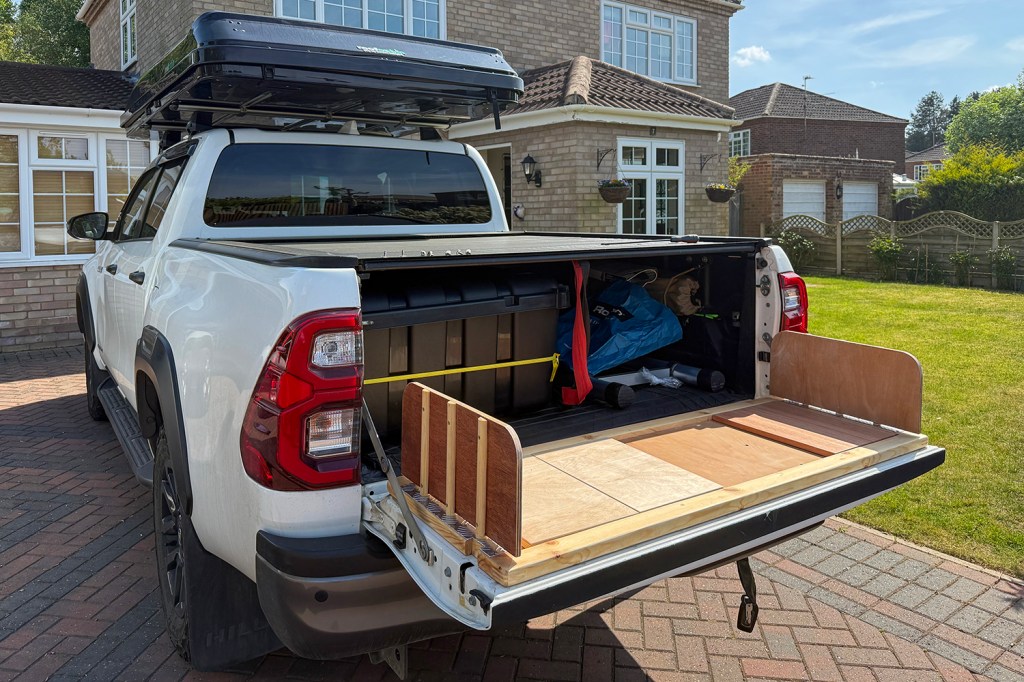
    Meanwhile Chetak is getting ready too. Thanks to Steve Summers for his skilful addition of a “kitchen-top” at the back of Chetak’s tailgate. It would be ideal to cook something quickly before hitting the road during our Odyssean Journey.
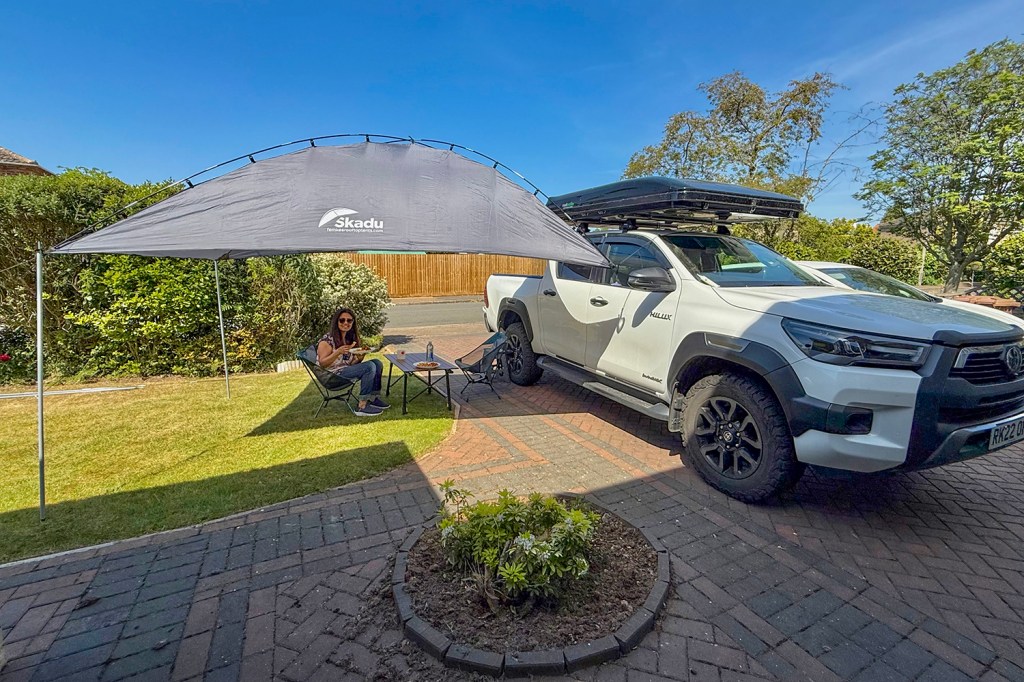
    We decided to have a go at a quick meal and sat comfortably under the shade of the roof tent. Initially it felt like a lot of work, but we managed to fit the poles and guy ropes perfectly despite a strong wind in 10 minutes! Not bad. They say practice makes perfect and I’m sure we will have many such sessions and will aim to get the set-up ready in under 5 minutes. Let’s see.

    The integral part of our preparation included getting to know the ins and outs of Chetak. We are extremely thankful to Ian Leys who gave up his Saturday morning to give us “hands on” lesson on how and what to do if things go wrong!

    As Chatak started to gear up, our excitement grew proportionately.

    Before we knew, Chetak started becoming an intergral part of our family.

    And then we had to do a “stage rehearsal” – we went out on a short weekend camping experience with Steve and Michelle.

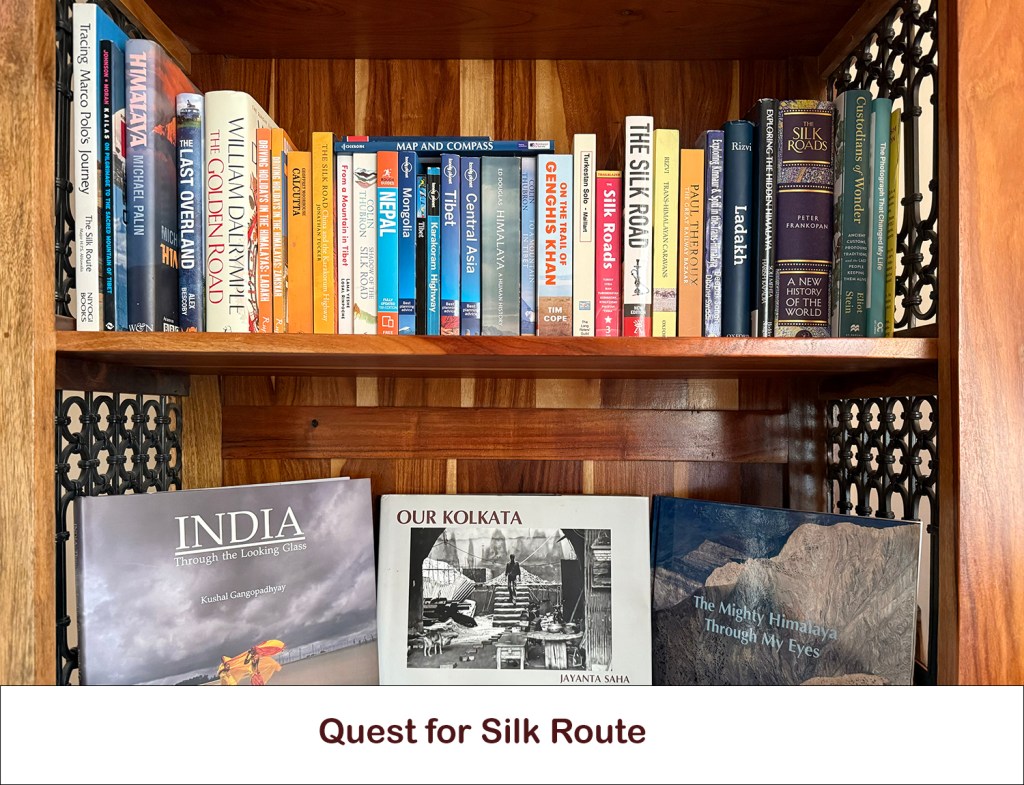
  • Quest for Silk Route

    Quest for Silk Route

    Ancient Silk Routes traversed across the length and breadth of India. Several corridors ran through the Tibetan plateau, through difficult Himalayan terrains to the plains of the mighty Ganga river. Our love for the Himalayan travel, and love for photography have propelled us to visit several places in India in pursuit of “Silk”.

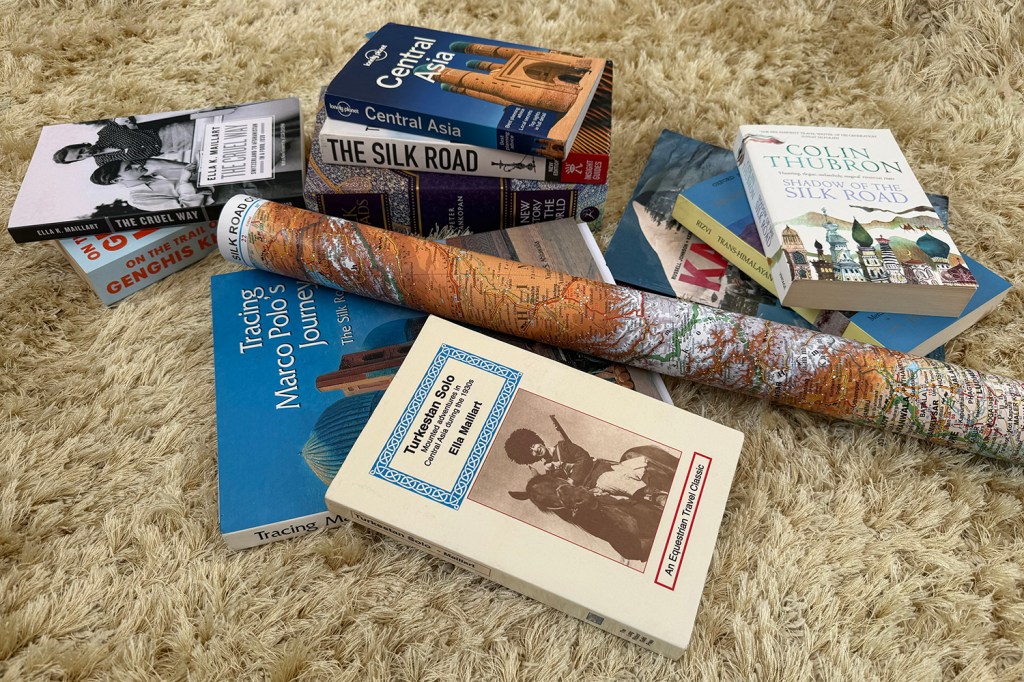
    Whilst not “On The Road”, we have spent endless hours reading about the fascinating journey of silk- from the far east- China to the west – weaving cultures and traditions.

    I would like to share a snapshot of stories behind our dream – the dream that sowed the seeds of trying something extraordinary- the inspirations that drove us to undertake the Odyssean journey.
    Our journey along the Indian section of the historic Silk Route had started several years back. We traced the journey of silk from the cocoons to finished silk products that are sold in markets of India… a fascinating journey.
    https://www.prabirmitra.co.uk/handmade-silk

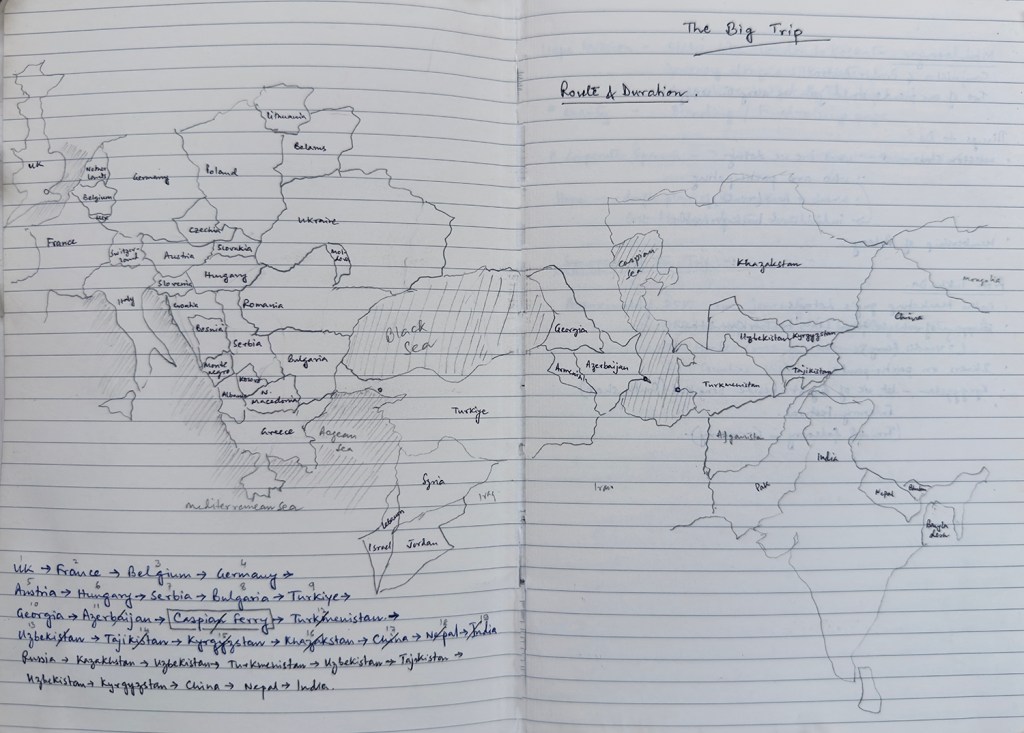
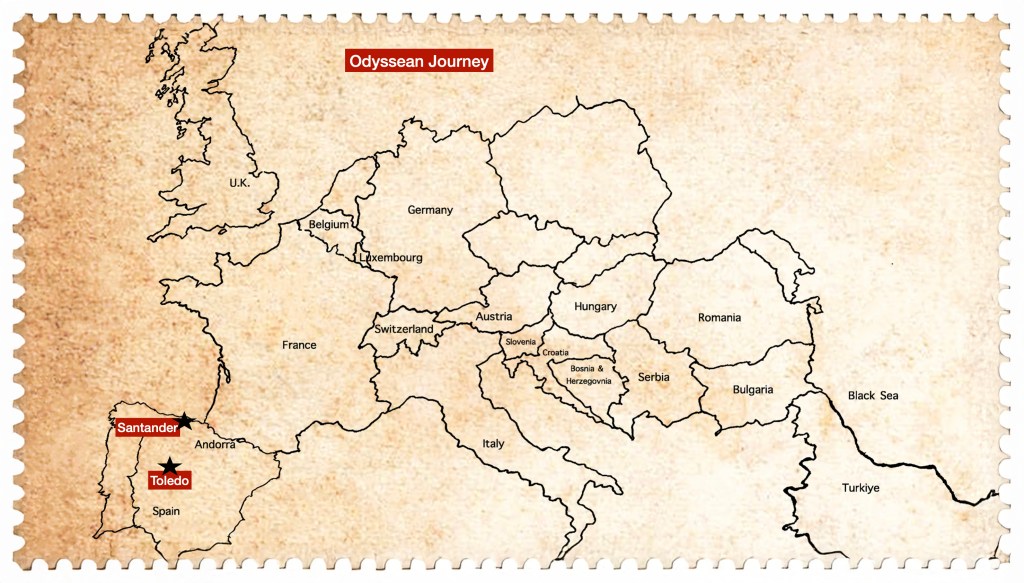
    I began to map out the logistics of our journey, starting with a hand-drawn route map and then building an itinerary around it. I knew, of course, that sticking rigidly to the plan would be difficult, but it gave us a broad framework to work from. Even before we set off, the journey already felt like a countdown: my leave from work was limited to four months. A generous amount of time, certainly, but not vast when measured against the scale of the road ahead.
    Hand Drawn Route Map