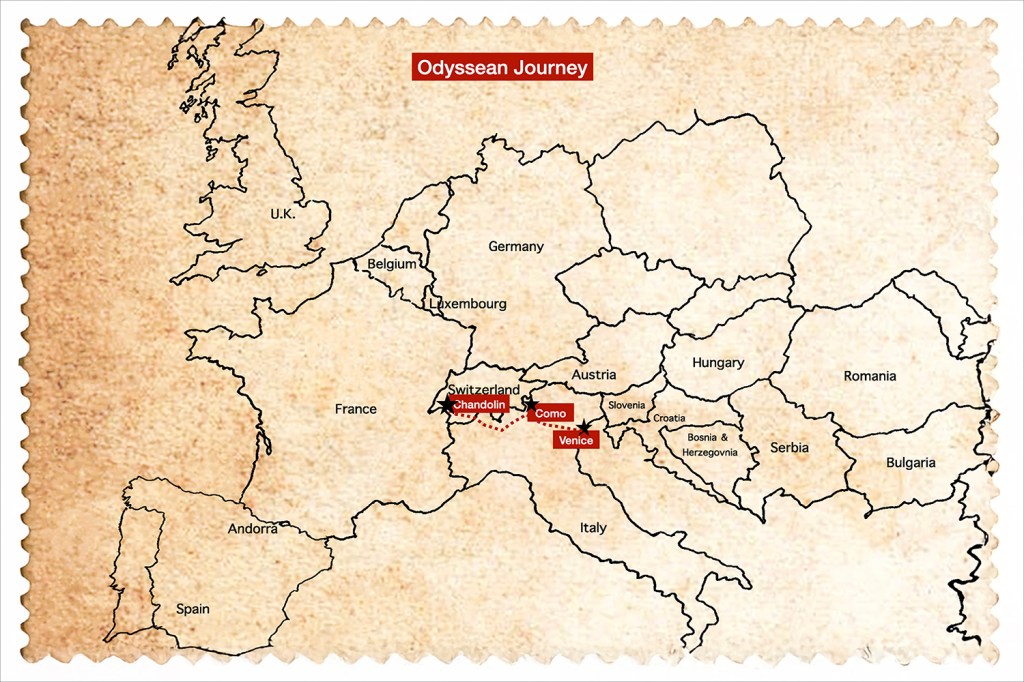
Category: Europe

  • Venice: Silk, Storms & Marco Polo

    Venice: Silk, Storms & Marco Polo

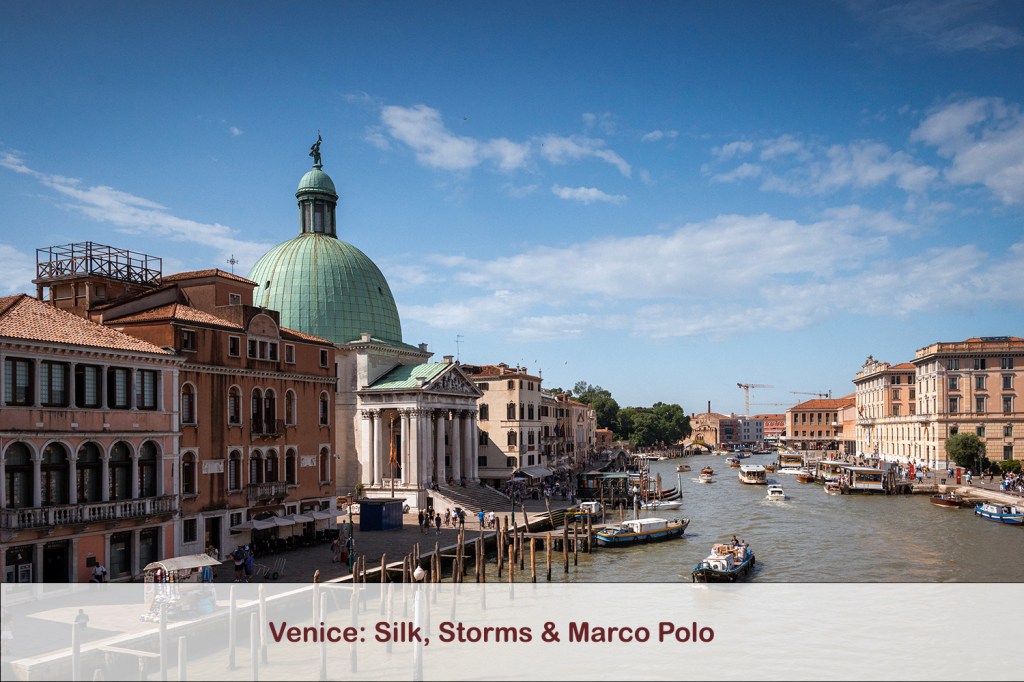
    Overlanding to Venice

    By the time Odyssean Journey rolled into Venice, we had crossed mountains, borders and enough motorway service stations to develop a complicated relationship with bad coffee.

    Then suddenly — no roads.

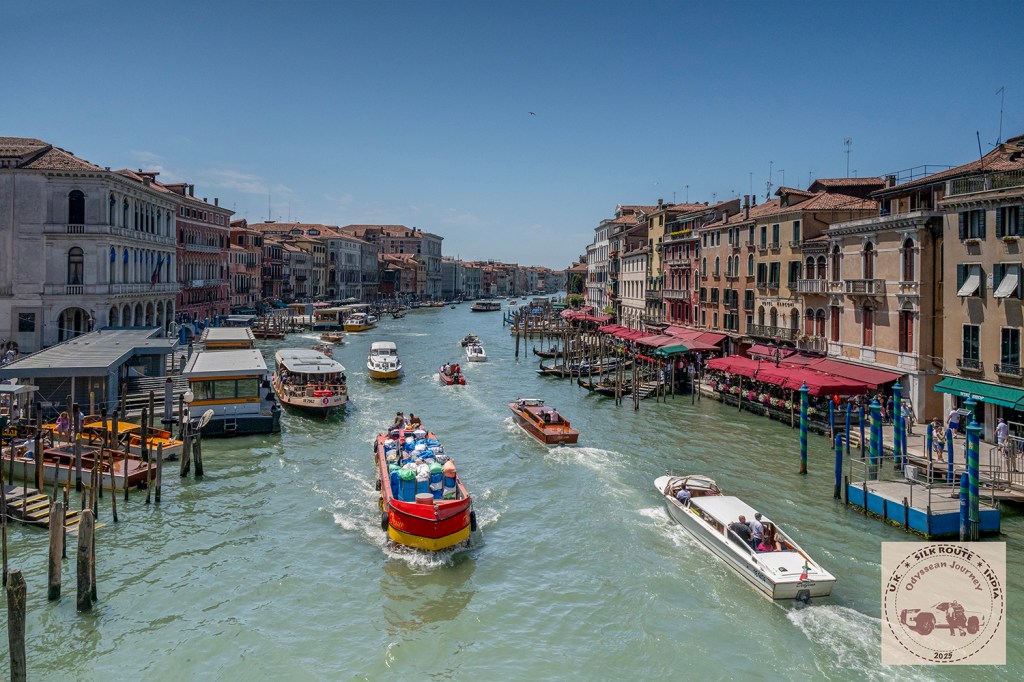
    Just water, narrow lanes, gondolas and a city that seems permanently caught between theatre and chaos.

    The first thing we learnt was that Venice rewards wandering. The best moments arrived when we stopped trying to “cover” the city and simply let it absorb us.

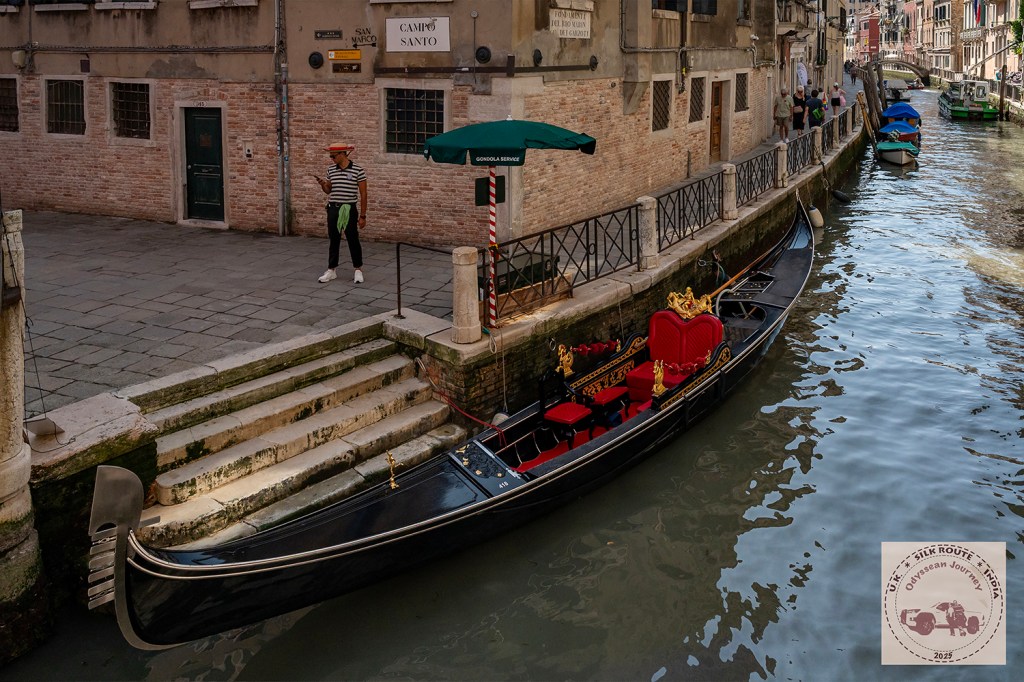
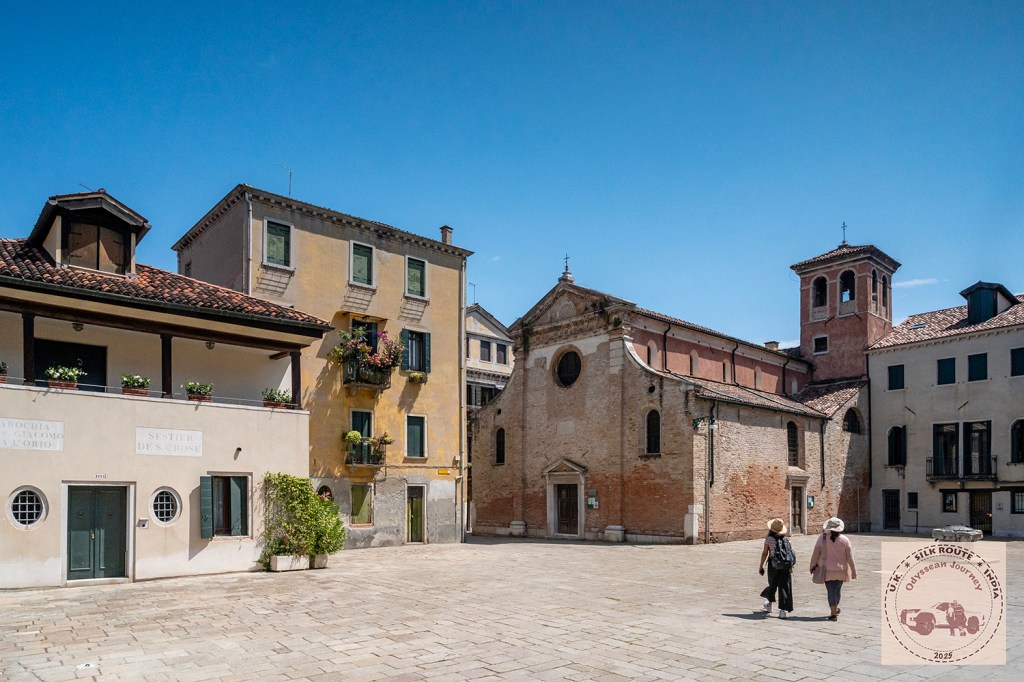
    A quiet canal… a lonely gondola…a square so silent it felt abandoned by time.
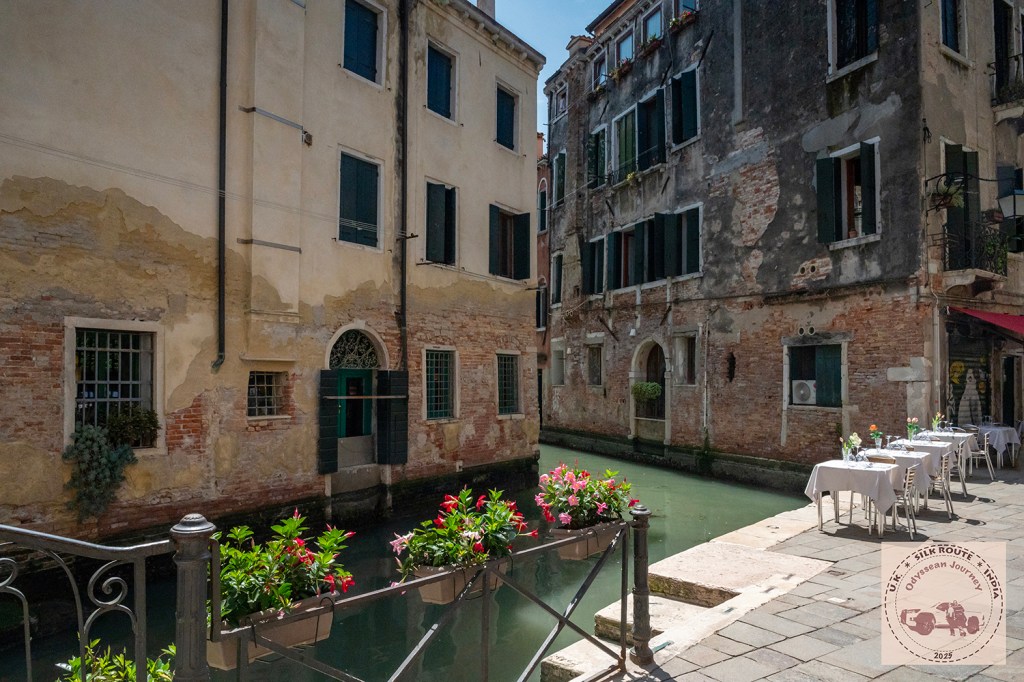
    A quiet canal…
    A lonely gondola…
    An empty square…

    Soon the city became sensory overload in the best possible way.

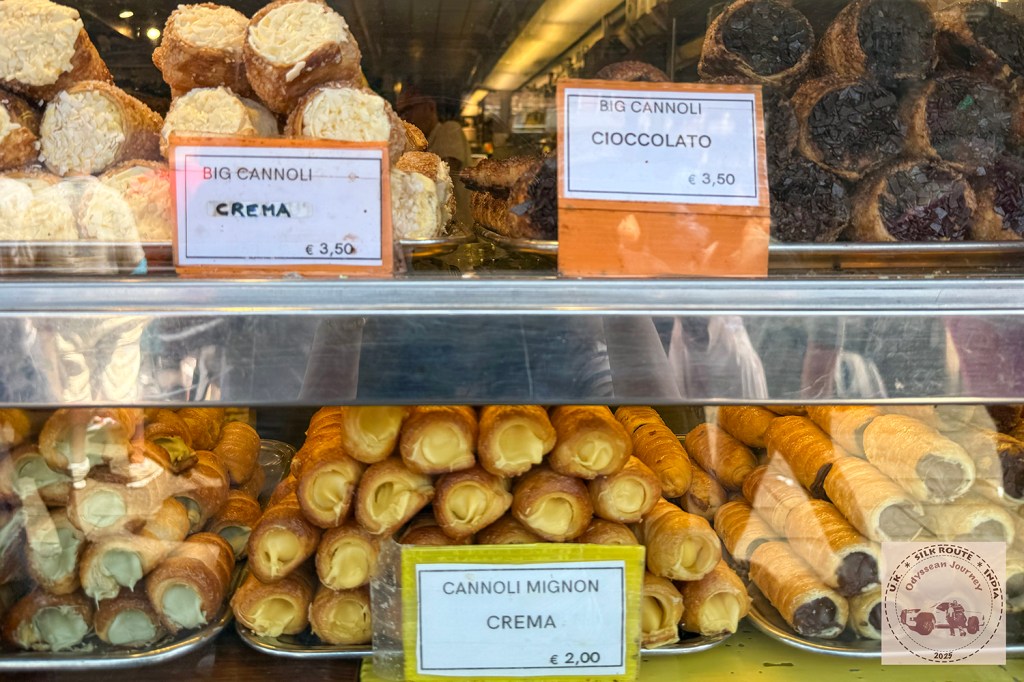
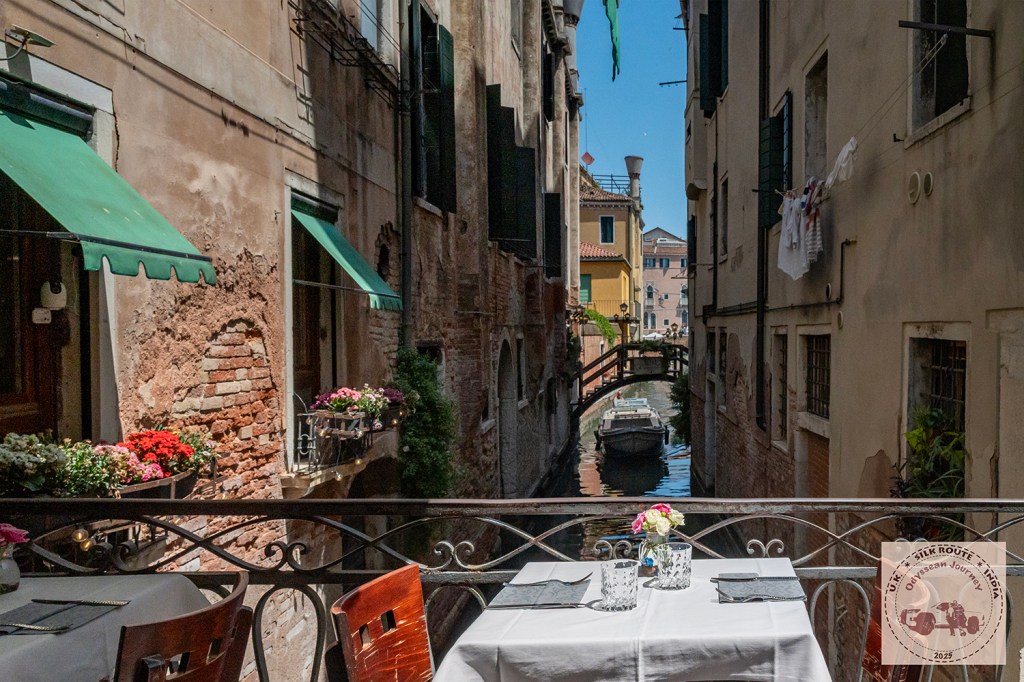
    Markets overflowed with colour. Tiny bakeries displayed rows of impossibly tempting pastries. Canal-side restaurants somehow managed to make even tourists look cinematic.

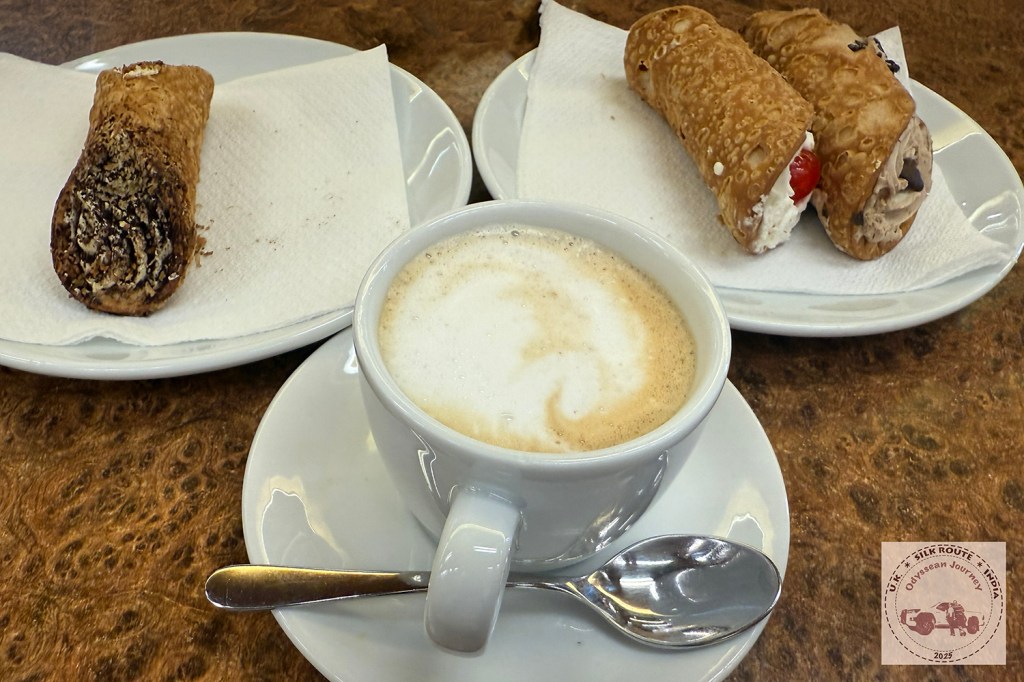
    We discovered quickly that Venice is not a city to rush through. It demands pauses. Espresso pauses. Cannoli pauses. “Let’s just sit here for ten minutes” pauses that quietly become an hour.
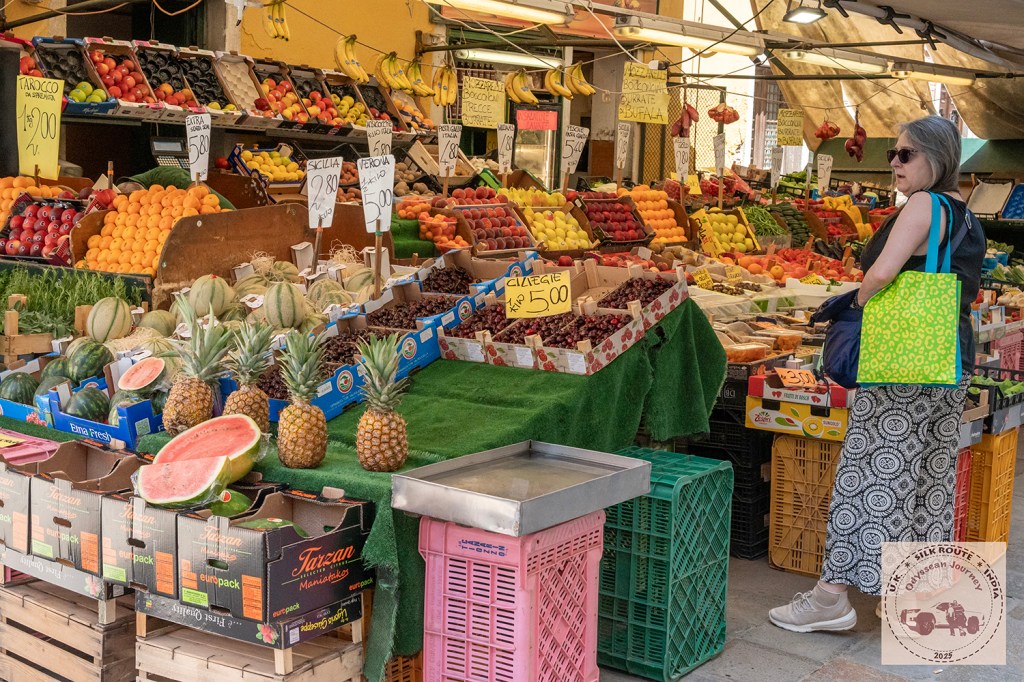
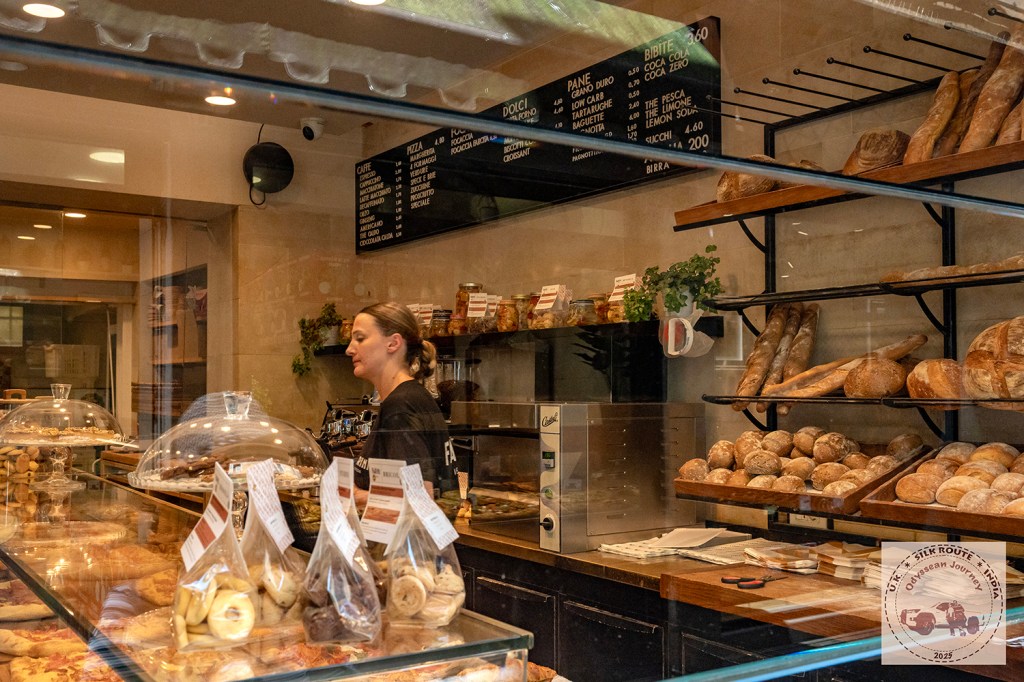
    Fruit market overflowing with colours
    Tempting bakeries and Espresso Stops
    Lapse of time

    But for us, Venice was never only about canals and cafés.

    Odyssean Journey had followed the echoes of the Silk Roads across Europe, and nowhere in the west felt more connected to that history than Venice.

    For centuries, Venetian merchants traded silk, spices and stories between East and West. And hidden behind an unassuming doorway, we found that legacy still alive.

    At Luigi Bevilacqua, ancient wooden looms continue weaving velvet and silk by hand, exactly as they have for generations.

    The room creaked with history. Watching them felt less like visiting a workshop and more like stepping into another century.
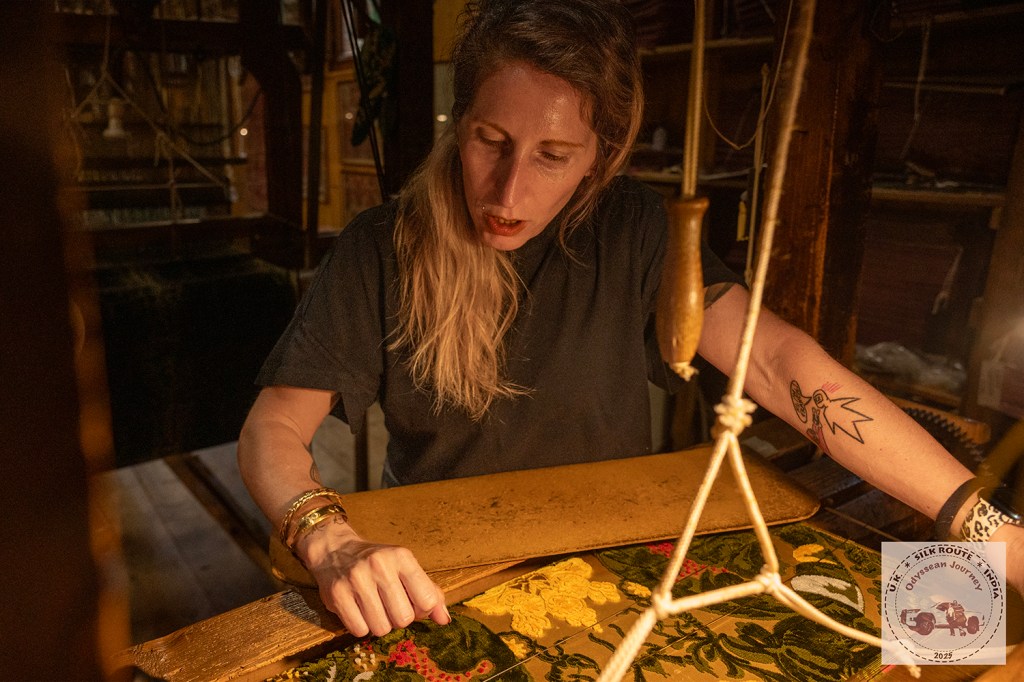
    Hand weaving of Silk at Luigi Bevilacqua Tessitura
    Hand Woven Venetian Silk

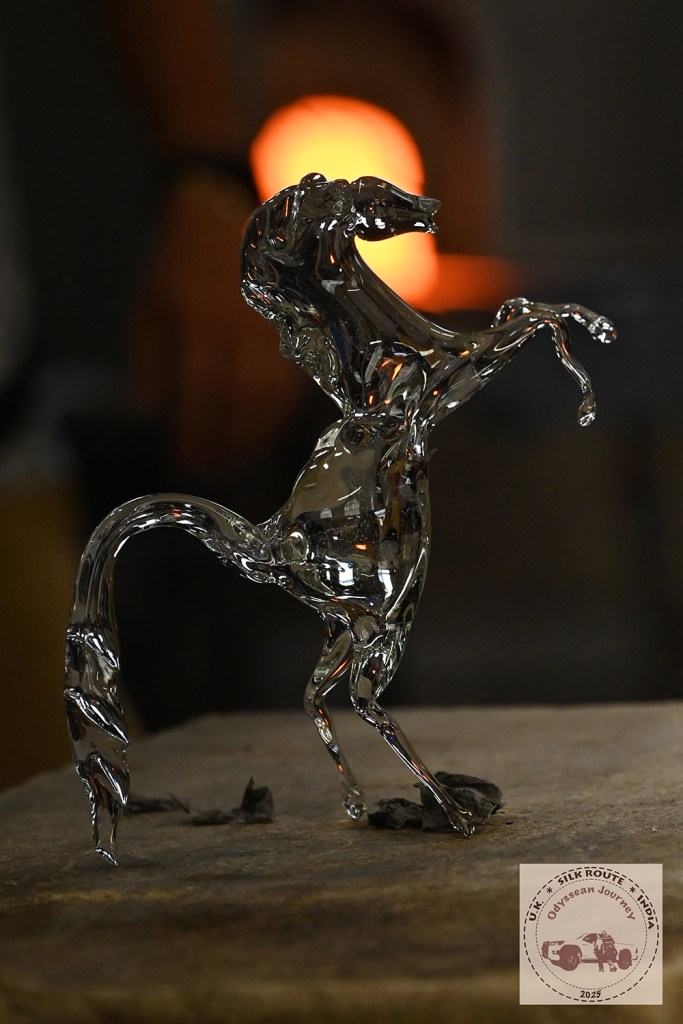
    From the soft shimmer of silk, Venice led us to another ancient craft of light and patience — Murano glass- which felt like Venice captured in fire and colour.
    Watching the glassmakers shape molten glass, we saw patience, skill and danger working together.
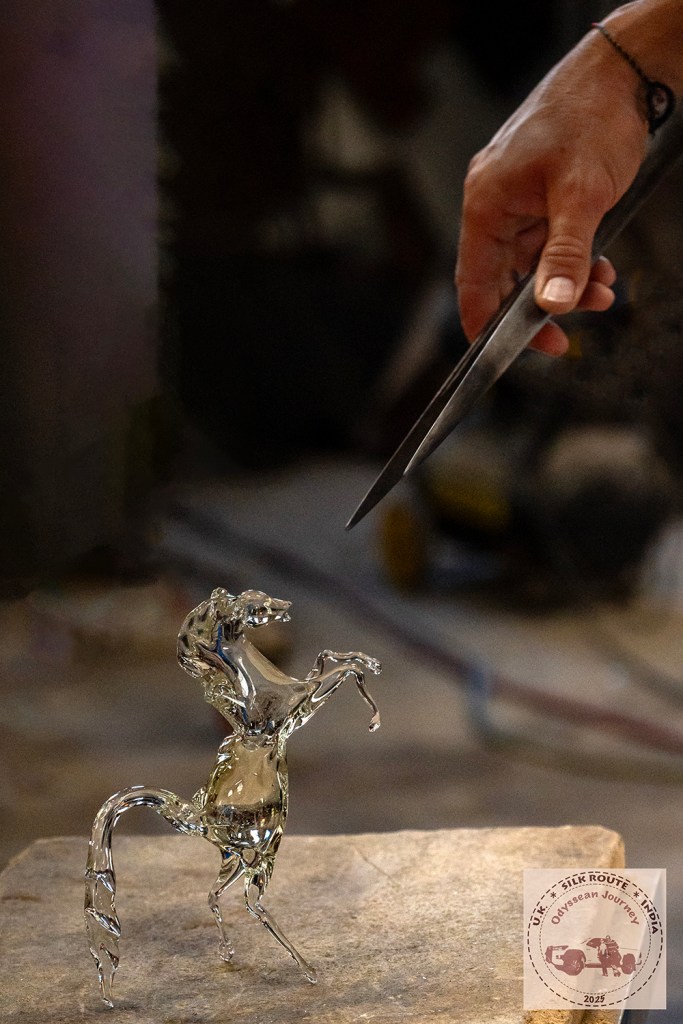

    And then, inevitably, there was Marco Polo.

    Venice still carries his shadow everywhere. Centuries ago he departed this watery republic and travelled eastward along the Silk Roads toward Asia. We had arrived from the opposite direction, carrying our own modern expedition across continents in our Toyota Hilux, Chetak.
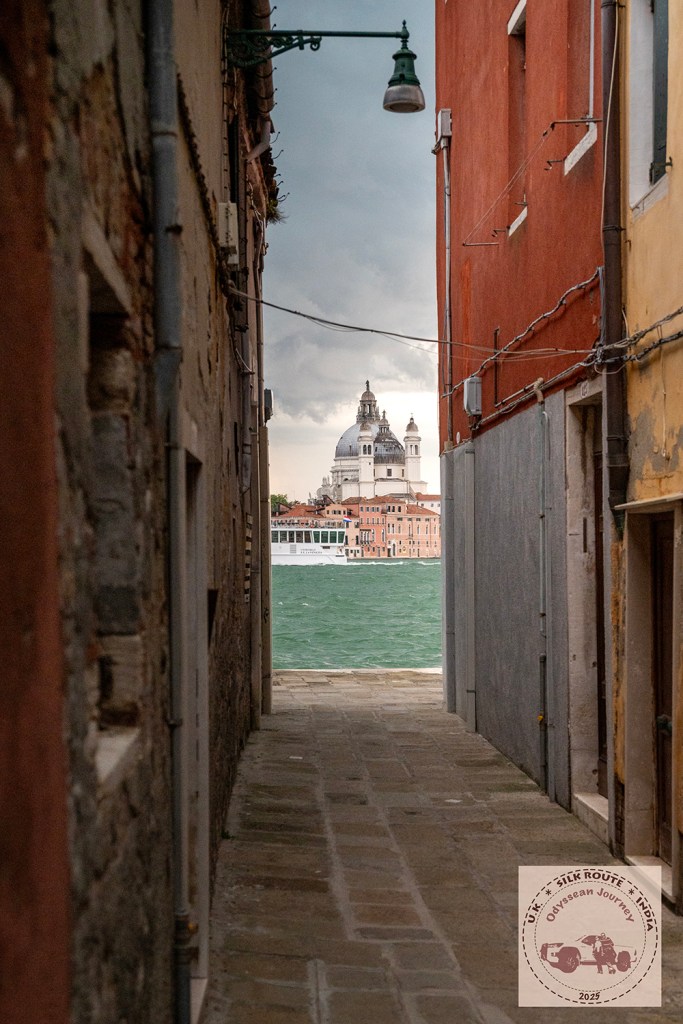
    Marco Polo House – not Marco Polo’s residence!

    A casual search about Marco Polo’s residence brought us to a narrow alleyway and local knowledge helped us rectify our mistake. This was a B&B with that name but not “His Residence” !!

    Marco Polo’s original Venetian residence no longer stands. It was in the Corte del Milion, near San Giovanni Crisostomo. The old Polo family house was destroyed by fire in 1597, but Venice keeps its memory quietly — in a courtyard, an old arch, and an opera house standing where one of history’s greatest journeys once came home.
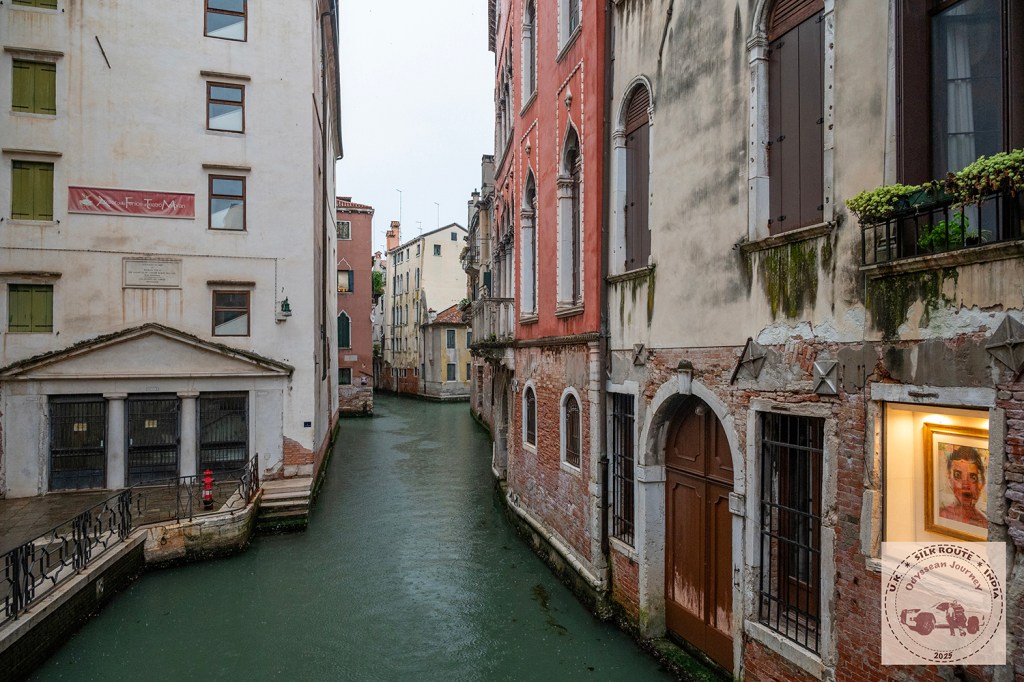
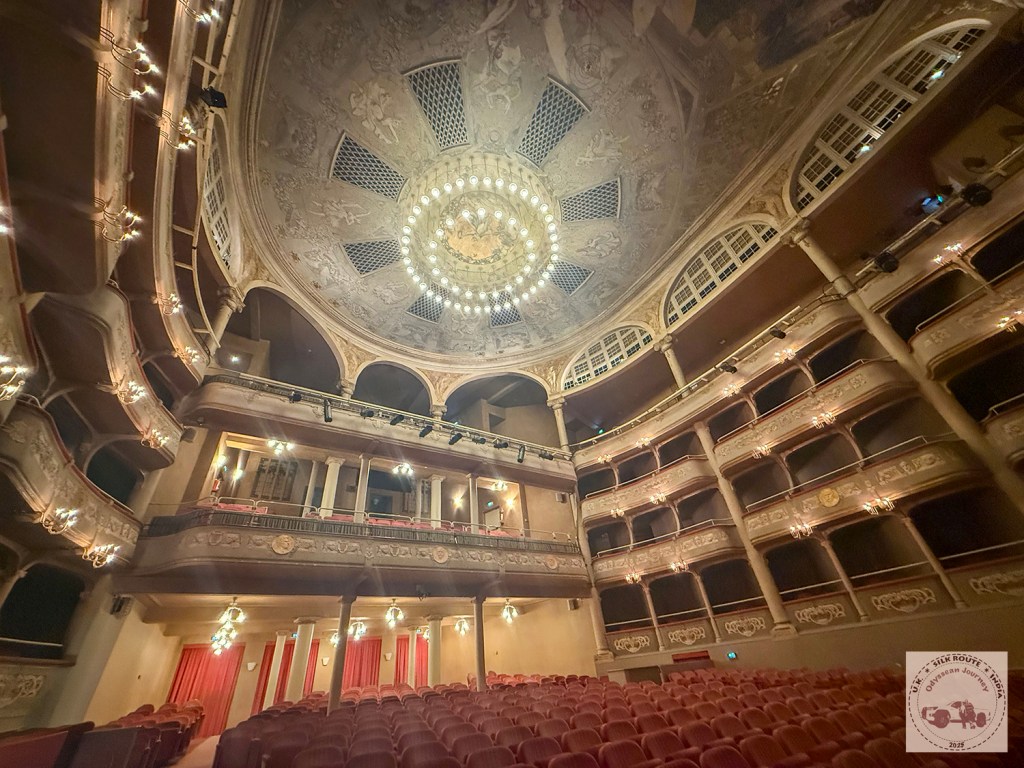
    Opera House at the site of Marco Polo’s residence.

    Shaped by its history, Venice never stops to amuse its visitors.
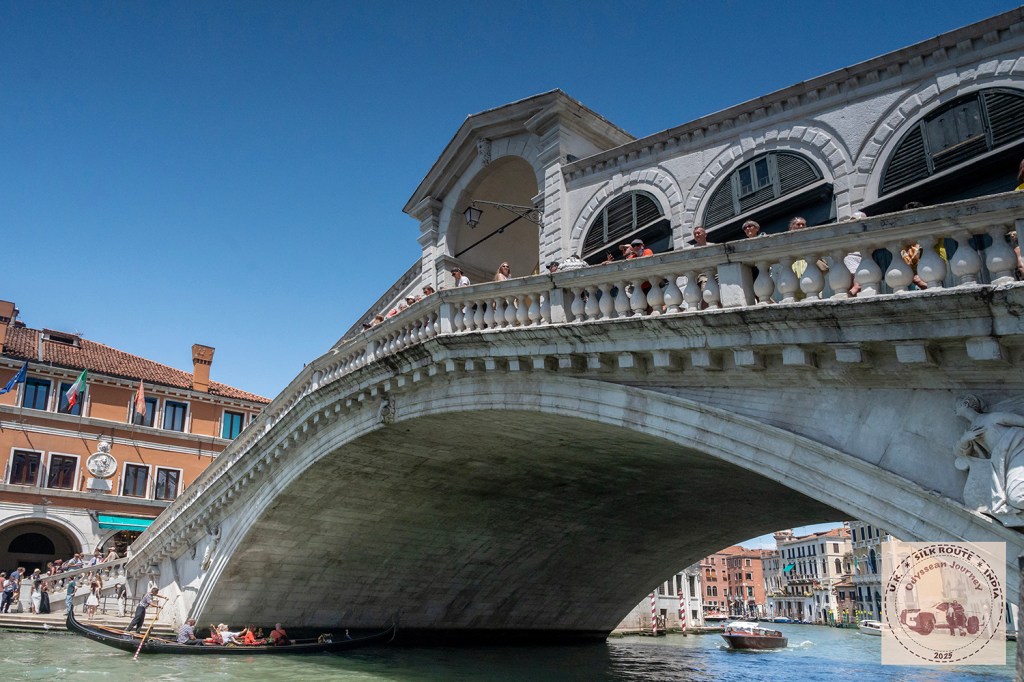
    A perfect blend of touristy and real Venice.
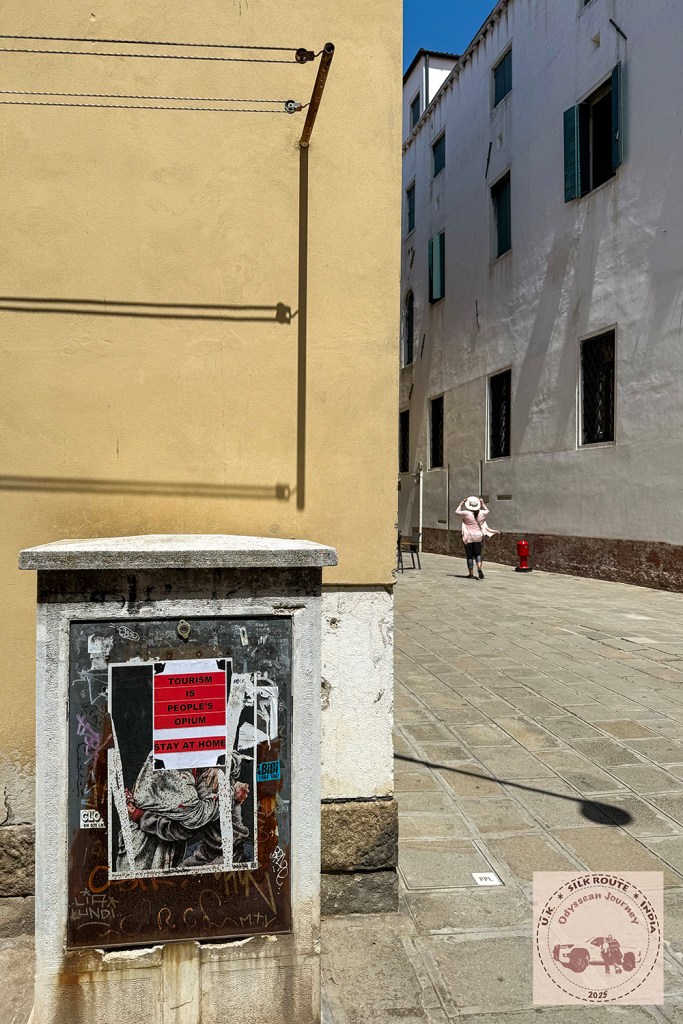
    Warning by the locals against “Over Tourism”

    This warning poster did hit me hard! And then the weather changed.

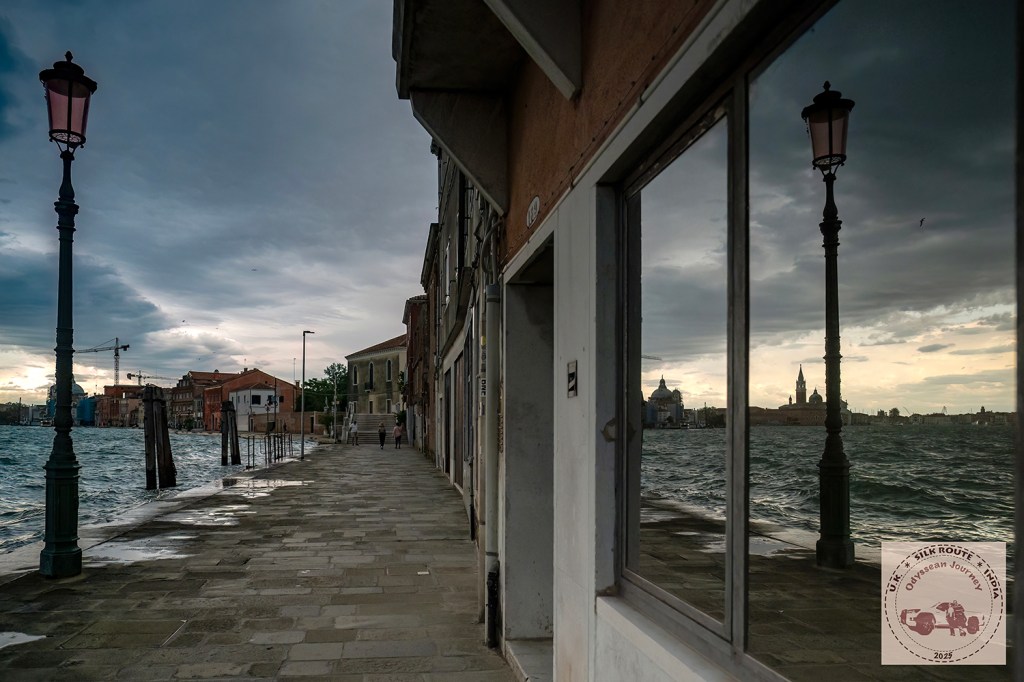
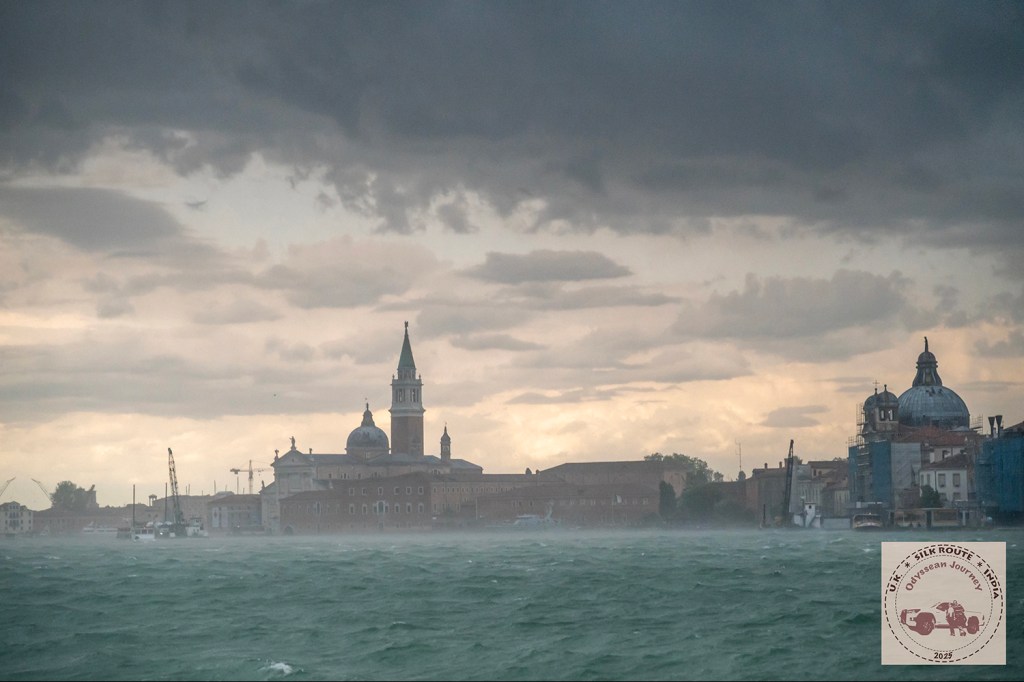
    The bright Mediterranean light disappeared behind bruised clouds. The lagoon darkened. Wind whipped across the water and tourists vanished beneath umbrellas with remarkable speed.

    Venice somehow became even more beautiful.

    Rain polished the stones silver. Church domes faded into mist. Gondolas rocked gently against empty moorings as thunder rolled somewhere beyond the lagoon.

    The city felt eternal.
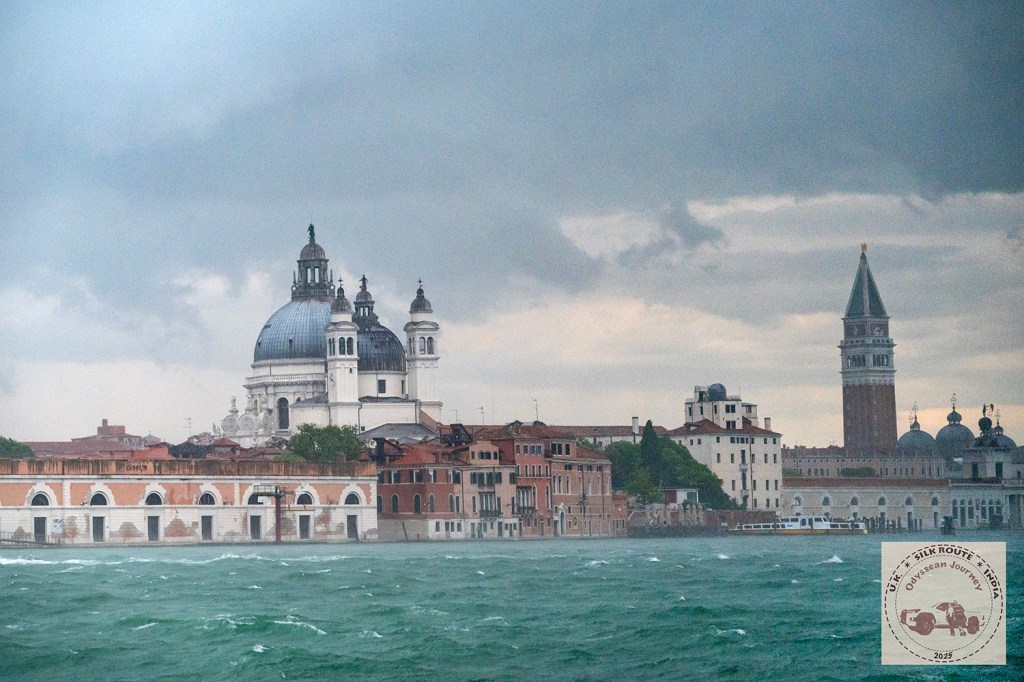
    We survived that storm, like Venice did innumerable times.

    It was high time to return behind the wheels of Chetak for the next chapter of our Odyssean Journey.
  • Chandolin: In the Footsteps of Ella Maillart

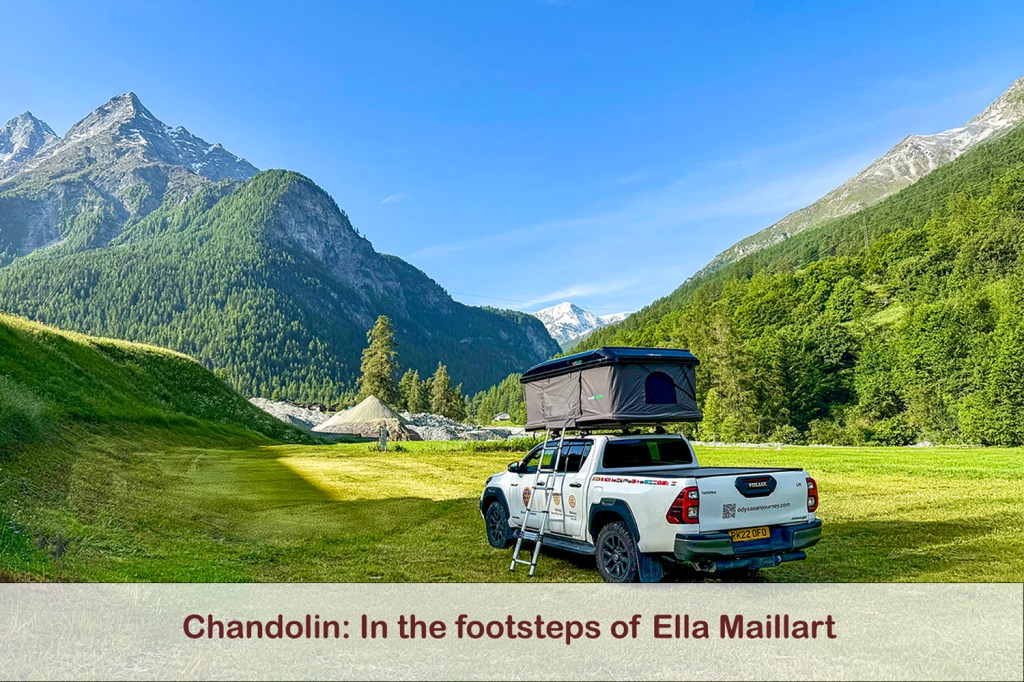
    Chandolin: In the Footsteps of Ella Maillart

    Overlanding to Chandolin

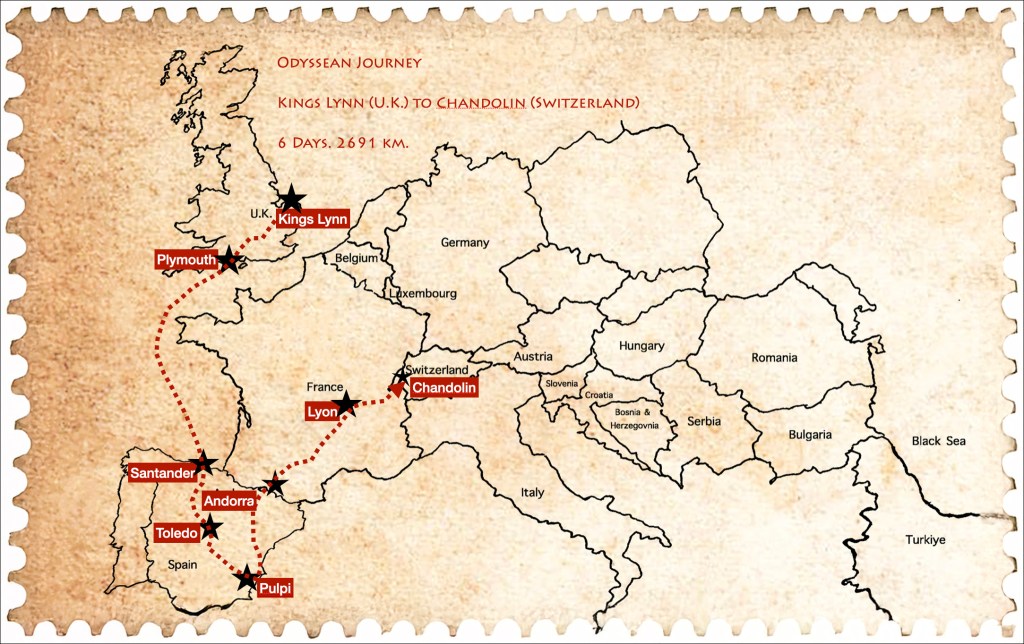
    Day 6 of Odyssean Journey brought us from Lyon to the Camping de Molignon, in the district of Anniviers, Switzerland. We drove along A40 and then on E62 by the side of the beautiful Lake Geneva for a total of 335 km for just over 3.5 hours.

    There are places we visit because they are beautiful. Then there are places we visit because they mean something. Chandolin was both.

    High in the Swiss Alps, surrounded by pine forests, wooden chalets, church bells and snow-marked peaks, this little village could easily have been just a scenic stop on our Odyssean Journey from the UK to Kolkata. But for us, Chandolin had a deeper pull. We had come here because of Ella Maillart.

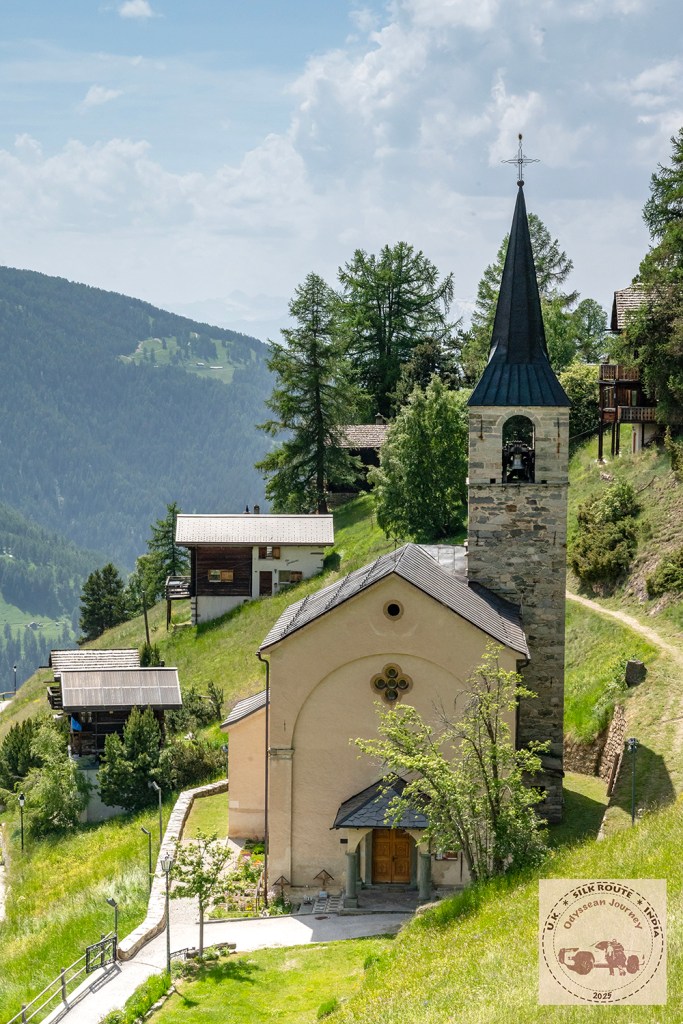
    Chandolin, a quiet Alpine village that became one of the emotional halts of our journey.

    Ella Maillart was one of the great traveller-writers of the 20th century — Swiss, adventurous, fiercely independent, and far ahead of her time. She had been an Olympic sailor, a skier, a photographer, and above all, a woman who refused to live within the limits expected of her. Her journeys took her across Central Asia, China, Kashmir, Tibet, Nepal and India. In the 1930s, when such travel was difficult for anyone and almost unthinkable for a woman travelling alone, she crossed vast landscapes by horse, camel, car and sheer determination.

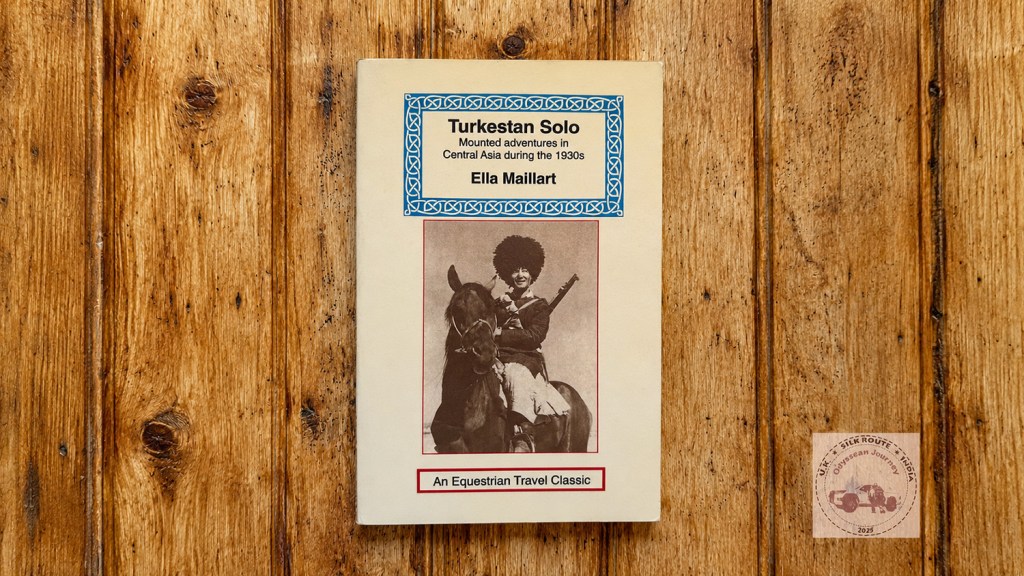
    For a journey like ours, following the spirit of the old Silk Roads, Ella Maillart felt like a quiet guide. Long before we reached Central Asia ourselves, we had read about her travels through Turkestan, about the mountains and deserts, the nomads and borderlands, the mystery of places that still pull travellers eastwards.

    Ella Maillart’s Turkestan Solo — a book that made Central Asia feel like both history and invitation.

    Switzerland was more like a pilgrimage, and not merely a detour for Odyssean Journey.
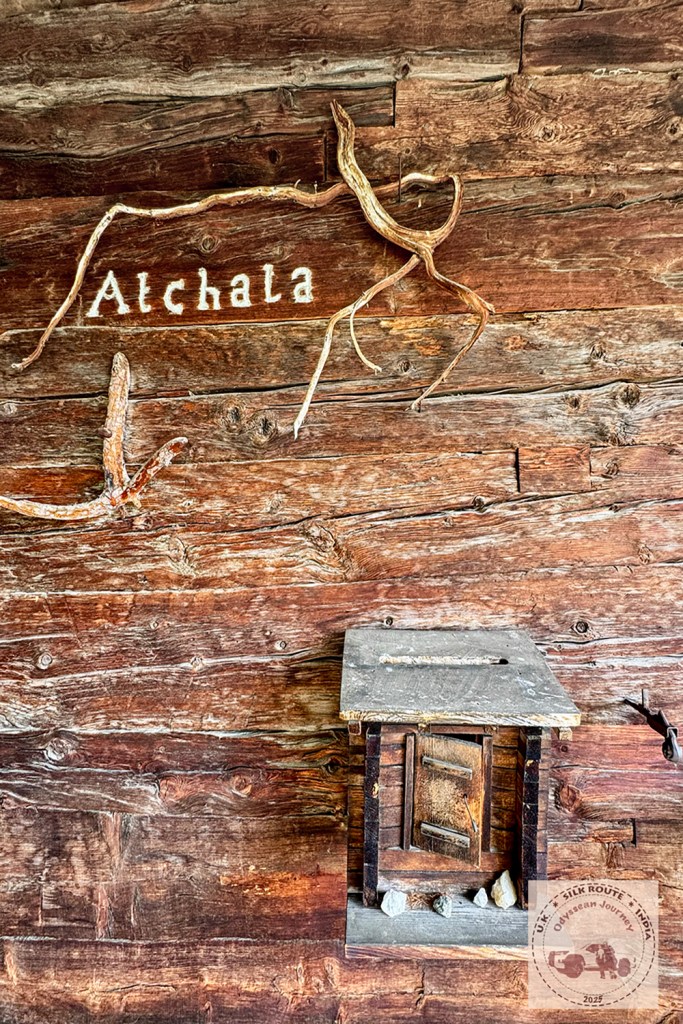
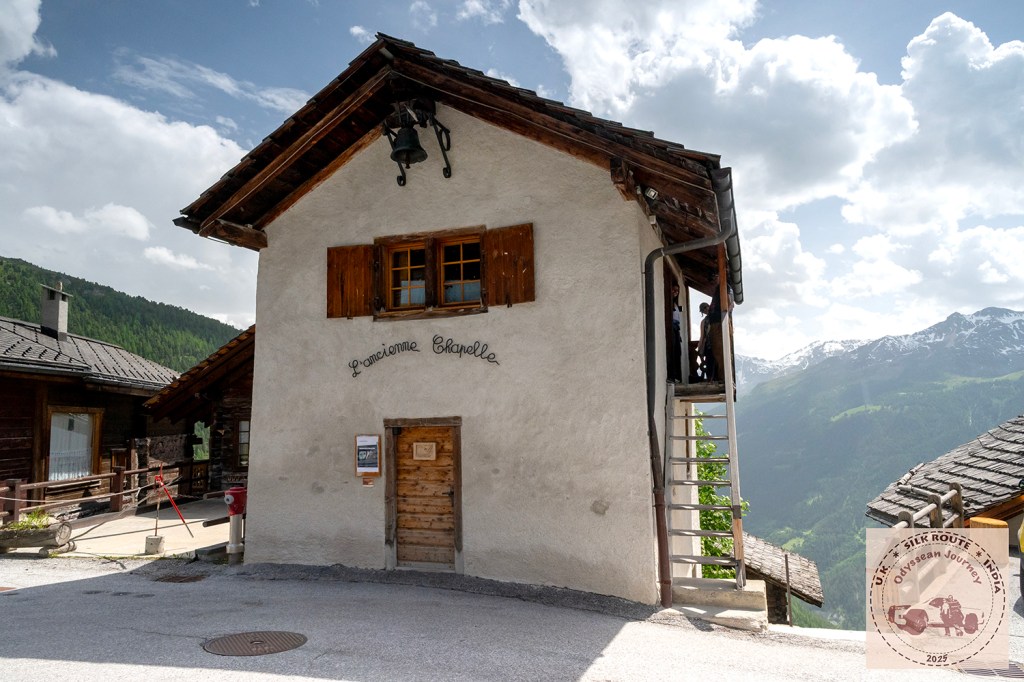
    In Chandolin, Ella built her chalet, Atchala, and spent many years returning to this mountain village after travelling across the world. Standing outside that simple wooden house, we felt something difficult to describe. It was not grand or dramatic. But it had a presence. Here was a woman who had crossed deserts, sailed seas, photographed distant cultures and written about the world with rare honesty — and yet she had chosen this quiet Alpine slope as her place of return.

    Atchala — Ella Maillart’s mountain home in Chandolin.

    The name of her house, Atchala, stayed with us. In Sanskrit, it suggests something “immovable” or “constant” — a name with a quiet sense of permanence. In Bengal, at-chala also refers to a traditional architectural style, often seen in temples and mosques, especially among the terracotta temples of West Bengal. This layered meaning made the name feel both personal and deeply rooted in history.

    Museum dedicated to Ella Maillart

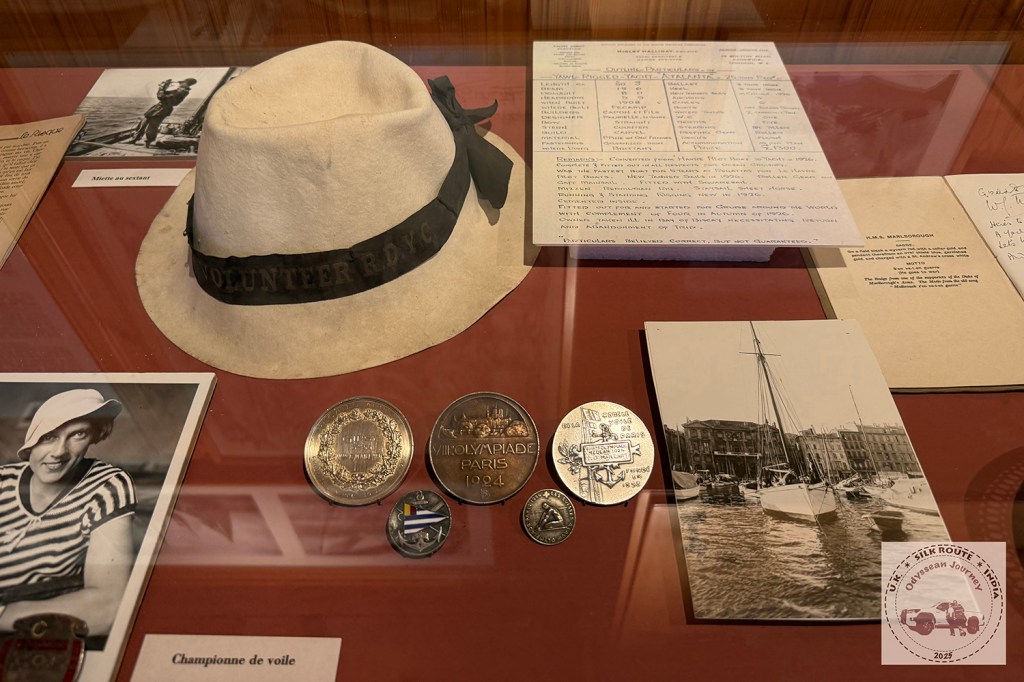
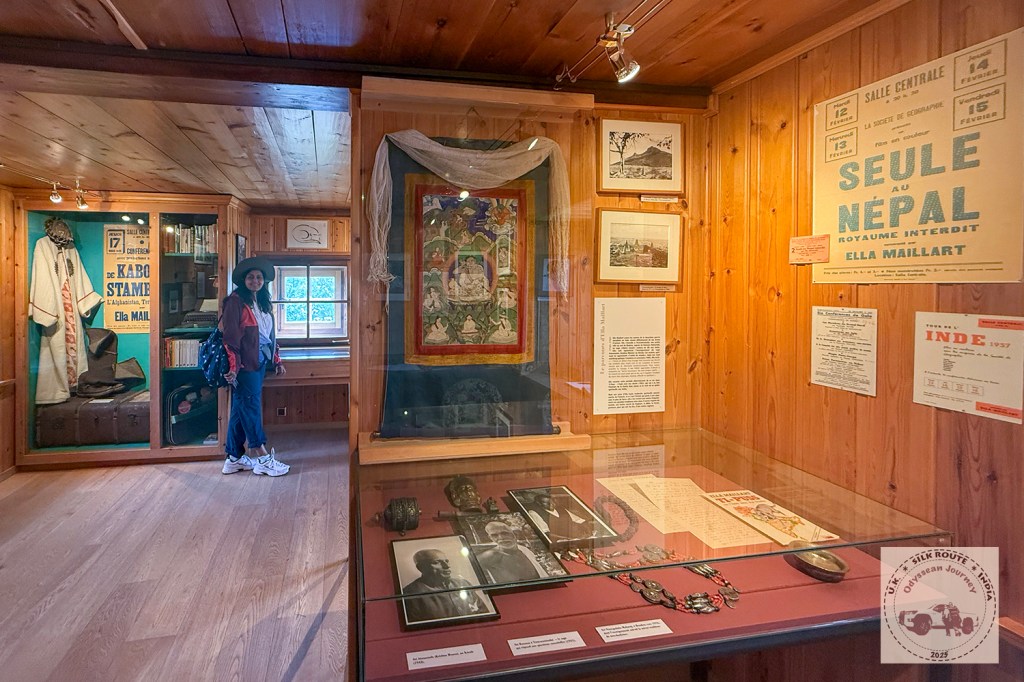
    The small museum dedicated to her felt intimate. There were photographs, books, posters, maps, letters and personal objects. A hat. Sailing medals. Images from her younger years. Posters from talks on Nepal and India. These were not just museum pieces. We could almost feel the essence of a life lived with courage, curiosity and discipline.

    Inside the Ella Maillart exhibition — objects from a life of movement, courage and curiosity.

    What moved us most was not simply that Ella had travelled far. Many people travel far. What made her remarkable was the way she travelled —observing and questioning. She was not ticking off countries. She was trying to understand lives of people she encountered. Perhaps that is why her story still feels so relevant. At its best, travel is not about escape. It is about seeing the world more clearly and perhaps seeing oneself more honestly too.

    The small museum in Chandolin brings Ella’s extraordinary journeys back into a quiet Alpine room.

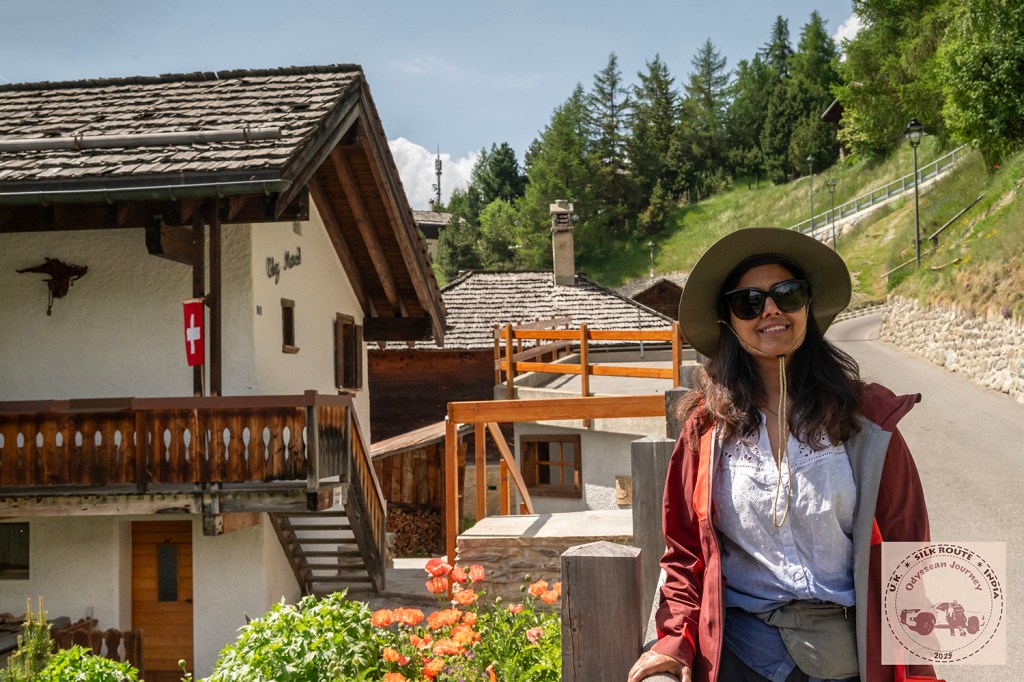
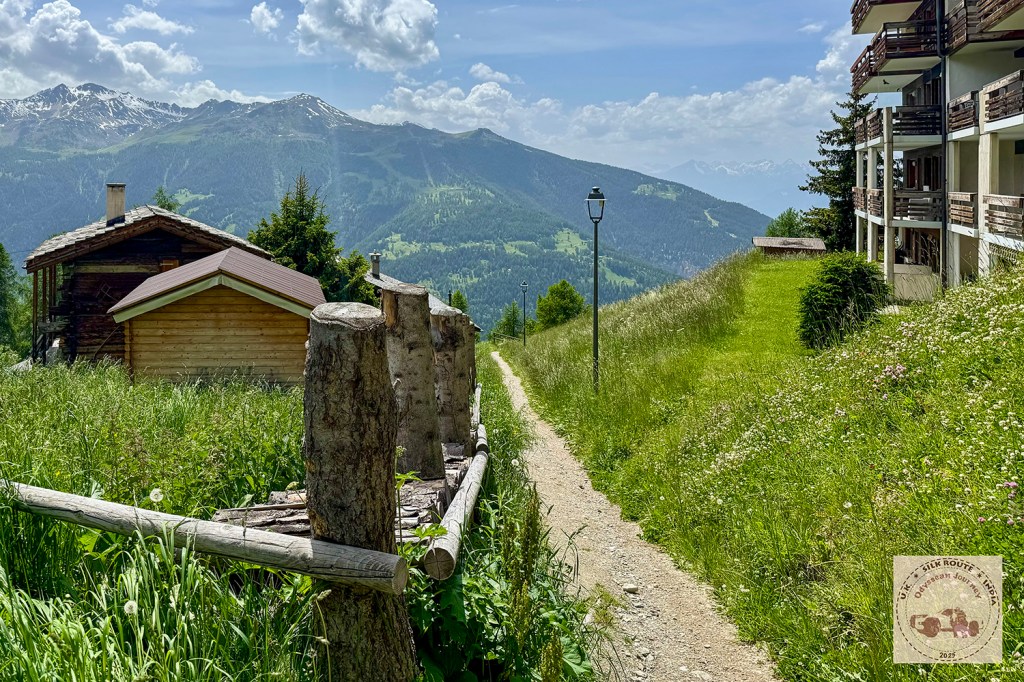
    After visiting the museum, we walked through Chandolin with a different feeling. The flowers, the old chalets, the church tower, the mountain air — everything seemed connected to her story. This was not just a beautiful Swiss village anymore. It was the place where a life of great movement had found stillness.

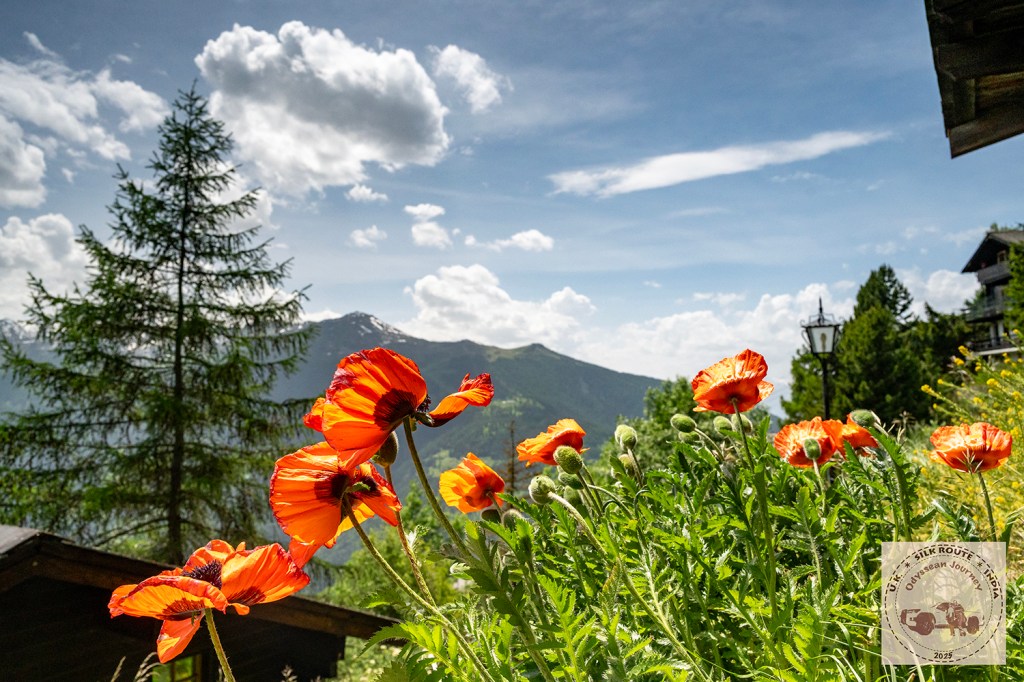
    Alpine flowers and mountain light — Chandolin at its most delicate and beautiful.

    There was also something personal in that moment. We were travelling in Chetak, our Toyota Hilux, carrying maps, camera gear, diabetes-awareness leaflets, hopes, anxieties and a roof tent. Our journey was very different from Ella’s, of course. The world has changed. Roads, phones and border systems have made some things easier. But the old impulse remains the same: to leave the familiar, to cross boundaries, to meet people, and to return with stories larger than oneself.

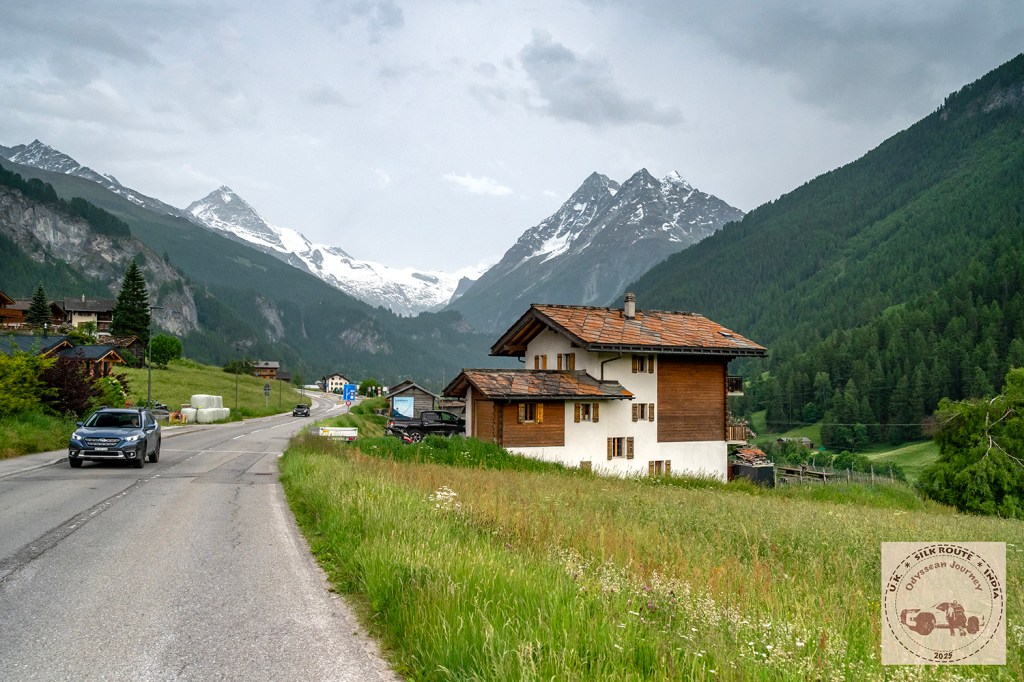
    Chandolin | Val d’Anniviers | Switzerland

    That evening, beneath the mountains, our roof tent became our little chalet on wheels. The valley grew quiet. The clouds moved over the peaks. Somewhere above us was Chandolin; somewhere behind us was Ella’s Atchala; and somewhere ahead lay the long road east.

    From the Swiss Alps, the road would soon turn east again — towards the Silk Roads and Asia.

    We came to Chandolin because of Ella Maillart.

    We left with the feeling that she had quietly blessed the journey ahead.

    Stay tuned :)

  • Lyon:Threads of Silk and Light

    Lyon:Threads of Silk and Light

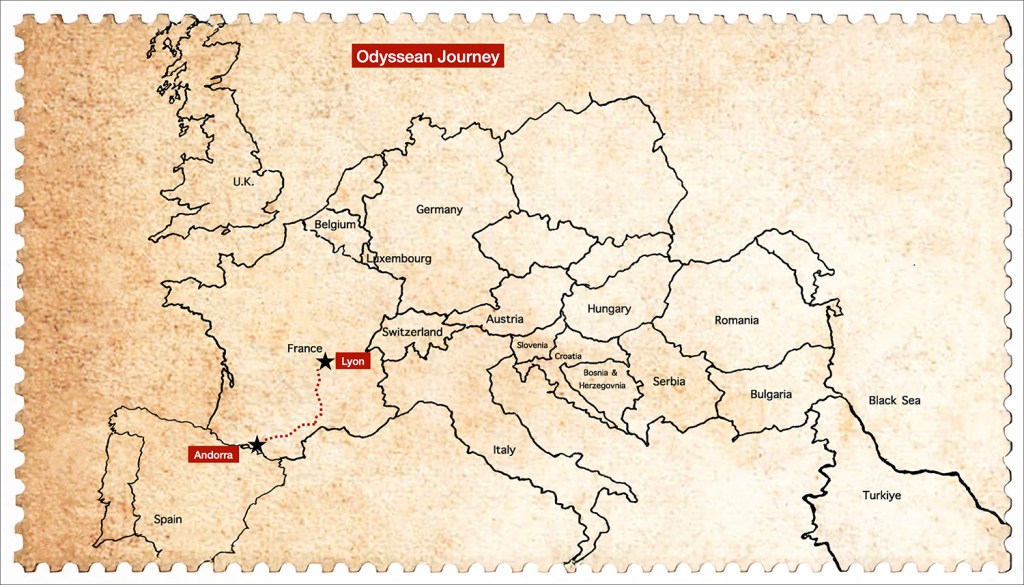
    Andorra to Lyon

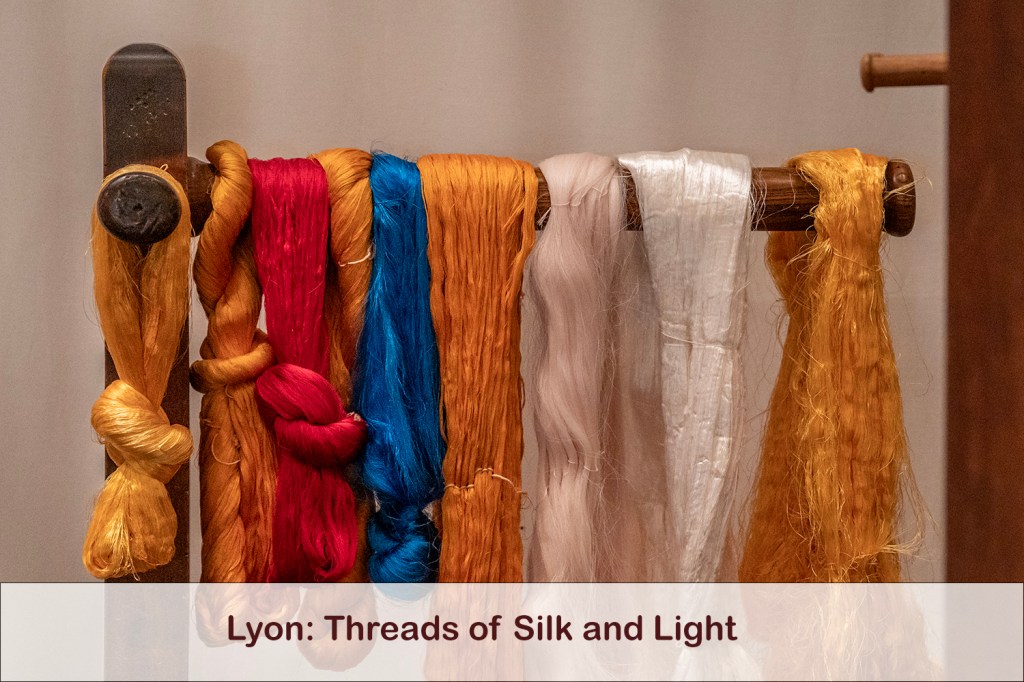
    On Day 5 of our Odyssean Journey, we reached Lyon from Andorra along A9 and then A7 covering about 650km over 8 hours. We were carrying the usual signs of a long road journey: tired legs, hungry stomachs and half-folded maps. We decided to stay off the city in the pleasant Camping Des Eydoches, a mere 80 odd km from the Maison des Canuts, the museum and a workshop, which shares and continues the proud history of silk making in Lyon, our prime destination for Day 6.

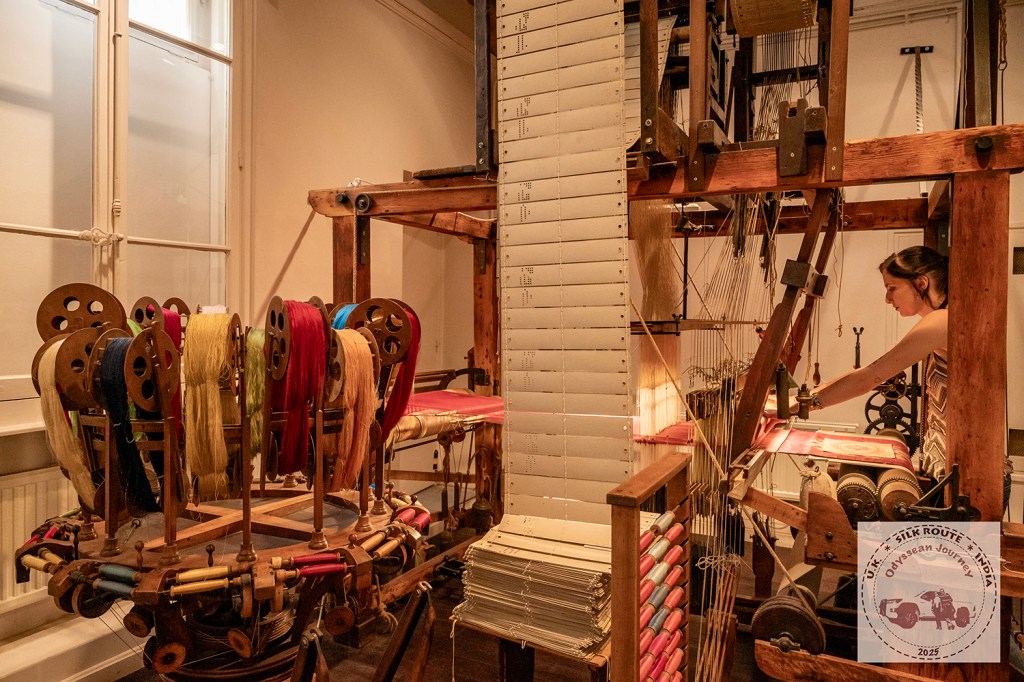
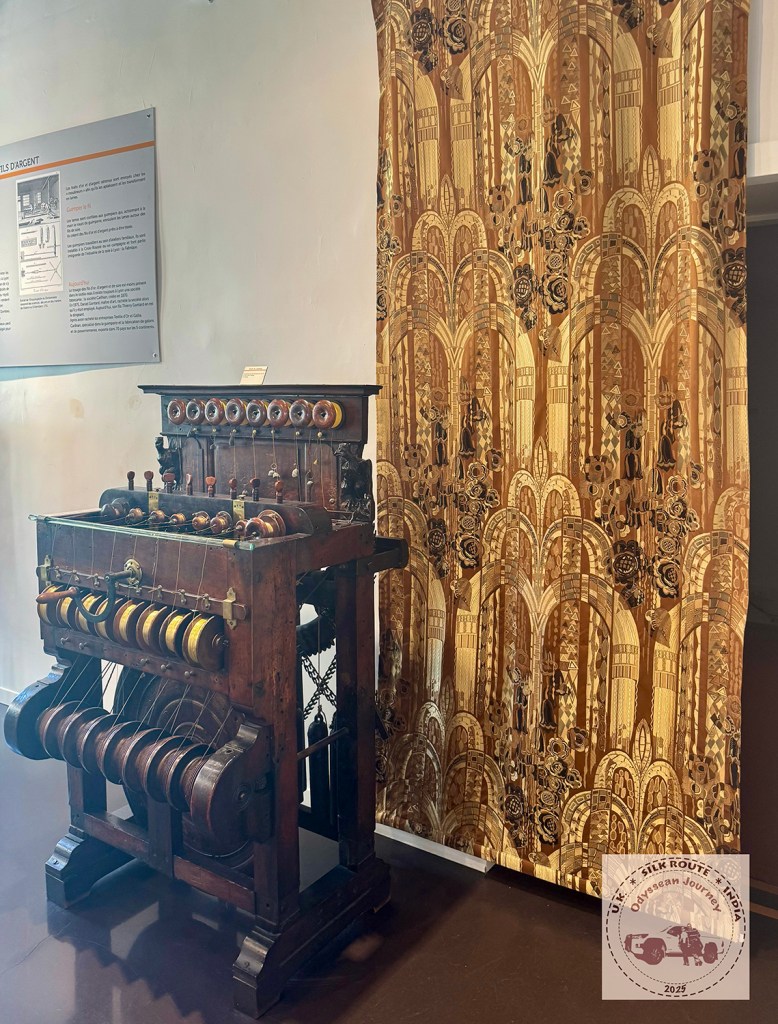
    The silk museum is intimate, wooden, and quietly moving but not grand in the loud, marble-floored sense. It. The looms stand like old witnesses. Spools of thread, punched cards, tools and silk samples fill the rooms. It feels less like a museum and more like a preserved workshop, where the workers have just stepped out for lunch and might return at any moment.

    The Jacquard loom: part machine, part memory, and one of the ancestors of modern computing.

    Lyon’s silk story began in 1536, when King Francis I granted the city the privilege of weaving silk and other noble materials. Over time, Lyon became one of Europe’s great silk capitals. Its silk industry, known as La Fabrique, involved merchants, designers, dyers, spinners, weavers, apprentices and thousands of looms.

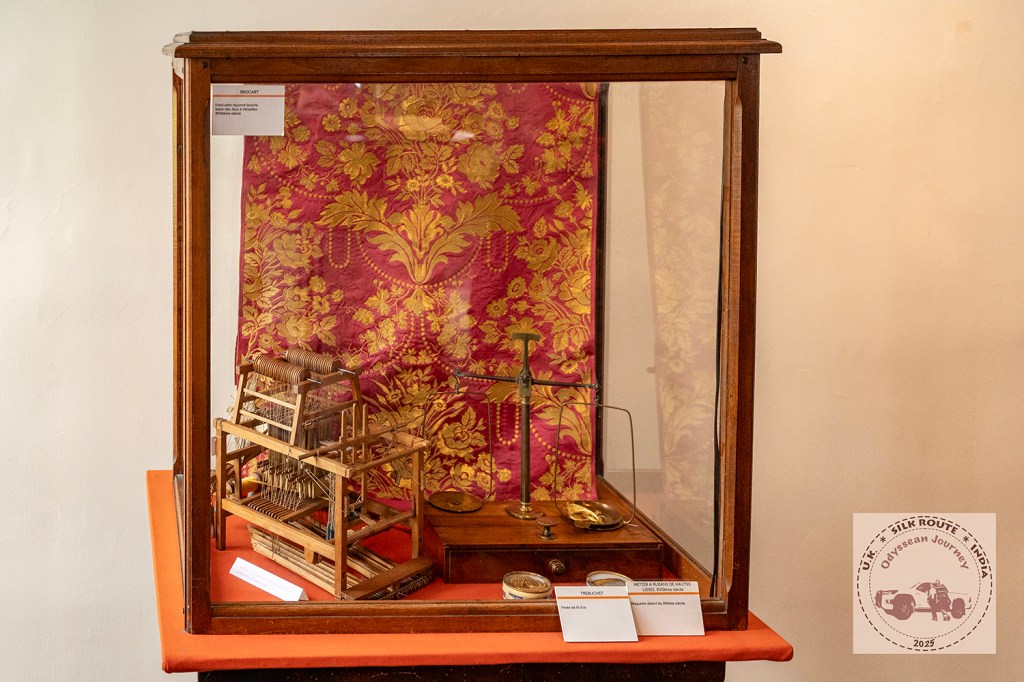
    At the heart of this world were the canuts — Lyon’s master silk weavers. Many worked from home, with their families and apprentices, living and labouring in the same space. Their tools were simple but precise: shuttles, combs, bobbins, scissors, oil lamps, tweezers and measuring instruments. Looking at them, one realises that silk was never just “made”. It was calculated, threaded, watched, corrected and patiently brought into being.

    Behind the luxurious Silk lay tools, discipline and immense patience.

    The great figure in the museum is Joseph-Marie Jacquard, born in Lyon in 1752, the son of a master weaver. His famous loom used punched cards to control complex patterns. A hole meant one instruction; no hole meant another. In that simple logic lay the early idea of programmability.

    Standing beside the Jacquard loom, it is striking to think that the digital world has one of its ancestors in the textile world. Before computers had code, looms had cards and silk carried patterns way before screens started displaying patterns.

    Entirely manually-created silk patterns

    But Lyon’s silk history is not only about beauty and is also about labour. The canuts worked hard, often under difficult financial pressure. Payment depended on the type of weave, the difficulty of the pattern and agreements with the silk merchants, known as soyeux.

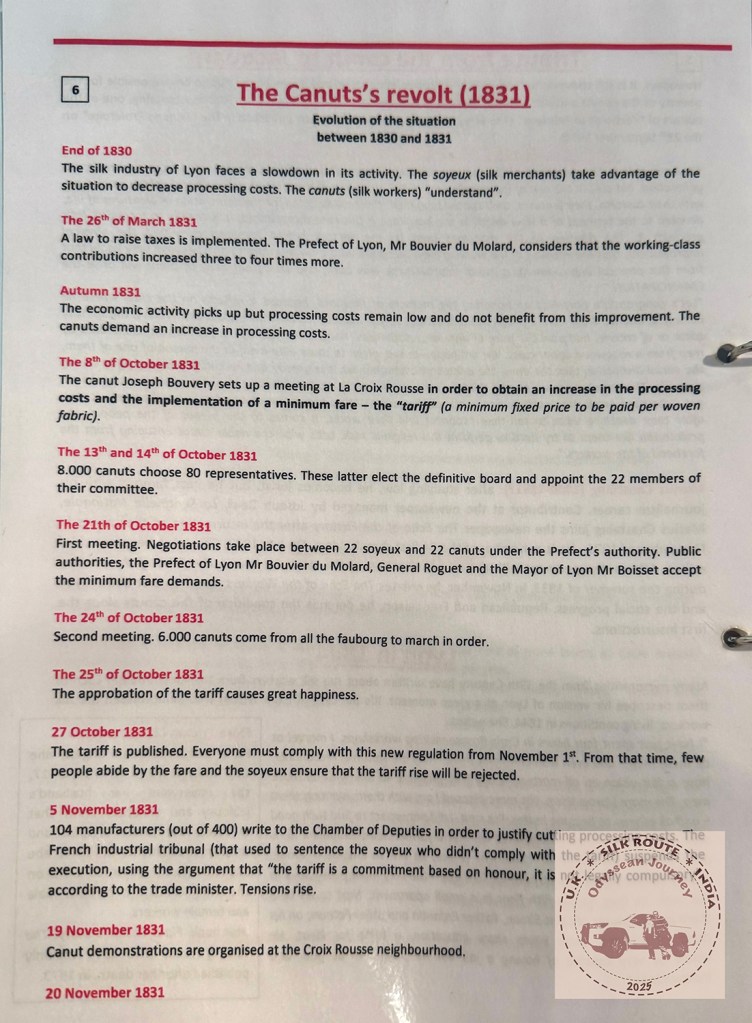
    In 1831, after falling wages and disputes over a minimum tariff, the canuts rose in revolt. Their motto became famous: “Live working, or die fighting.” A second revolt followed in 1834, known as the “bloody week”. The museum tells this story with quiet seriousness. Silk may look soft and elegant, but in Lyon it also carries the memory of struggle and one of the earliest workers’ uprisings of the industrial age.

    The canuts’ revolts of 1831 and 1834 remind us that silk was also a story of labour and dignity. © Museum Archive

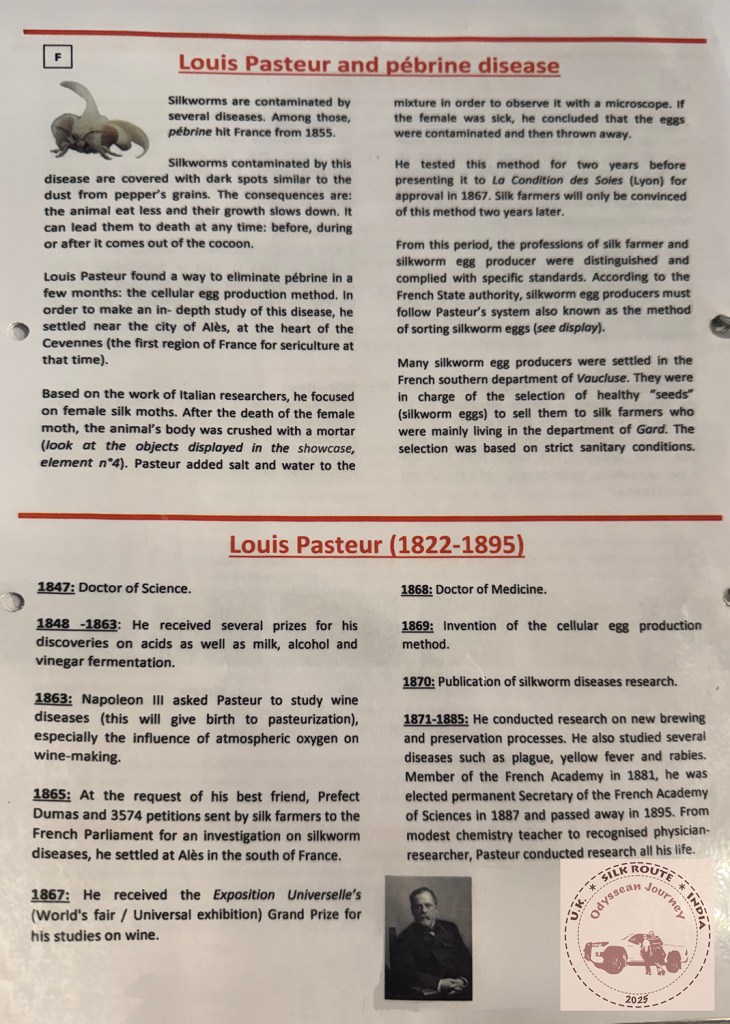
    There is also a scientific thread to the story. In the 19th century, French silkworms were devastated by pébrine disease. Louis Pasteur helped save sericulture by developing a method to identify healthy silkworm eggs. The museum also explains how silk was carefully weighed and conditioned, because silk absorbs water and was sold by weight. Even romance, it seems, required regulation.

    From silkworm eggs to woven fabric, Lyon’s silk industry depended on science as much as craft. © Museum Archive

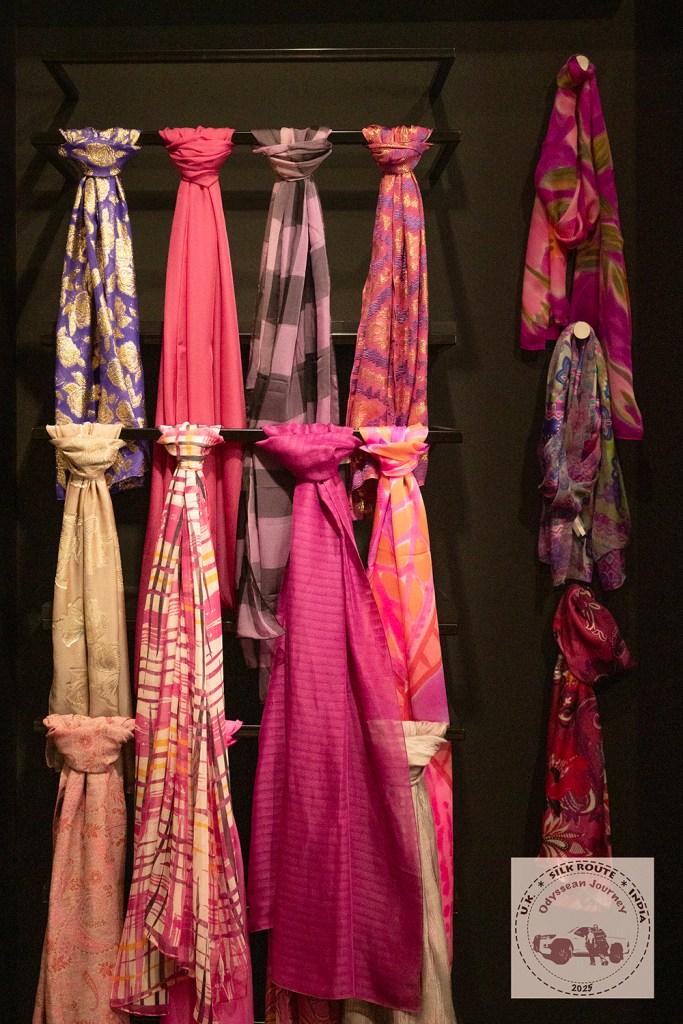
    The silk shop brought the story into the present. Shelves of scarves glowed in pink, orange, green and gold. These were not museum relics but living descendants of Lyon’s textile imagination. Modern production may be digital, global and faster than ever, but the essential questions remain the same: pattern, texture, colour, quality, and the human desire to turn thread into beauty.

    Modern Lyon silk: colour and elegance.

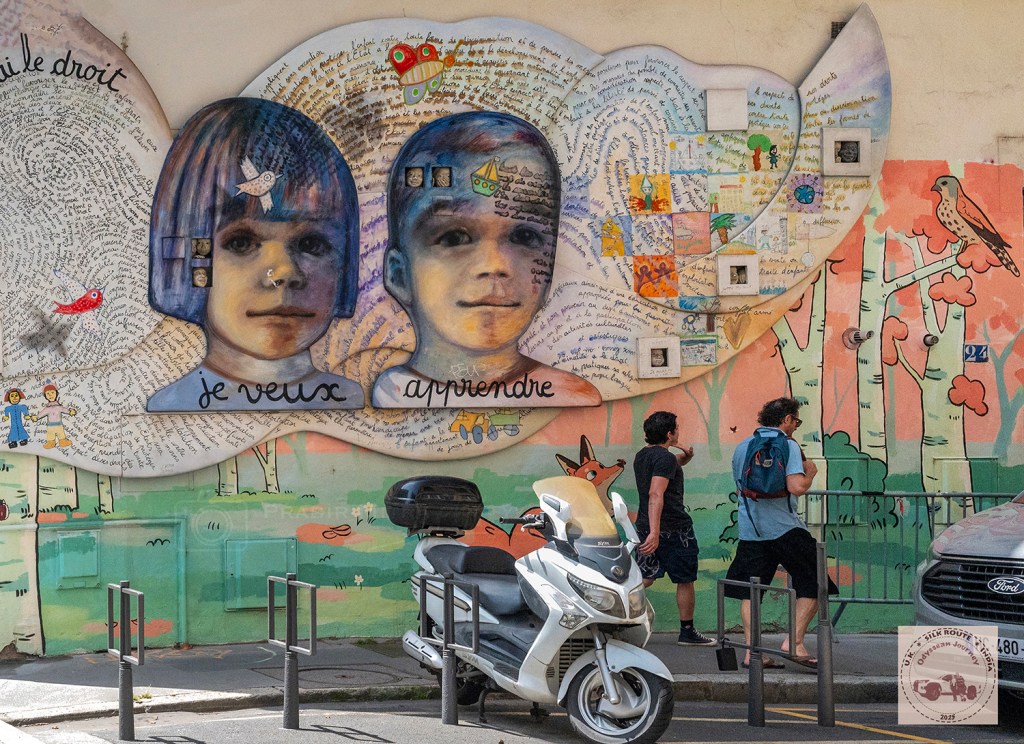
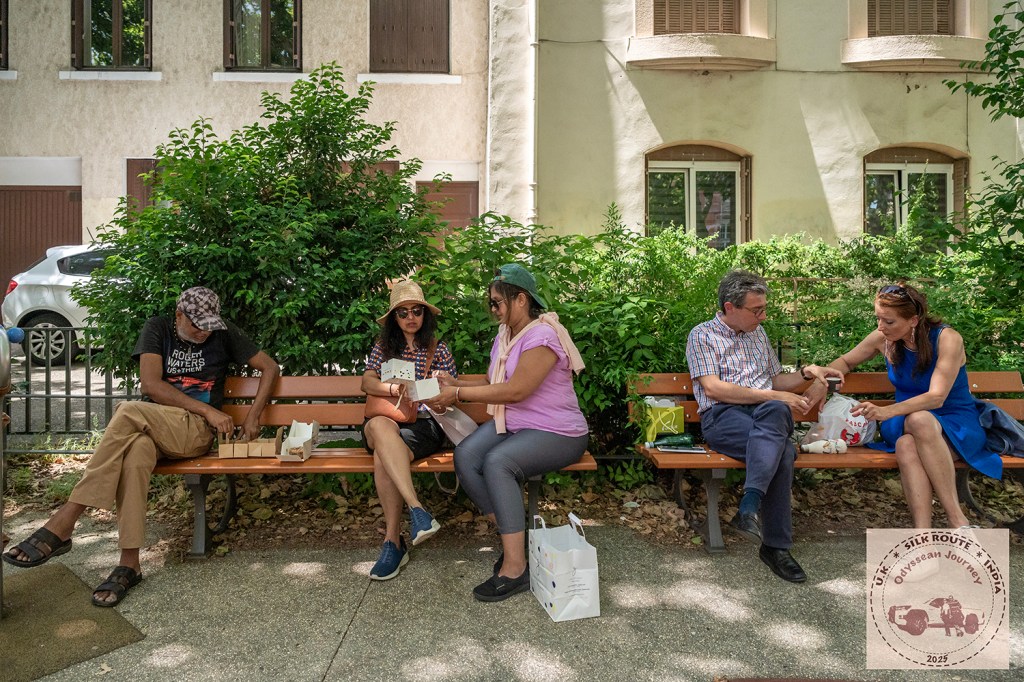
    What made the visit especially memorable was how the old silk world spilled naturally into modern Lyon. After the museum, we stepped into the sunshine, sat on a bench, opened our little packets of food and watched the city go by. Around us were murals, scooters, shop windows and people getting on with their ordinary day.

    The contrast was lovely. Inside, there had been looms, revolts and centuries of craft. Outside, there was a red scooter glowing in the street, a mural saying “je veux apprendre”I want to learn — and four travellers happily surrendering to lunch.

    A traveller’s pause after the museum: shade, snacks and the luxury of sitting down.

    For us, Lyon’s silk museum became more than a stop on the itinerary. It connected many strands of our journey: the Silk Road, European craft, labour history, technology, science and the simple pleasure of travelling together.

    We entered expecting to see silk. We left having seen a city through its threads — its elegance, its hardship, its invention and its pride.

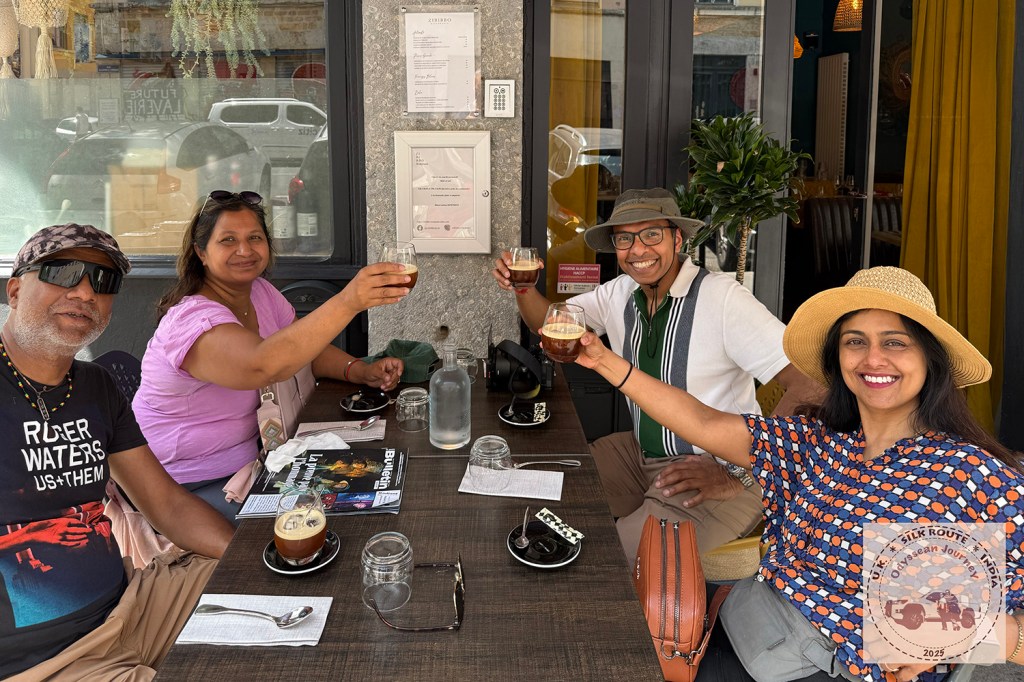
    Later, over coffee, we raised our glasses to Lyon. Not dramatically, not ceremonially, but with the quiet satisfaction of travellers who had found something richer than expected.

    Silk, after all, is never only fabric. It is memory woven into light.

    A toast to Lyon — a city where silk, history and friendship met on a summer afternoon.

    Our journey would lead us from the annals of the silk trade into the remarkable story of an extraordinary woman. Guess where ??