Tag: italy

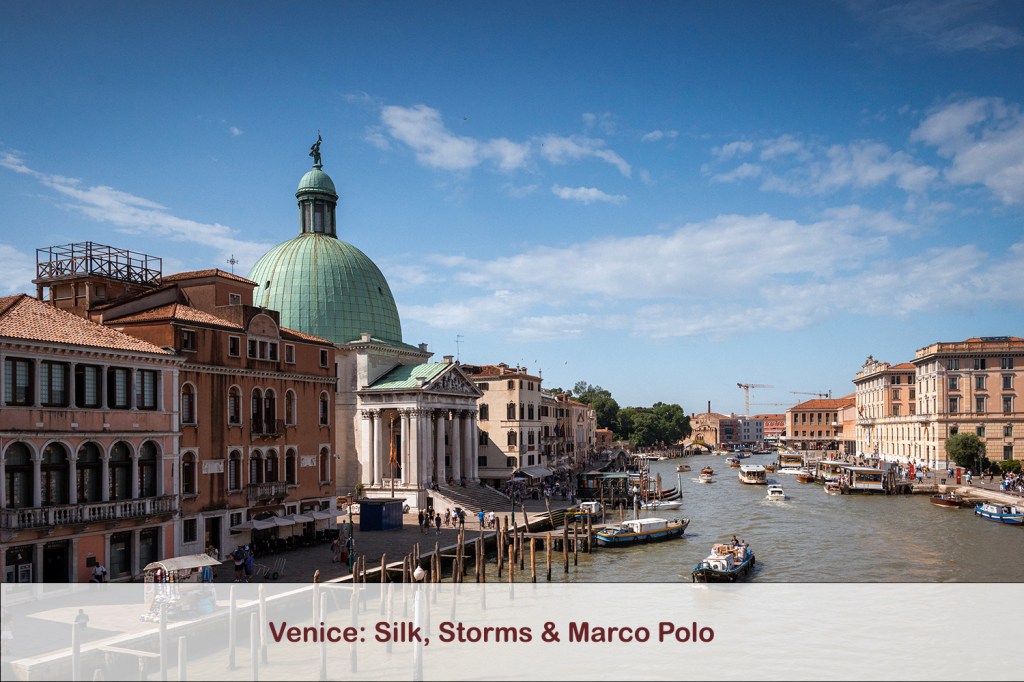
  • Venice: Silk, Storms & Marco Polo

    Venice: Silk, Storms & Marco Polo

    Overlanding to Venice

    By the time Odyssean Journey rolled into Venice, we had crossed mountains, borders and enough motorway service stations to develop a complicated relationship with bad coffee.

    Then suddenly — no roads.

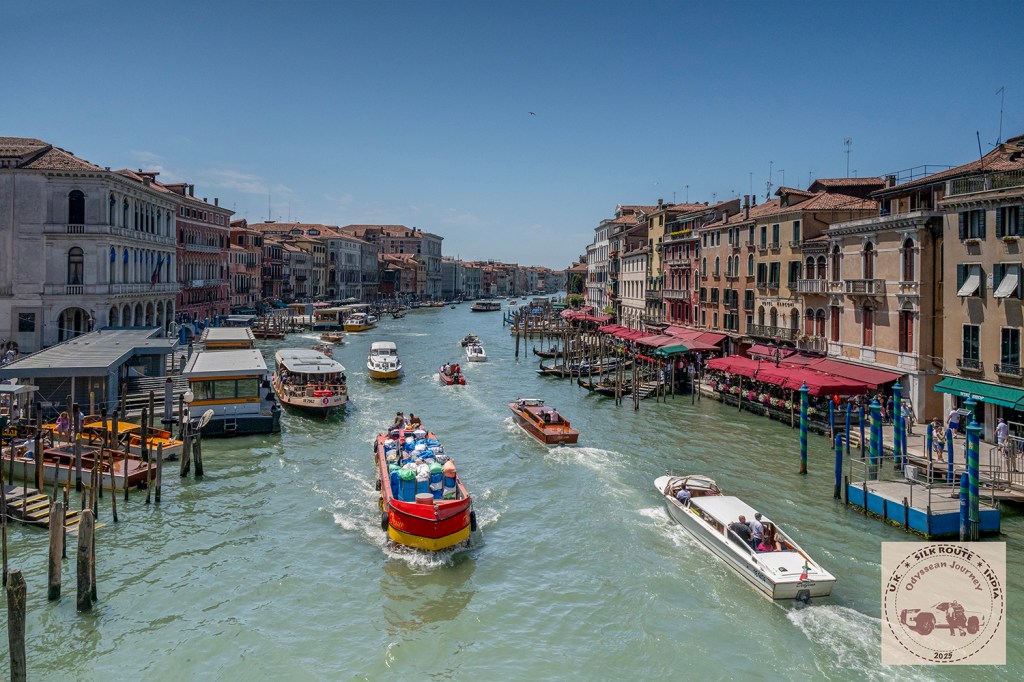
    Just water, narrow lanes, gondolas and a city that seems permanently caught between theatre and chaos.

    The first thing we learnt was that Venice rewards wandering. The best moments arrived when we stopped trying to “cover” the city and simply let it absorb us.

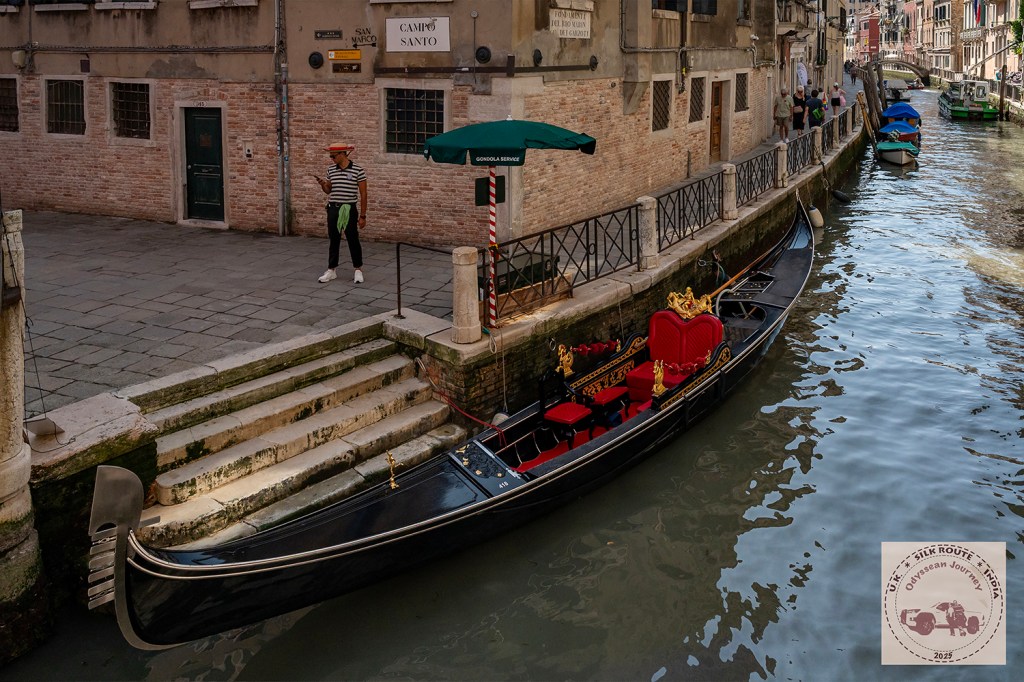
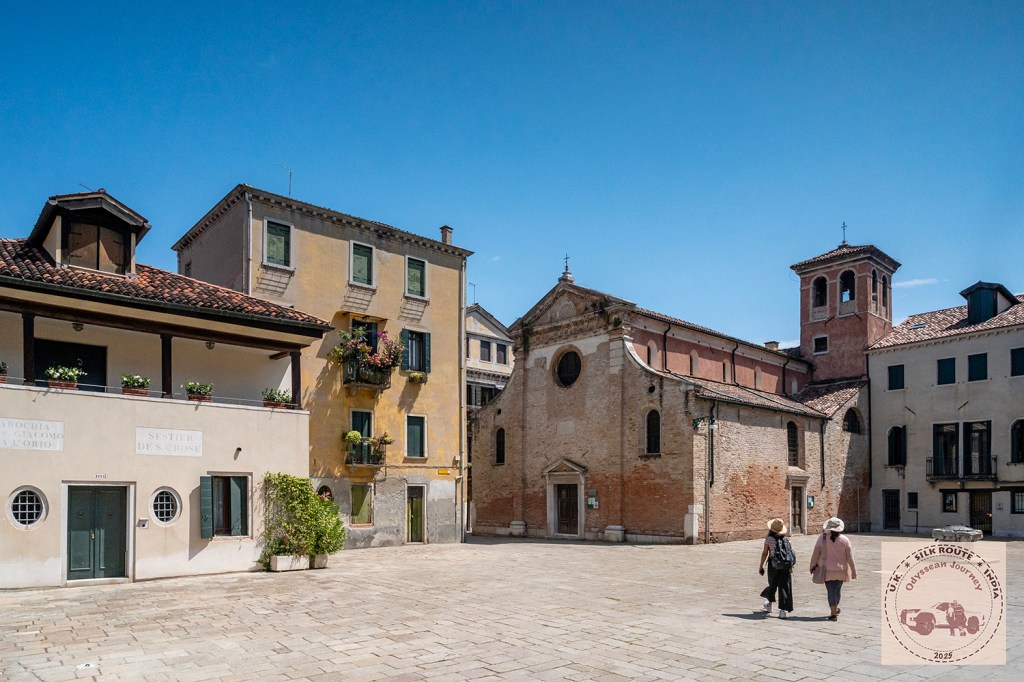
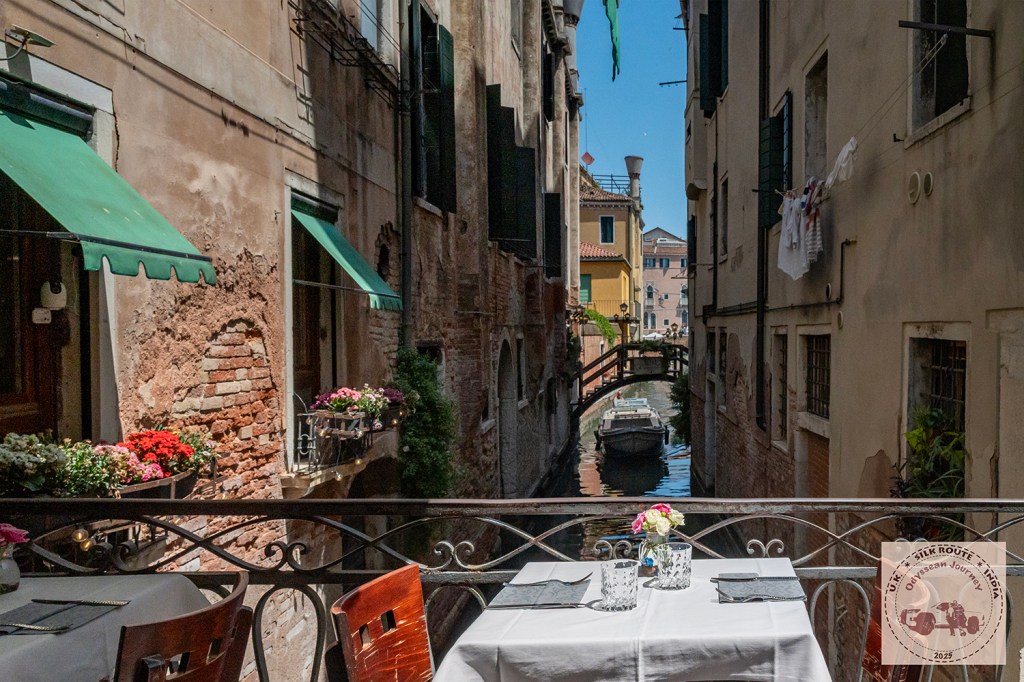
    A quiet canal… a lonely gondola…a square so silent it felt abandoned by time.
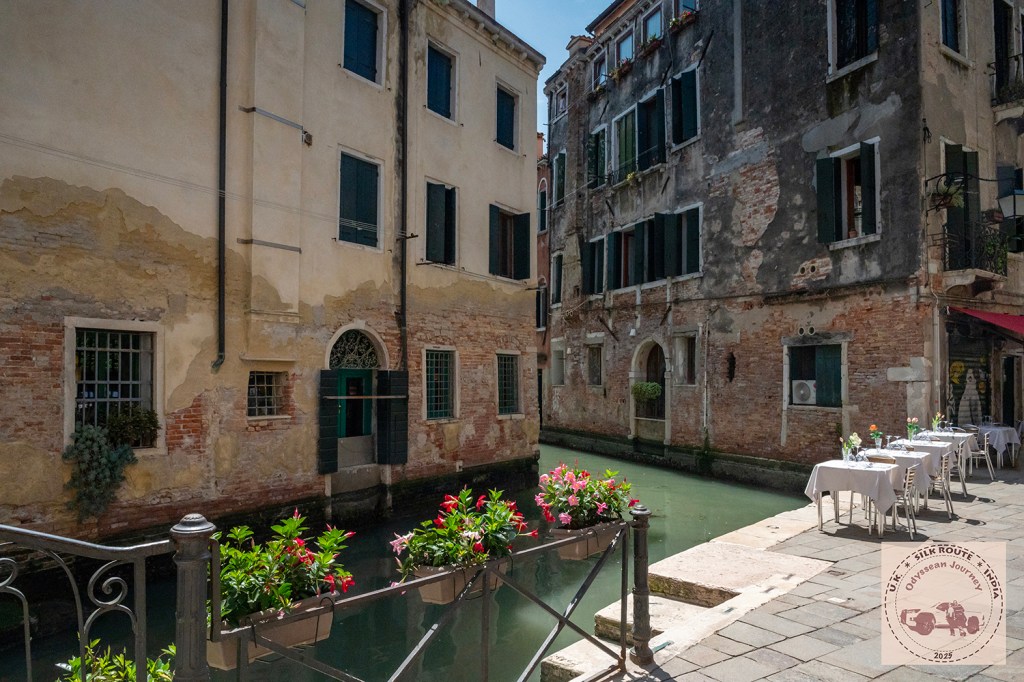
    A quiet canal…
    A lonely gondola…
    An empty square…

    Soon the city became sensory overload in the best possible way.

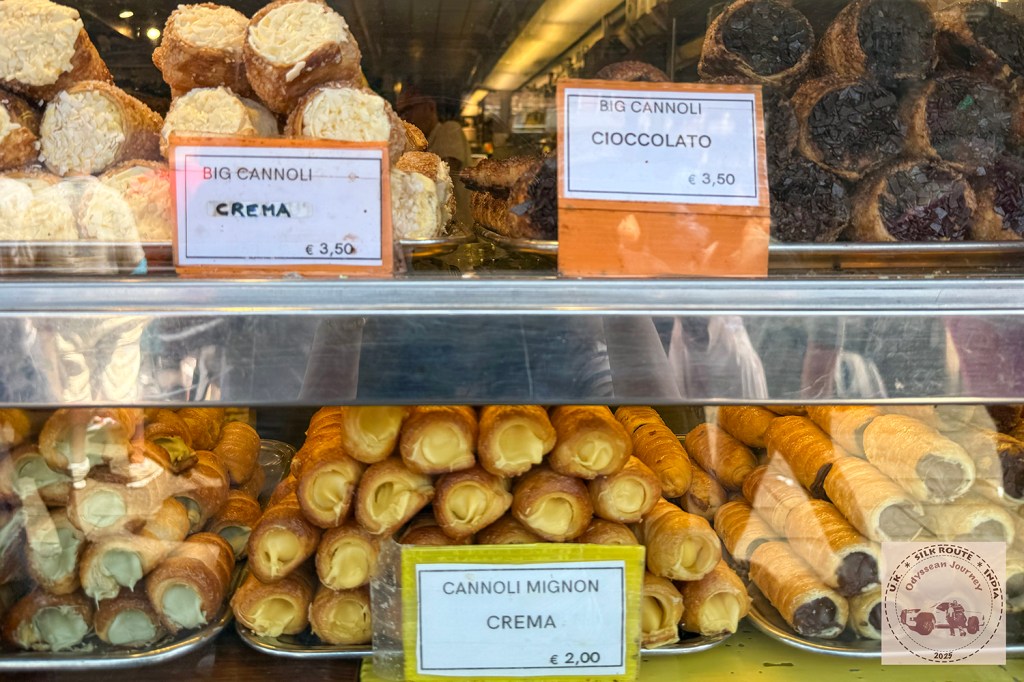
    Markets overflowed with colour. Tiny bakeries displayed rows of impossibly tempting pastries. Canal-side restaurants somehow managed to make even tourists look cinematic.

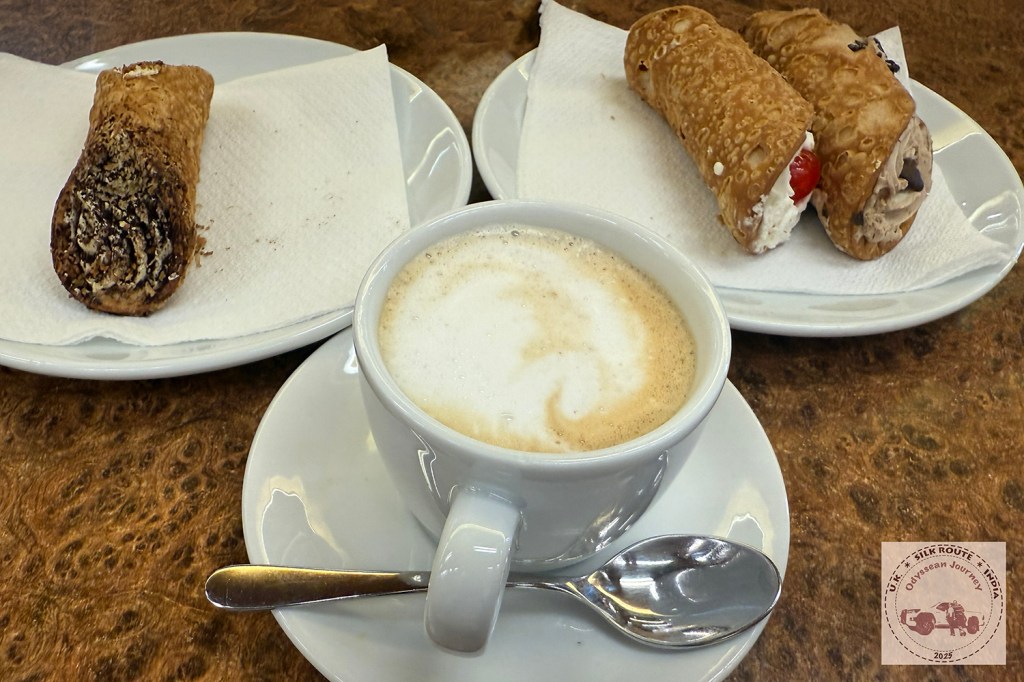
    We discovered quickly that Venice is not a city to rush through. It demands pauses. Espresso pauses. Cannoli pauses. “Let’s just sit here for ten minutes” pauses that quietly become an hour.
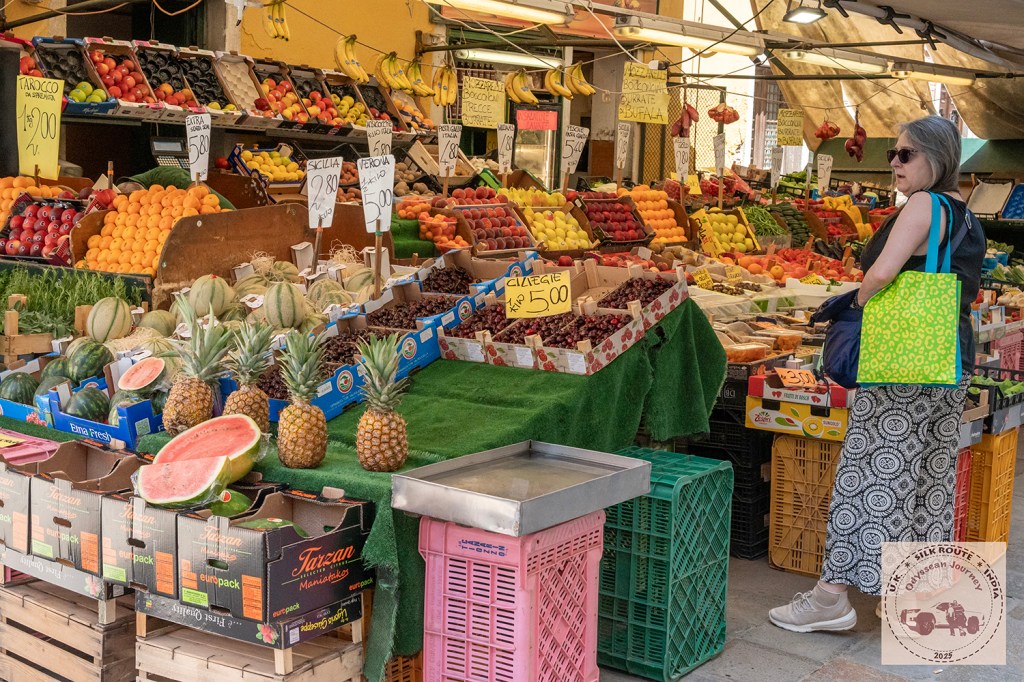
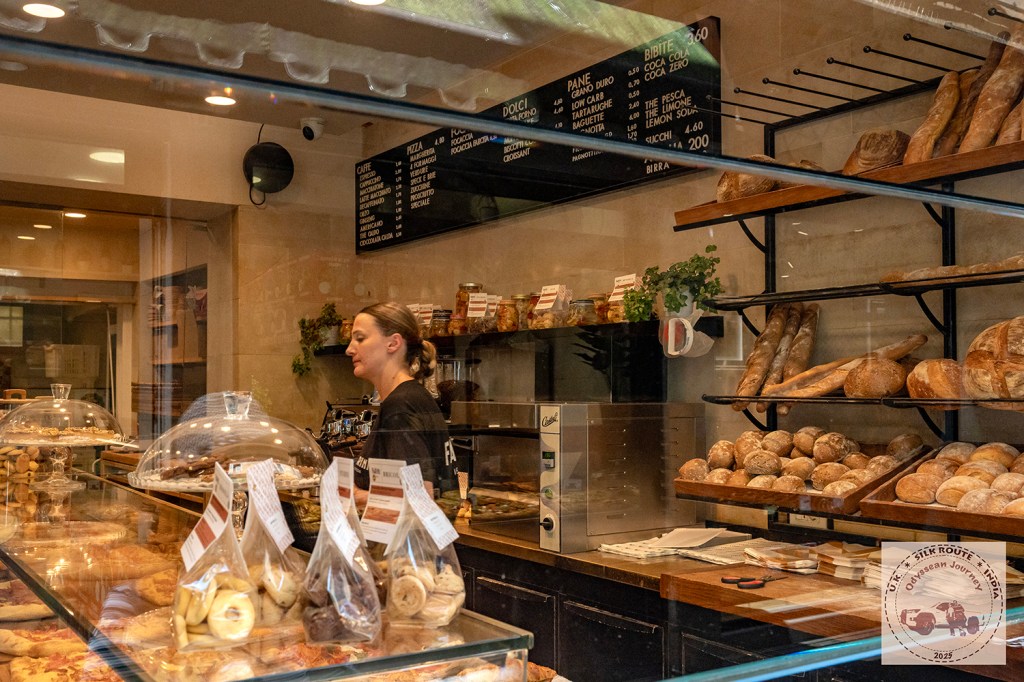
    Fruit market overflowing with colours
    Tempting bakeries and Espresso Stops
    Lapse of time

    But for us, Venice was never only about canals and cafés.

    Odyssean Journey had followed the echoes of the Silk Roads across Europe, and nowhere in the west felt more connected to that history than Venice.

    For centuries, Venetian merchants traded silk, spices and stories between East and West. And hidden behind an unassuming doorway, we found that legacy still alive.

    At Luigi Bevilacqua, ancient wooden looms continue weaving velvet and silk by hand, exactly as they have for generations.

    The room creaked with history. Watching them felt less like visiting a workshop and more like stepping into another century.
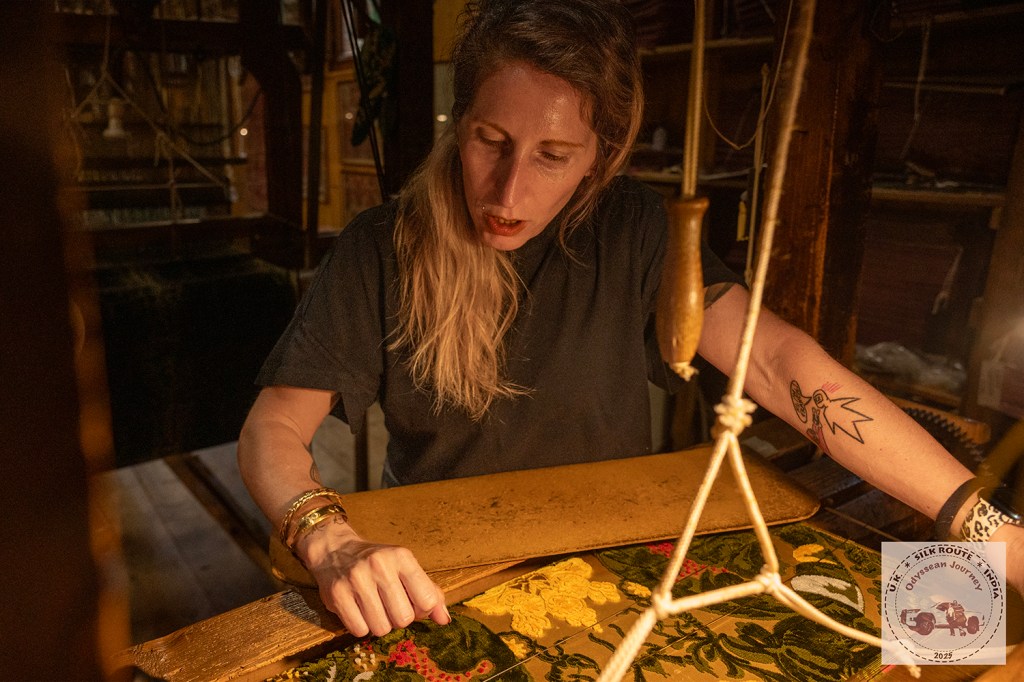
    Hand weaving of Silk at Luigi Bevilacqua Tessitura
    Hand Woven Venetian Silk

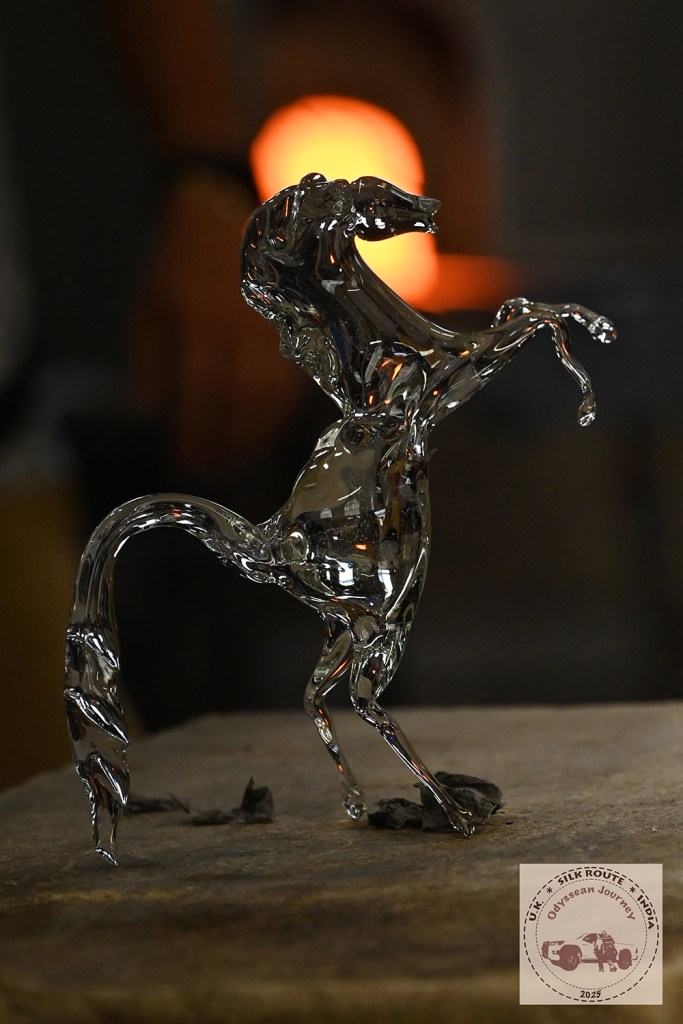
    From the soft shimmer of silk, Venice led us to another ancient craft of light and patience — Murano glass- which felt like Venice captured in fire and colour.
    Watching the glassmakers shape molten glass, we saw patience, skill and danger working together.
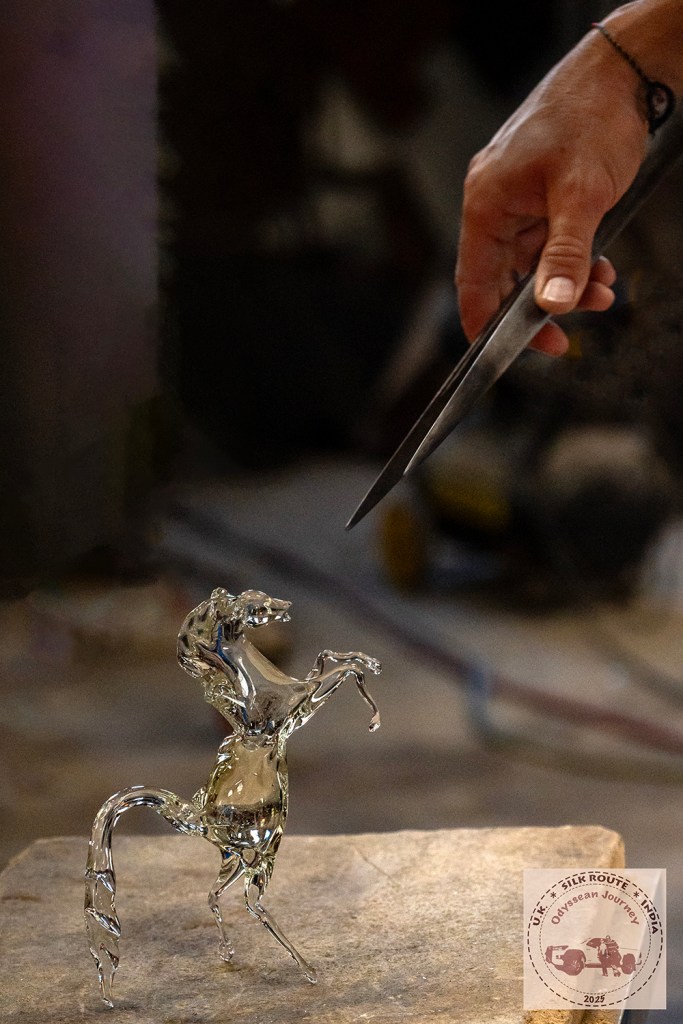

    And then, inevitably, there was Marco Polo.

    Venice still carries his shadow everywhere. Centuries ago he departed this watery republic and travelled eastward along the Silk Roads toward Asia. We had arrived from the opposite direction, carrying our own modern expedition across continents in our Toyota Hilux, Chetak.
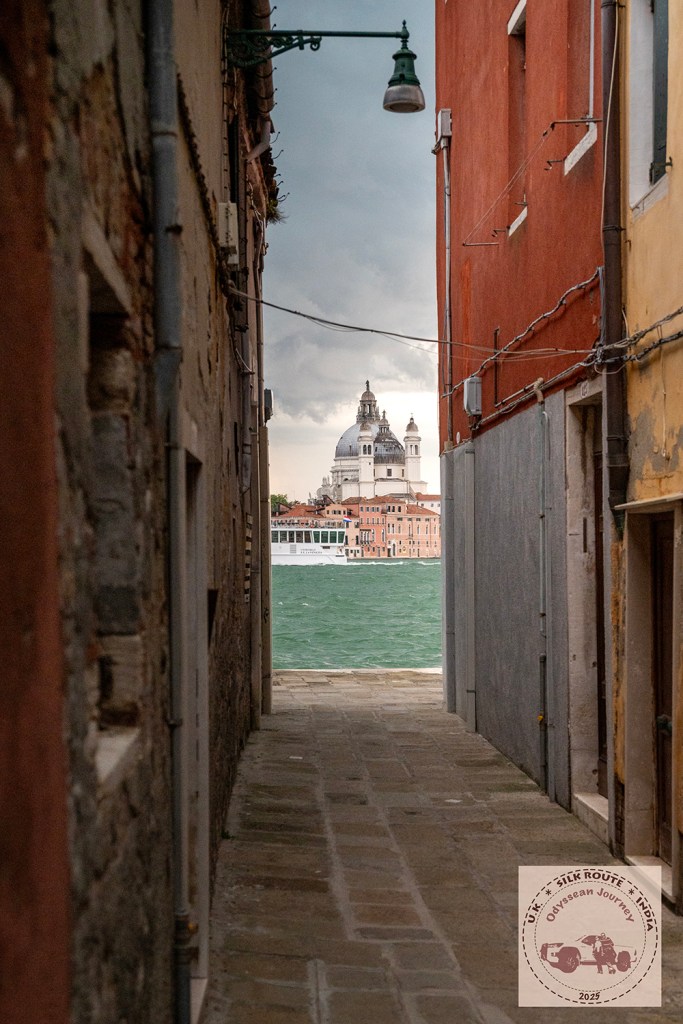
    Marco Polo House – not Marco Polo’s residence!

    A casual search about Marco Polo’s residence brought us to a narrow alleyway and local knowledge helped us rectify our mistake. This was a B&B with that name but not “His Residence” !!

    Marco Polo’s original Venetian residence no longer stands. It was in the Corte del Milion, near San Giovanni Crisostomo. The old Polo family house was destroyed by fire in 1597, but Venice keeps its memory quietly — in a courtyard, an old arch, and an opera house standing where one of history’s greatest journeys once came home.
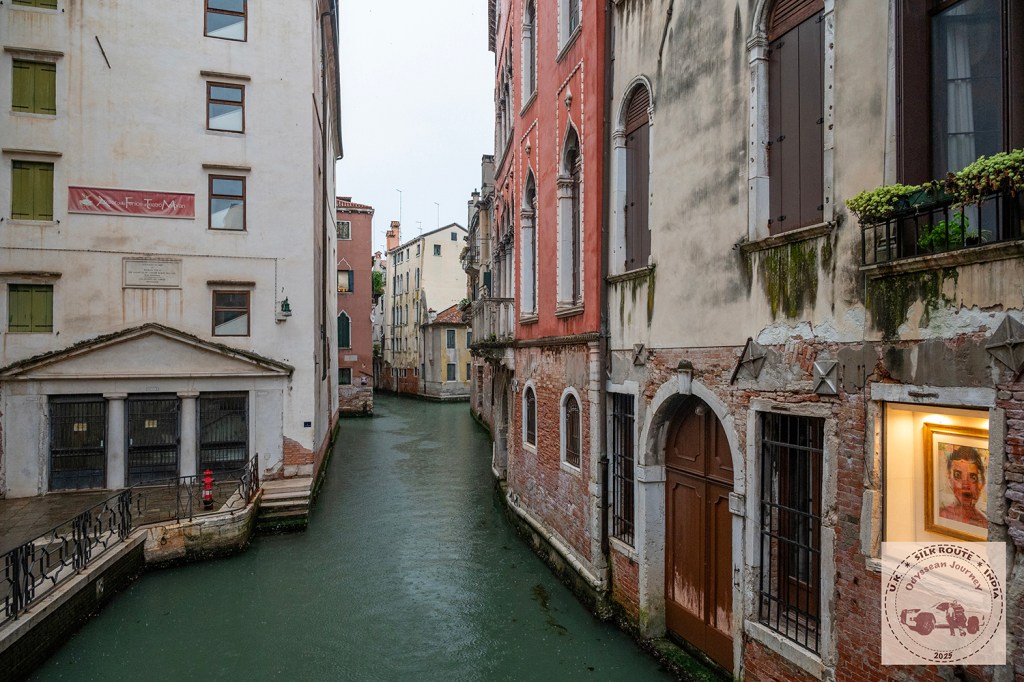
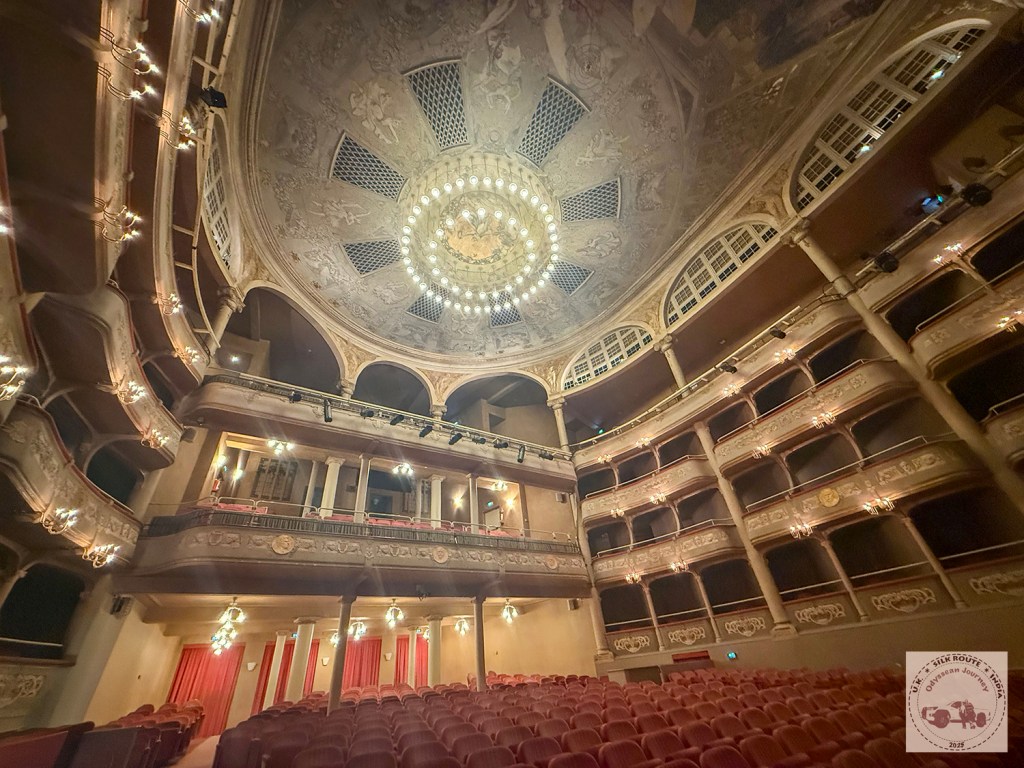
    Opera House at the site of Marco Polo’s residence.

    Shaped by its history, Venice never stops to amuse its visitors.
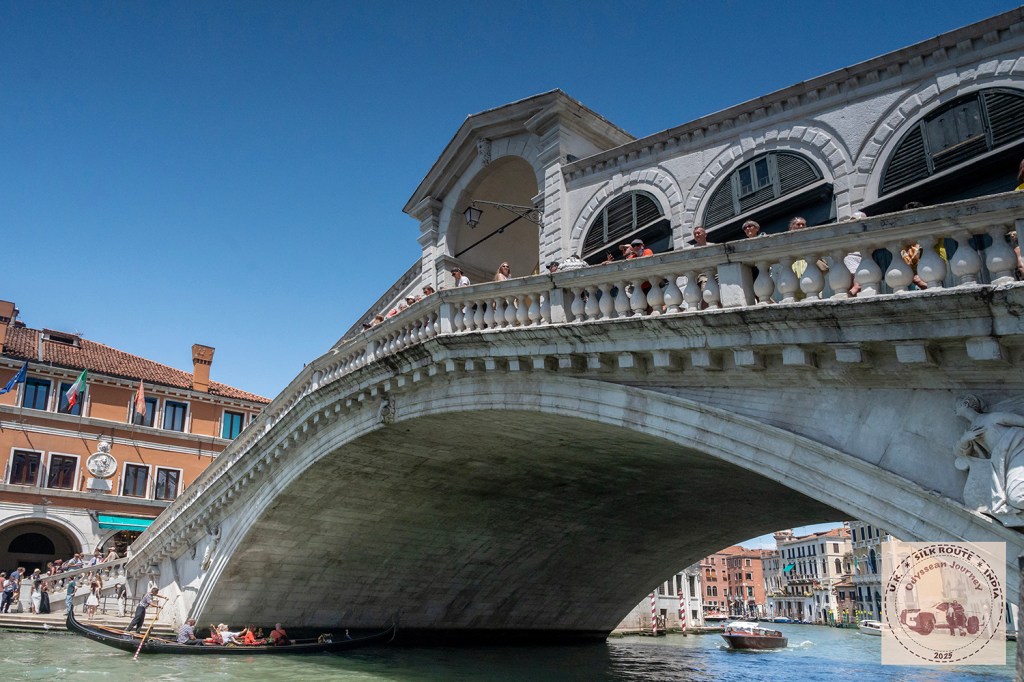
    A perfect blend of touristy and real Venice.
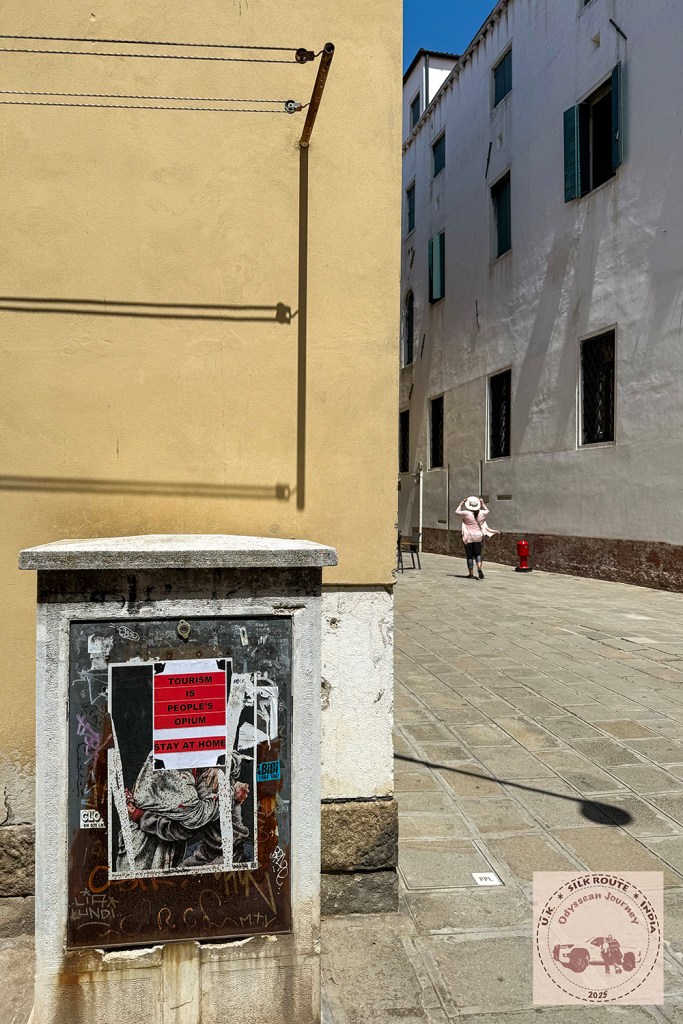
    Warning by the locals against “Over Tourism”

    This warning poster did hit me hard! And then the weather changed.

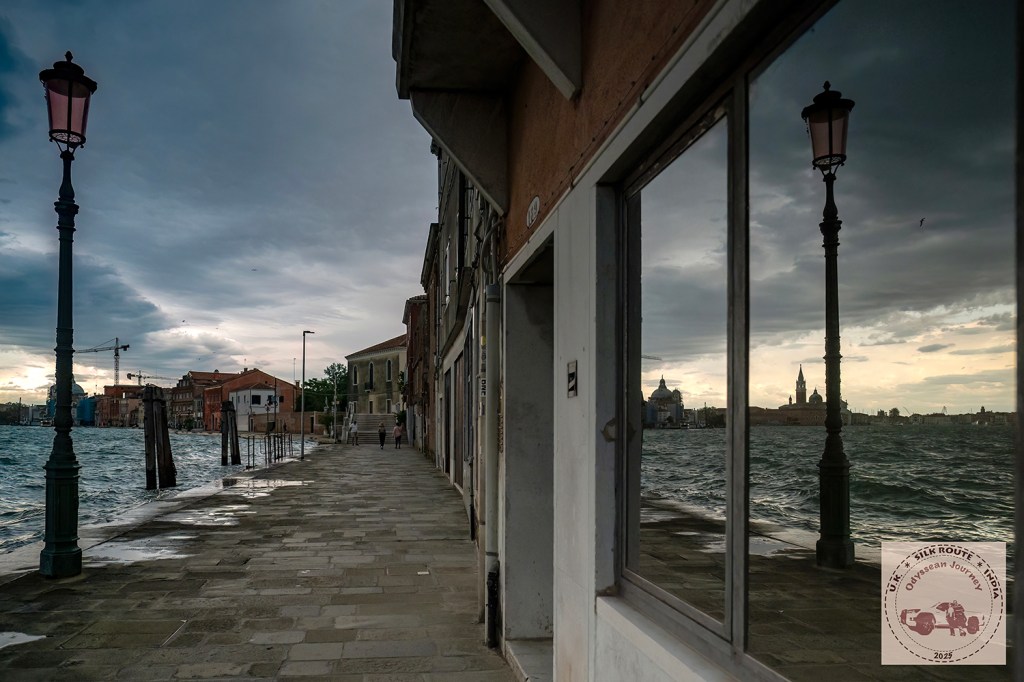
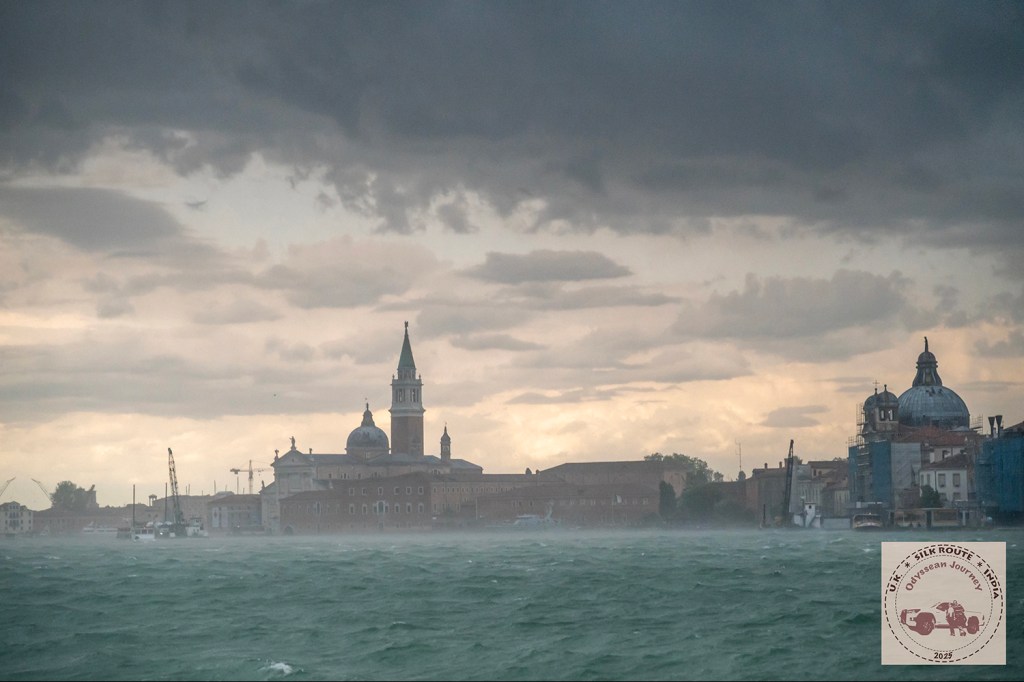
    The bright Mediterranean light disappeared behind bruised clouds. The lagoon darkened. Wind whipped across the water and tourists vanished beneath umbrellas with remarkable speed.

    Venice somehow became even more beautiful.

    Rain polished the stones silver. Church domes faded into mist. Gondolas rocked gently against empty moorings as thunder rolled somewhere beyond the lagoon.

    The city felt eternal.
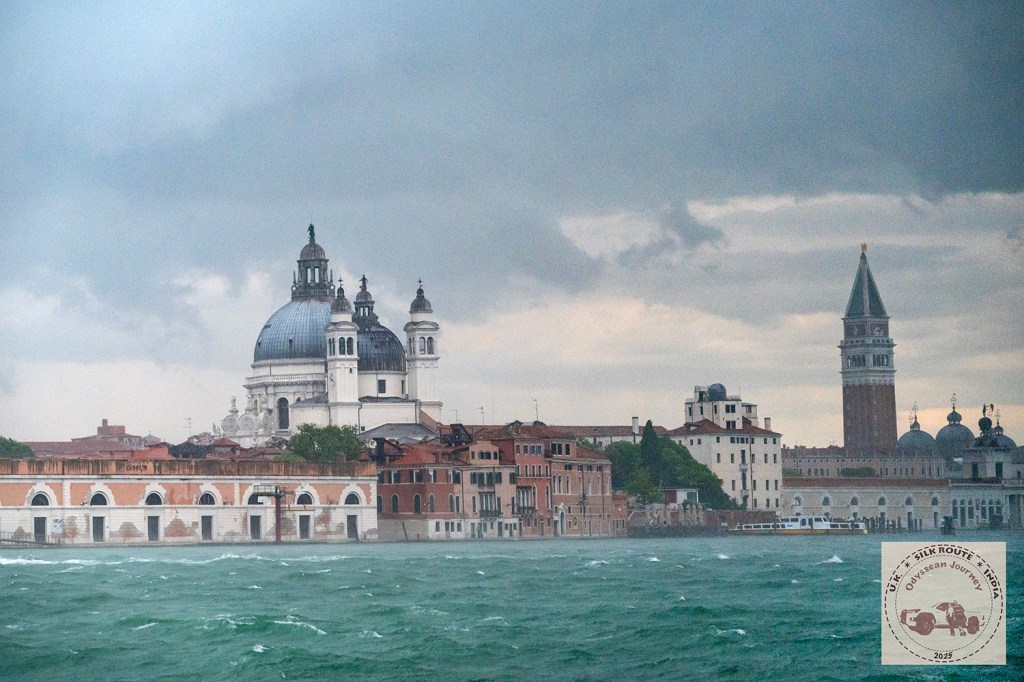
    We survived that storm, like Venice did innumerable times.

    It was high time to return behind the wheels of Chetak for the next chapter of our Odyssean Journey.
  • Simplon Car Train: When Chetak Took the Train Through the Alps

    Simplon Car Train: When Chetak Took the Train Through the Alps

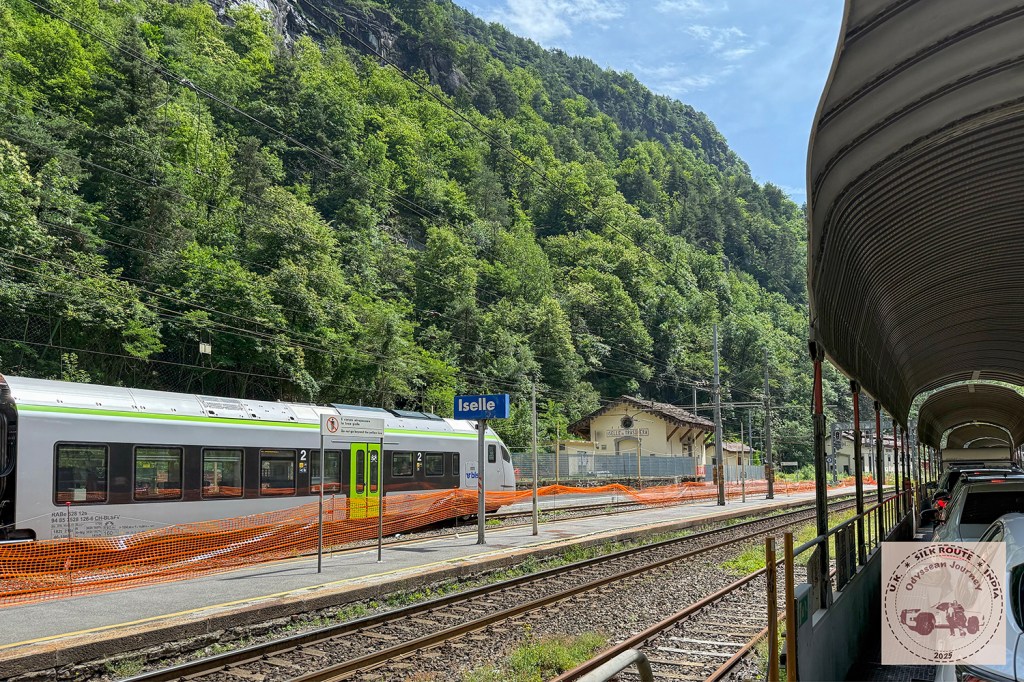
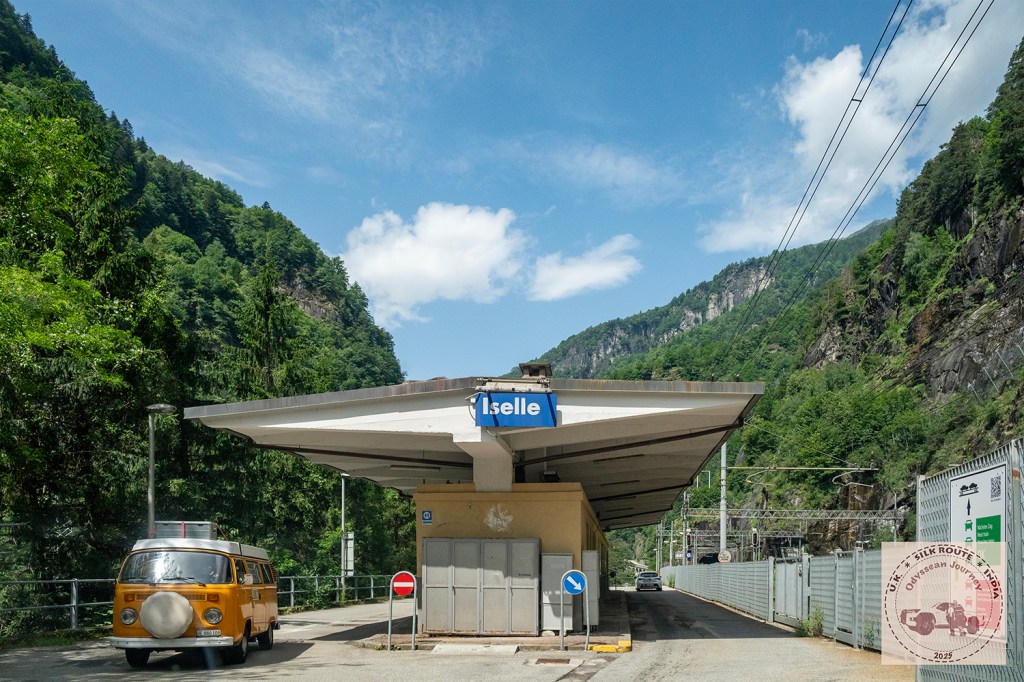
    Landborder between Brig (Switzerland) & Islle (Italy)

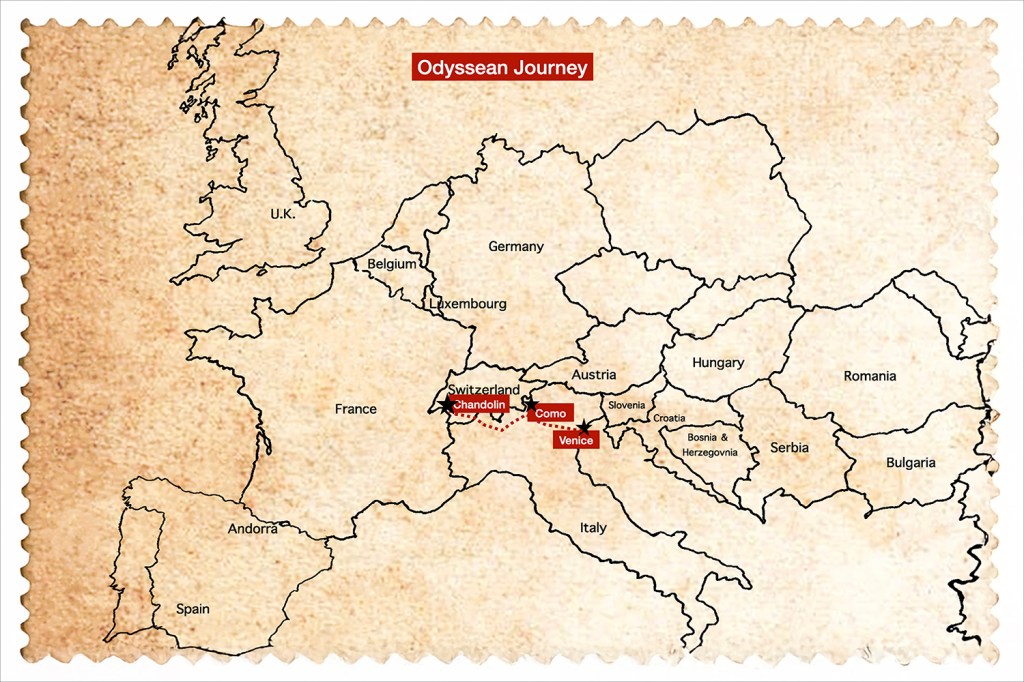
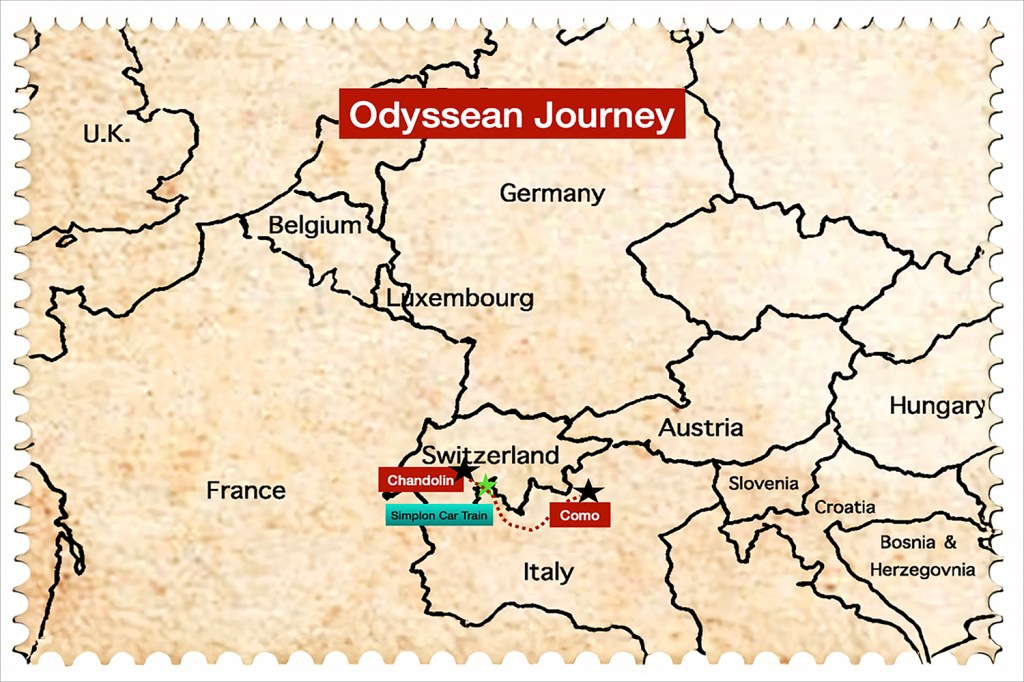
    On Day 8 of the Odyssean Journey, we left Chandolin with Lake Como in our sights. Switzerland had already given us more than enough drama: mountain roads and impossible views, but somewhere between the valleys of Valais and the promise of Italy, the Alps had one more surprise for us.

    The Simplon Car Train.

    Of course, like many great discoveries on the road, we first missed it.

    Google Maps, with its usual confidence and occasional mischief, had us driving along Route 9. We passed what looked suspiciously like the car train station, continued for a bit, then had that familiar travelling conversation:

    “Was that it?”

    “No, surely not.”

    “Actually… maybe that was it.”

    So, we turned around, slightly sheepish, slightly amused, and very grateful that in Switzerland even confusion tends to happen in scenic surroundings.

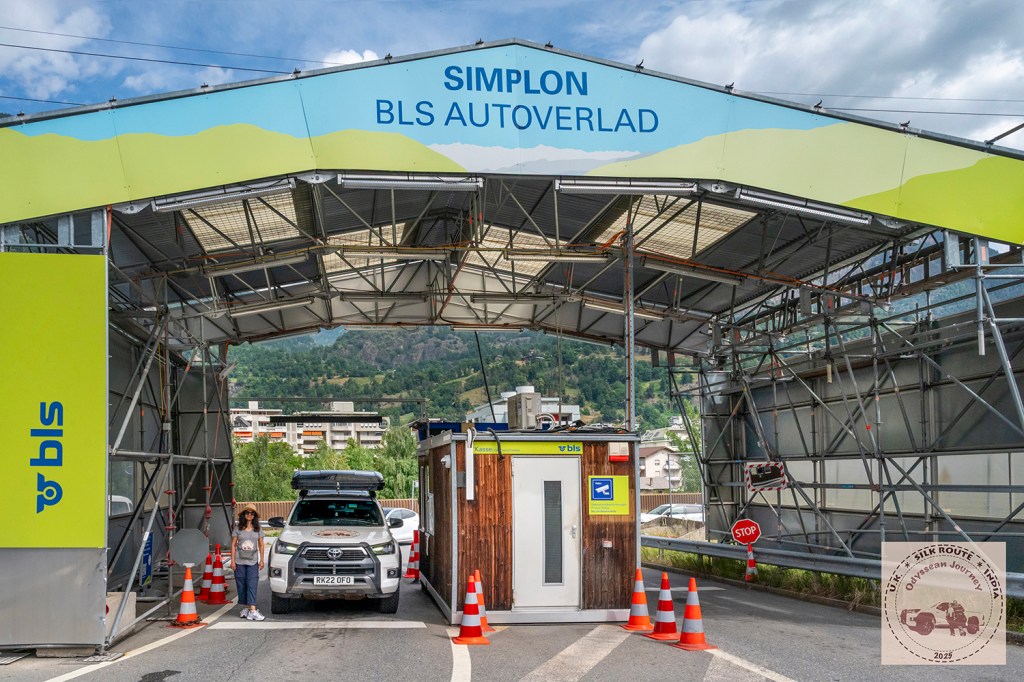
    After a brief argument with Google Maps, we found the Simplon car train station.

    The Simplon route itself is no ordinary crossing. For centuries, this has been one of the great north–south passages through the Alps. In earlier days it was a mule track and trade route; later, Napoleon saw its military value and commissioned a proper road over the Simplon Pass to connect France with northern Italy. The road from Brig towards Domodossola opened in the early 19th century and became one of Europe’s great Alpine routes.

    But modern Switzerland, being modern Switzerland, found a more elegant solution than asking every driver to wrestle with the mountains: put the car on a train and send the whole lot under the Alps.

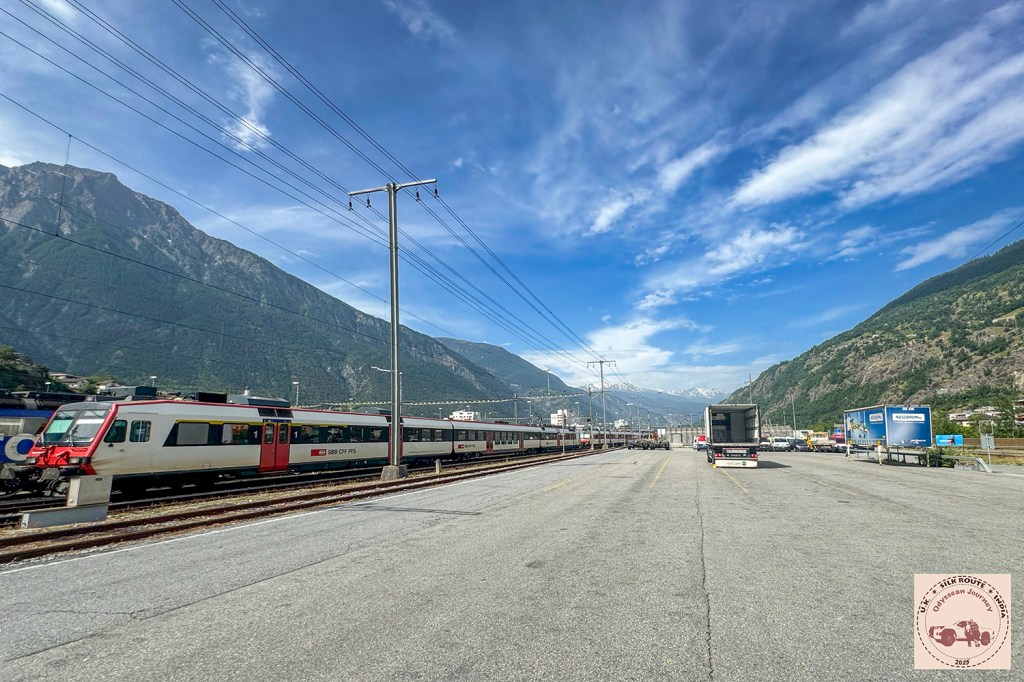
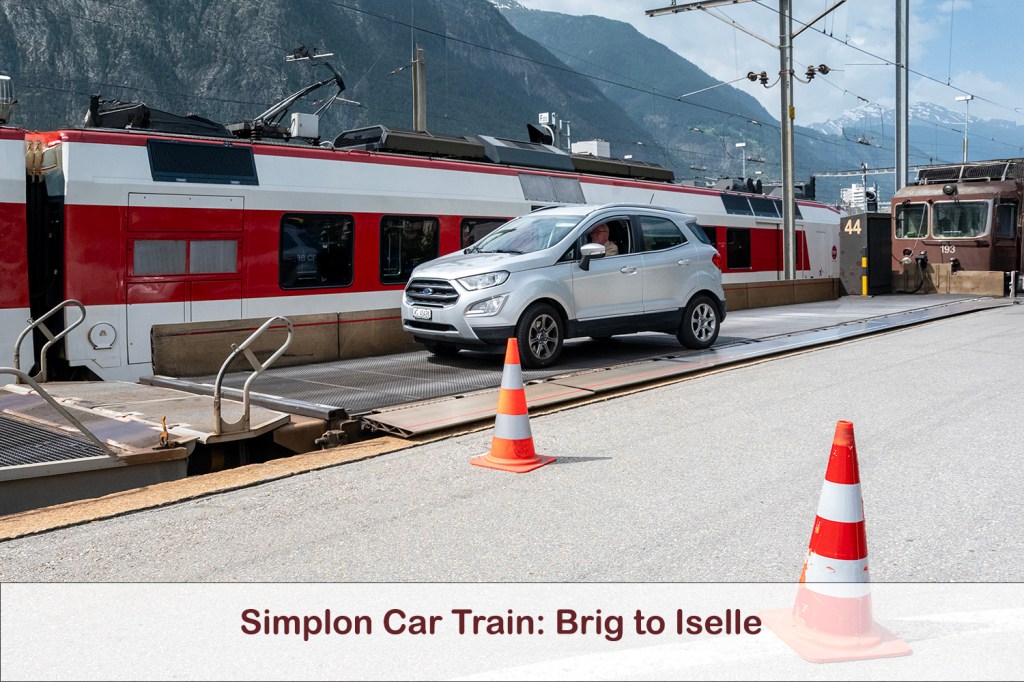
    The Simplon Tunnel, connecting Brig in Switzerland with Iselle in Italy, opened in 1906. At nearly 20 kilometres long, it was an astonishing engineering achievement for its time, cutting through the mountains rather than climbing over them. Today, the BLS car transport service carries vehicles between Brig and Iselle, allowing drivers to remain with their cars while being transported through the tunnel. The crossing takes about 20 minutes.

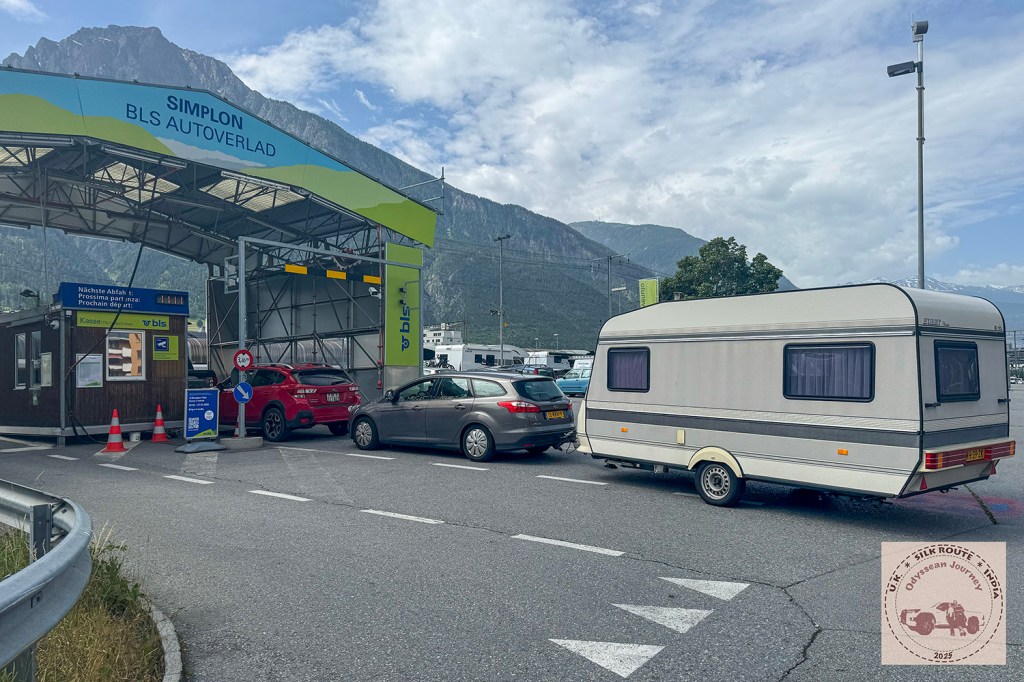
    There was something wonderfully odd about the whole experience. One moment we were road travellers, masters of our own steering wheel. The next, Chetak was being lined up like a well-behaved schoolchild, waiting to board a train. The train times were well structured (At Brig we were told the next one to Iselle would be in 2 hours, exactly), the attendants were extremely helpful in helping us load our cars in the correct way and the journey cost us £23.80 (26.00 CHF)

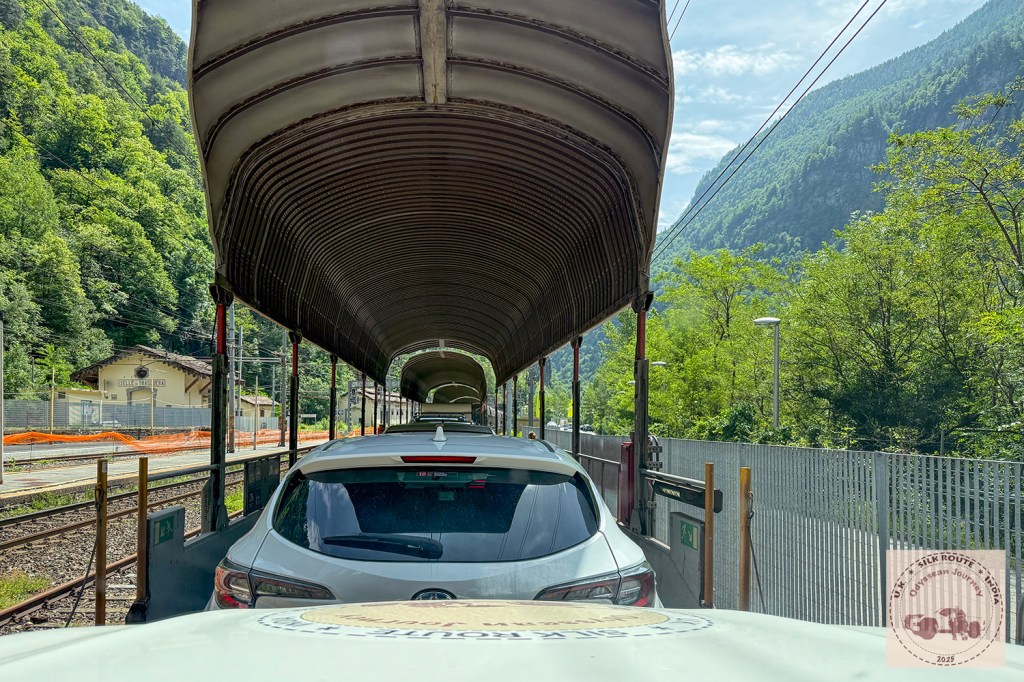
    Driving onto the flat wagon felt a little like entering a mechanical ark. Cars ahead, cars behind, all of us packed neatly into place, engines quietened, drivers pretending to look confident. Chetak, who had crossed cities, plains, ferries, borders and campsites, now stood still — as if enjoying his own well-earned Alpine spa treatment. This was Chetak’s turn to be the passenger!

    Chetak takes the train: crossing beneath the Alps from Brig to Iselle.

    Inside the car, we sat and waited. There was no dramatic mountain pass to conquer, no steering correction, no braking for hairpins, no sudden gasp from the passenger seat. Instead, there was darkness, steel, rhythm, and that faintly childlike thrill of being transported while still sitting inside your own vehicle. It was travel within travel — a journey folded inside another journey.

    And then, almost before the novelty had worn off, daylight returned.

    After crossing-over to Italy.
    Simplon Car Train from Chetak.

    We emerged at Iselle, on the Italian side, with the quiet satisfaction of people who had crossed the Alps without actually having to cross the Alps. Switzerland had slipped behind us; Italy was ahead. The road began to soften, the signs changed, and the mood changed with them. There is always a small magic in crossing borders by land — the gradual shift of language, food, architecture, temperament. But crossing by car train made it feel even more theatrical, as if the Alps had drawn a curtain and raised it again on a new act.

    From there, we continued towards Lake Como, carrying with us another small story from the road: how Google Maps made us overshoot the station, how Chetak took a train under the Alps, and how one of Europe’s greatest mountain barriers became, for 20 minutes, a dark tunnel filled with cars and quiet wonder.

    The Simplon Car Train was a reminder that travel is often at its best when it surprises you. The memorable part of a day was when a road journey suddenly became a railway journey, and your car, your companion, your beast of burden, is carried through the heart of the mountains like precious cargo.

    We had set out to follow roads, rivers, trade routes and old histories across continents. And here, between Chandolin and Lake Como, we found all of that compressed into one Alpine crossing: ancient passage, Napoleonic ambition, Swiss engineering, Italian promise — and one slightly embarrassed U-turn back to the correct station.

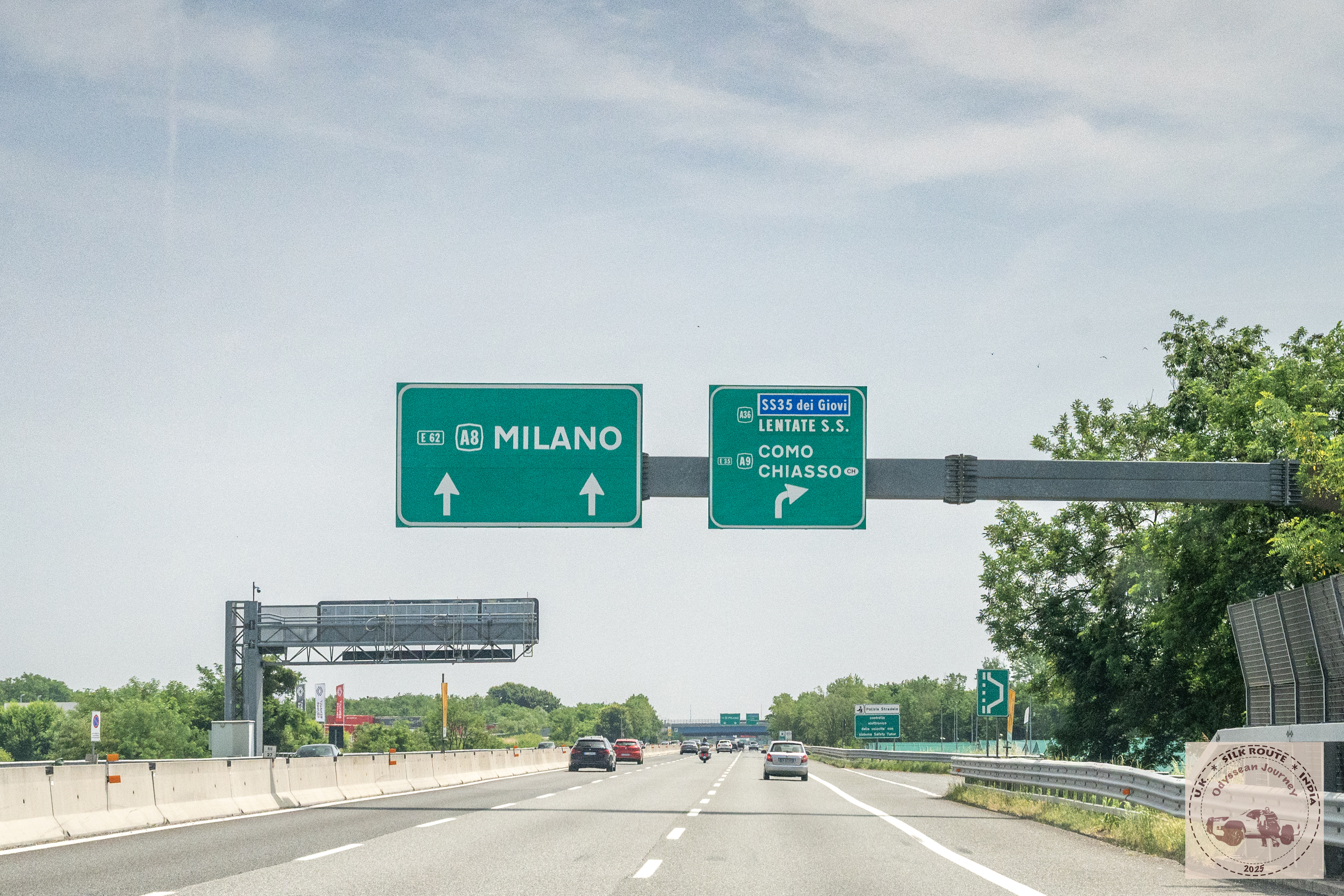
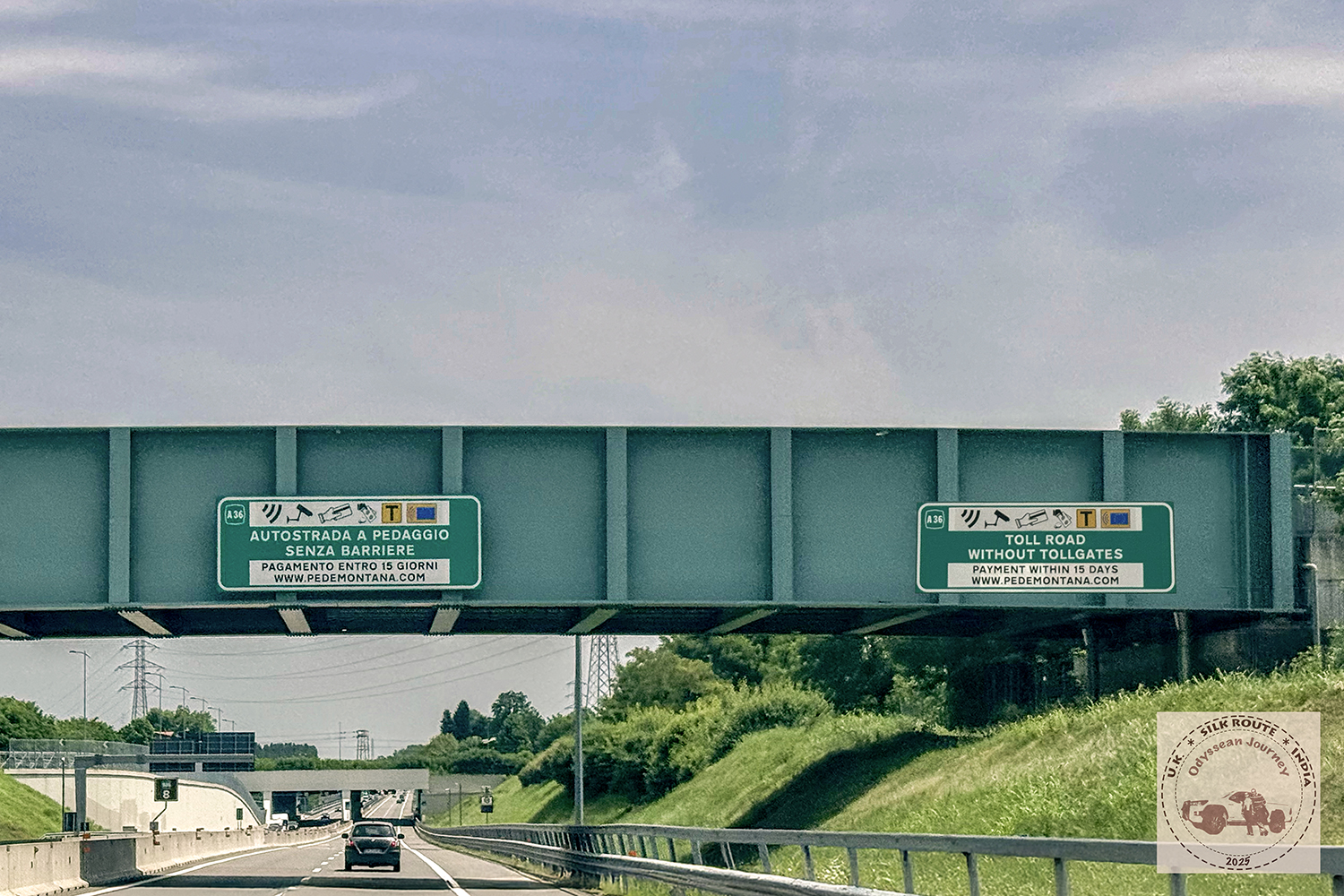
    Once in Italy, so as the Italians do. We were cursing nicely along E62, then along A9. Then came A36 – “Toll Road without Toll Gates” – it was not easy to catch the signboards on display but managed to take a photo of one of the many signs – that allowed us to avoid the hefty fine by paying £4.47 (5.23 EUR) only.

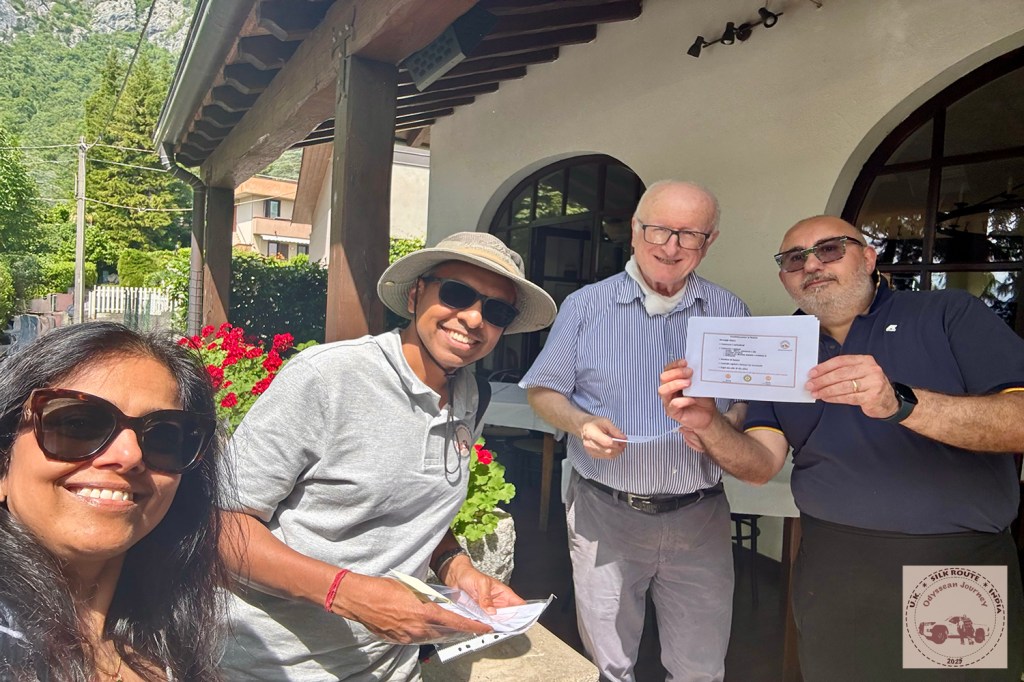
    Discussing Diabetes Awareness @Crotto di Lierna

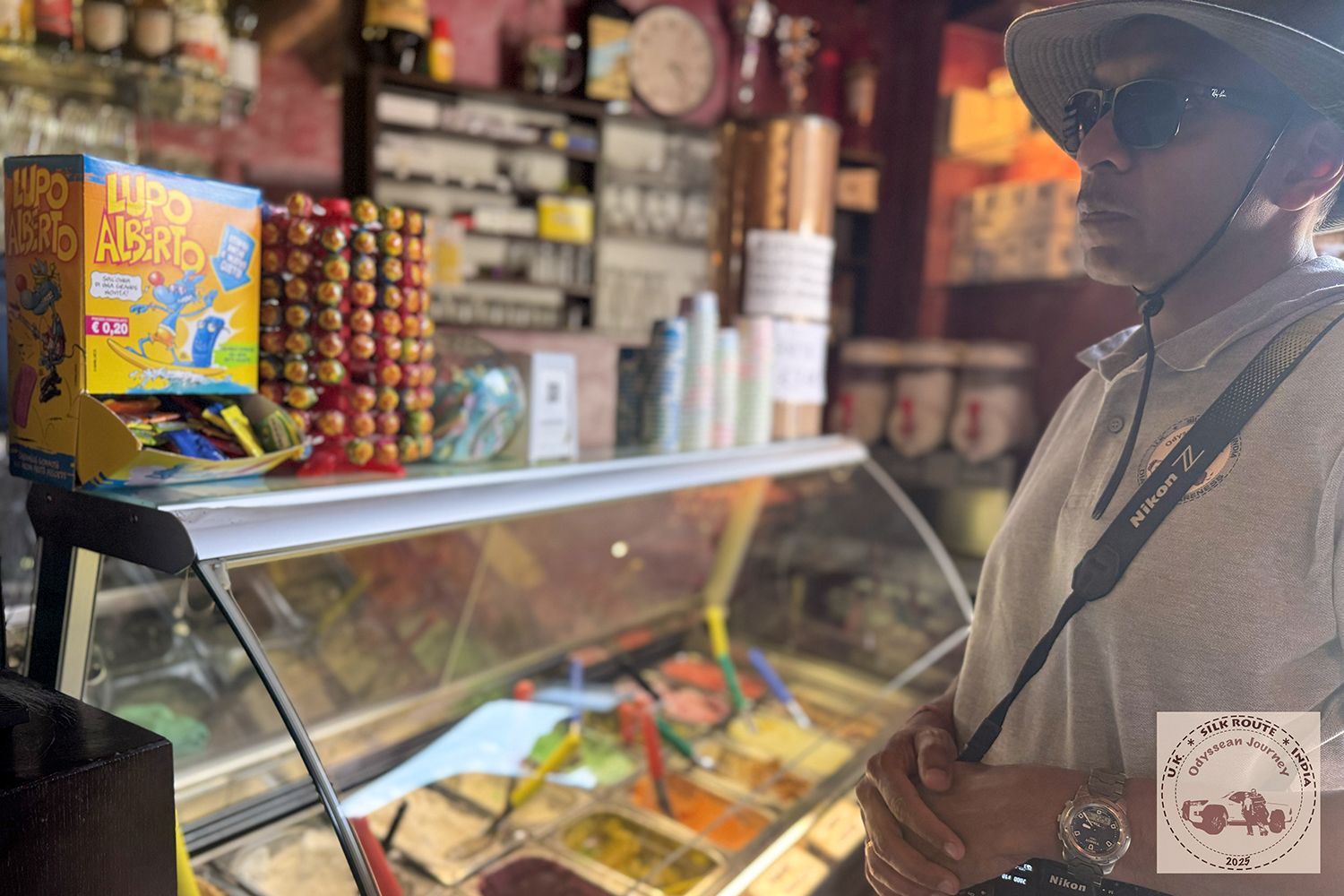
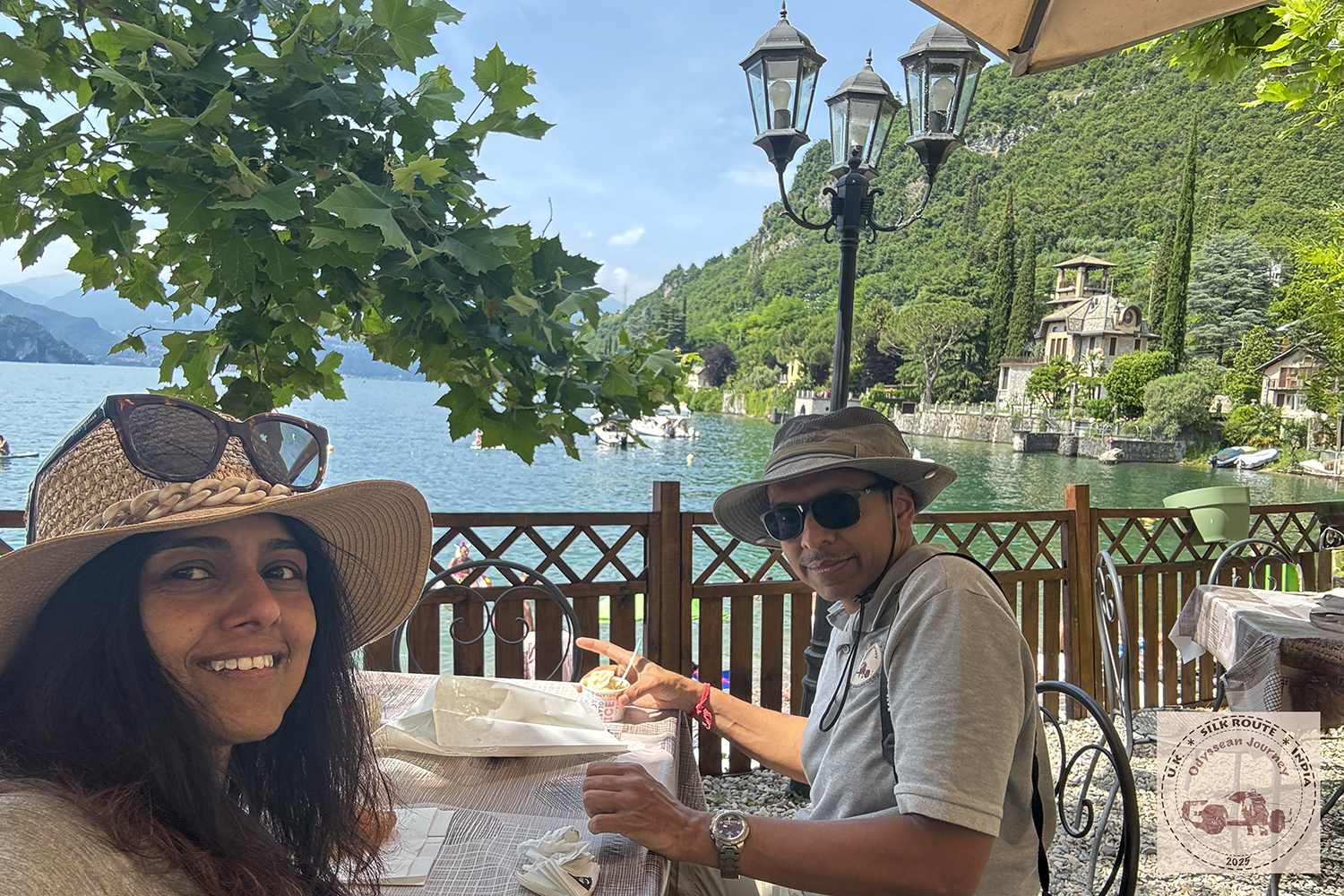
    We wanted to stop over on the side of Lake Como for a photographic opportunity- we could not have found a better place than the village of Lierna. The Crotto di Lierna, which locals say, have been making the best grilled meat since 1892, indeed served us with extraordinary food. The warmth of Guiseppie, the owner added an extra flavour, and we engaged in a deeper discussion that included diabetes awareness, food, life in Italy vs. life in England – to name a few. Following our late lunch we could not resist the temptation of local ice-creams by the side of Lake Como, before hitting the road again.

    For Odyssean Journey, this day was perfect. Not everything goes to plan. Sometimes you miss the turning. Sometimes you come back. And sometimes, if you are lucky, you are greeted by lovely experience, lovely food and lovely people.

    Before we knew, we were driving out of this beautiful area for our next destination.

    Guess where?