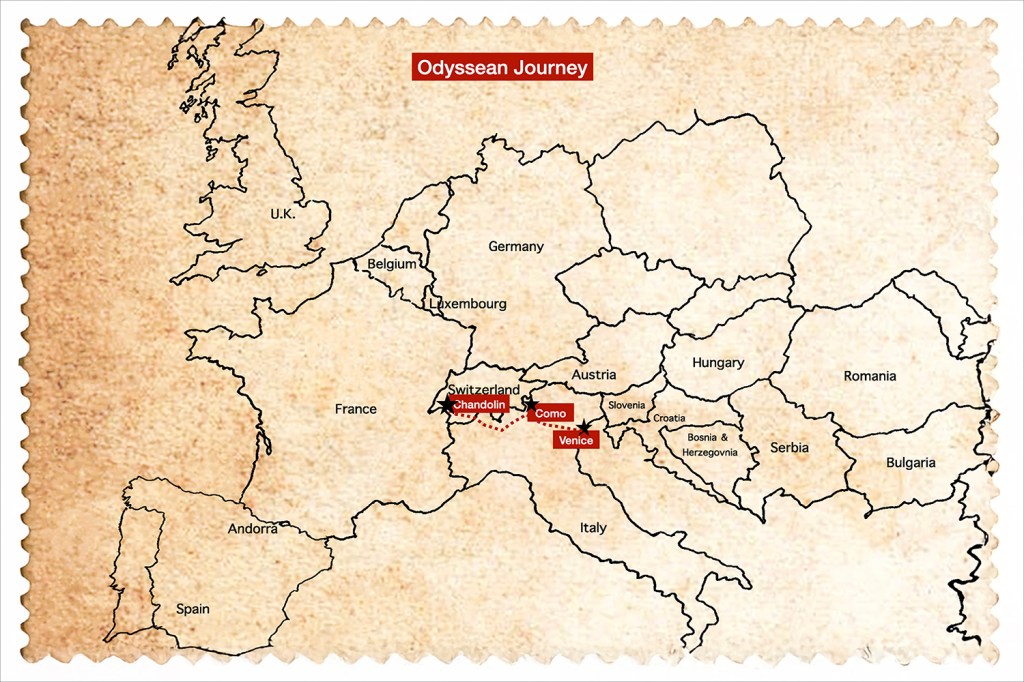
By the time Odyssean Journey rolled into Venice, we had crossed mountains, borders and enough motorway service stations to develop a complicated relationship with bad coffee.
Then suddenly — no roads.
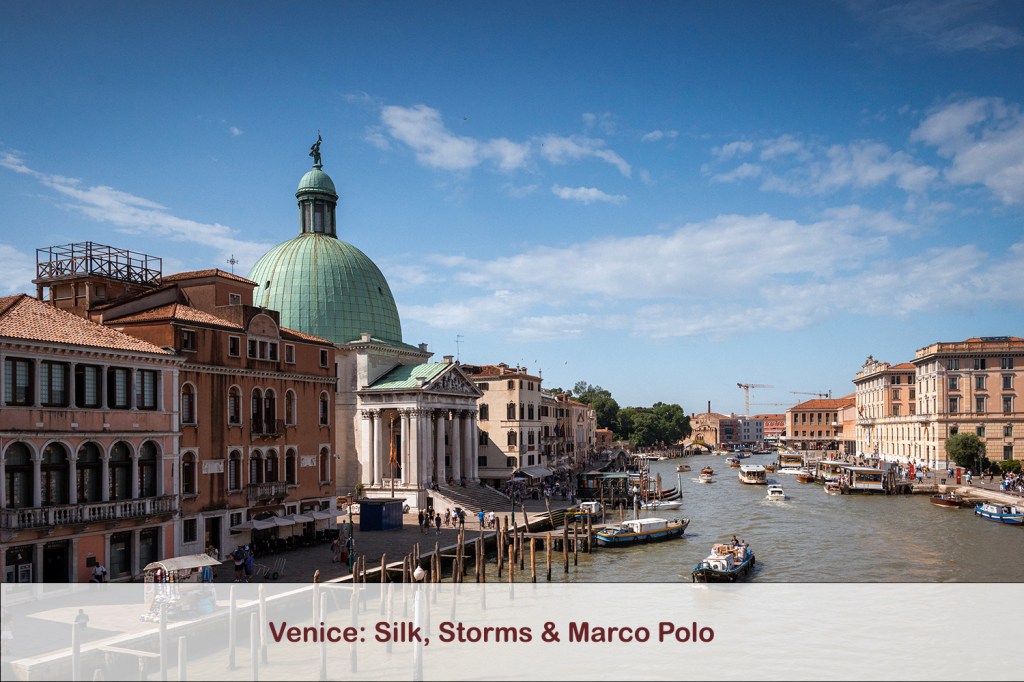
Just water, narrow lanes, gondolas and a city that seems permanently caught between theatre and chaos.
The first thing we learnt was that Venice rewards wandering. The best moments arrived when we stopped trying to “cover” the city and simply let it absorb us.
A quiet canal… a lonely gondola…a square so silent it felt abandoned by time.
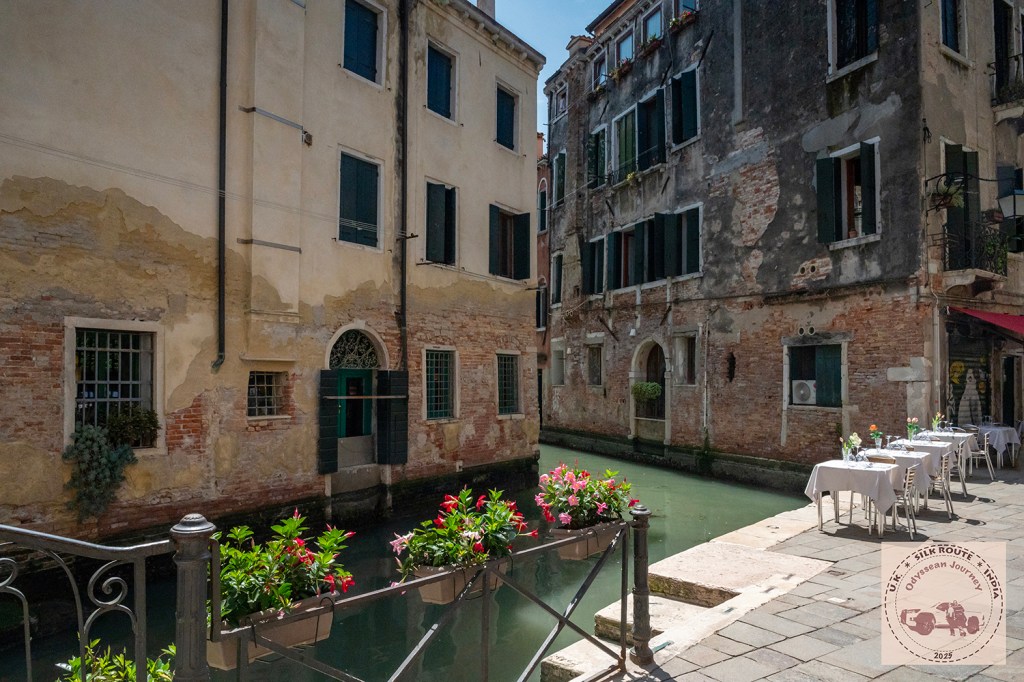
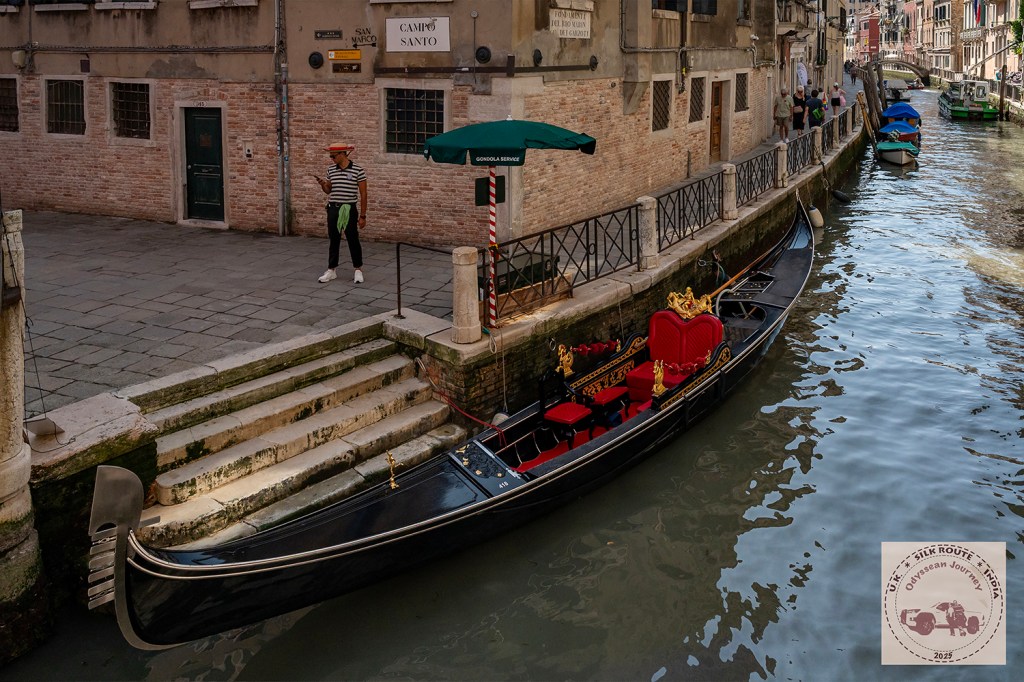
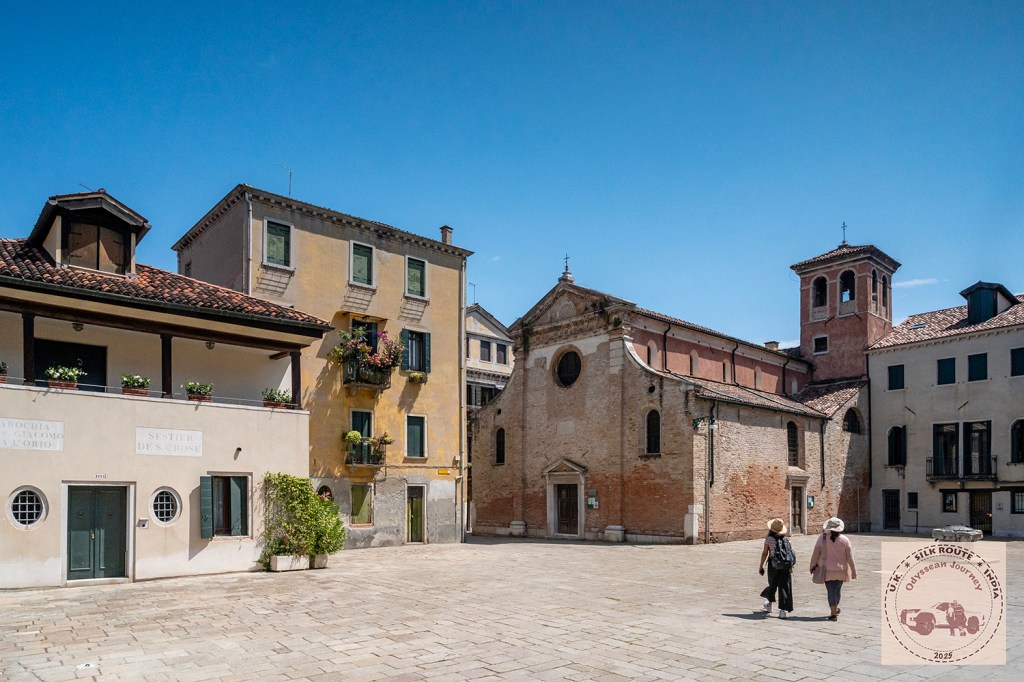
Soon the city became sensory overload in the best possible way.
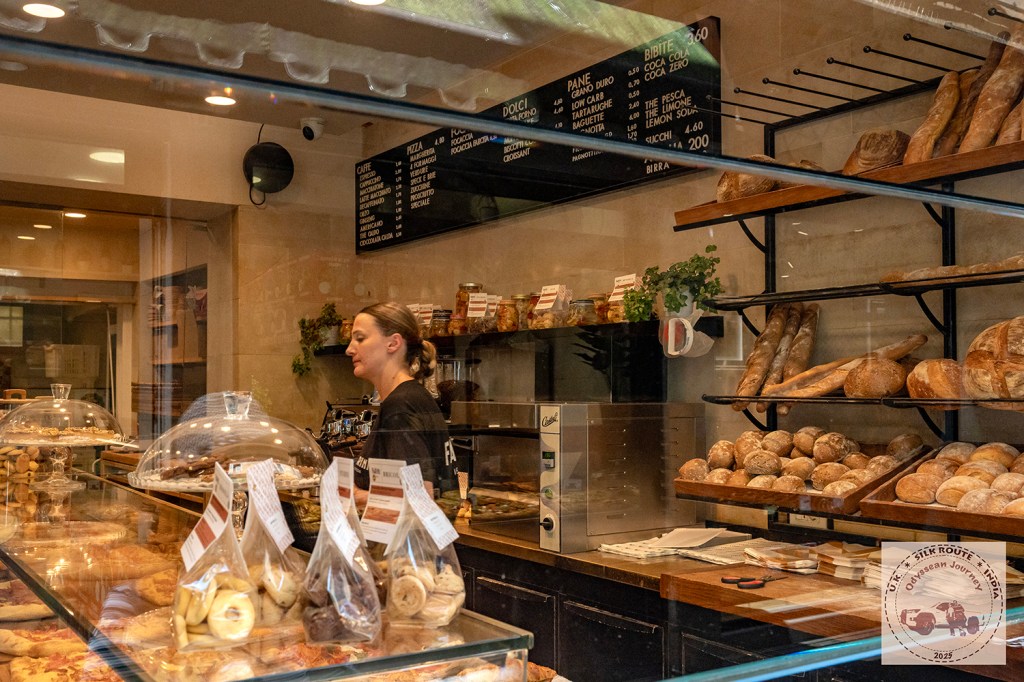
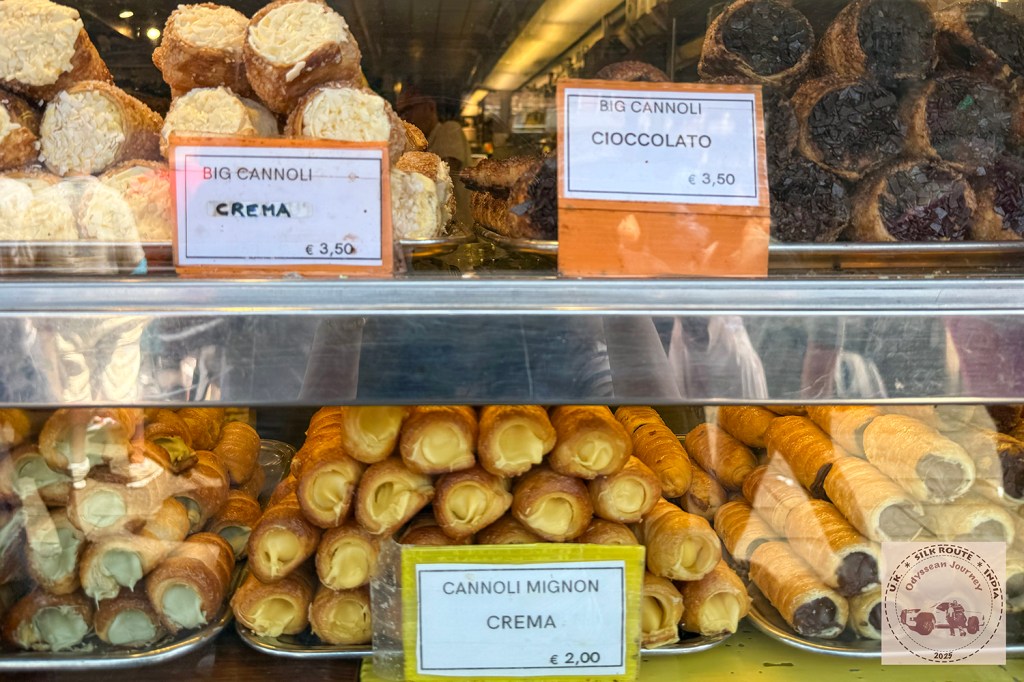
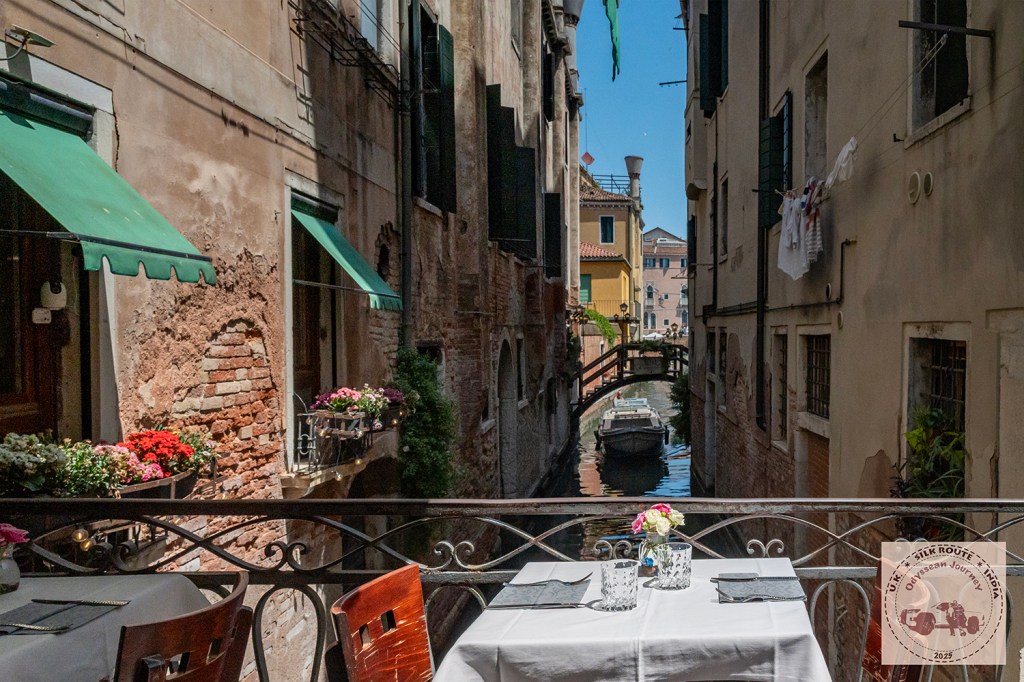
Markets overflowed with colour. Tiny bakeries displayed rows of impossibly tempting pastries. Canal-side restaurants somehow managed to make even tourists look cinematic.
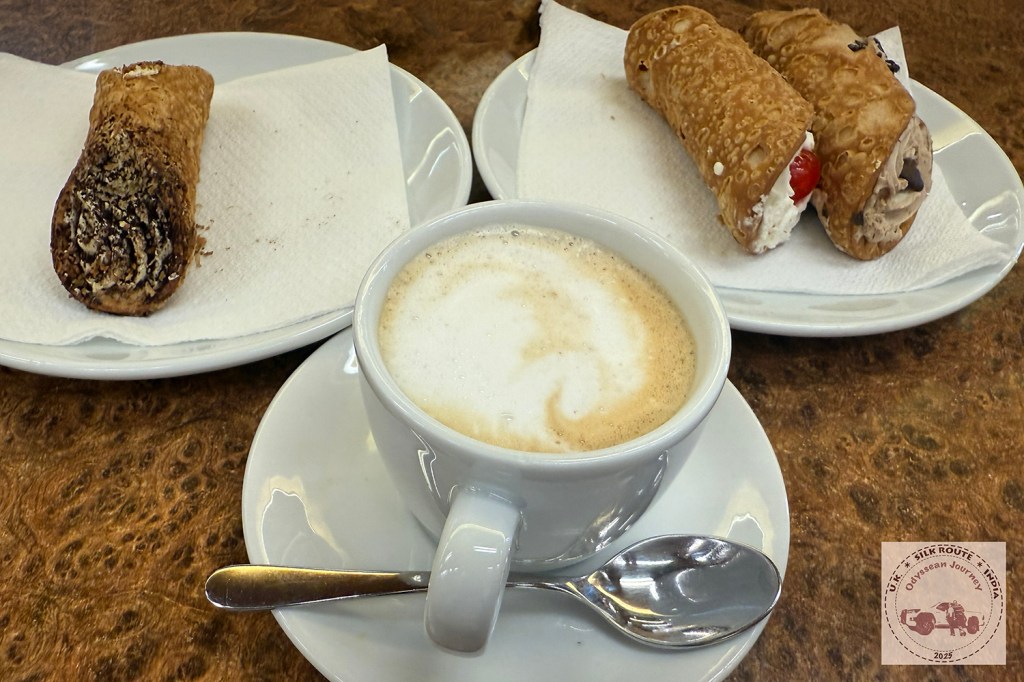
We discovered quickly that Venice is not a city to rush through. It demands pauses. Espresso pauses. Cannoli pauses. “Let’s just sit here for ten minutes” pauses that quietly become an hour.
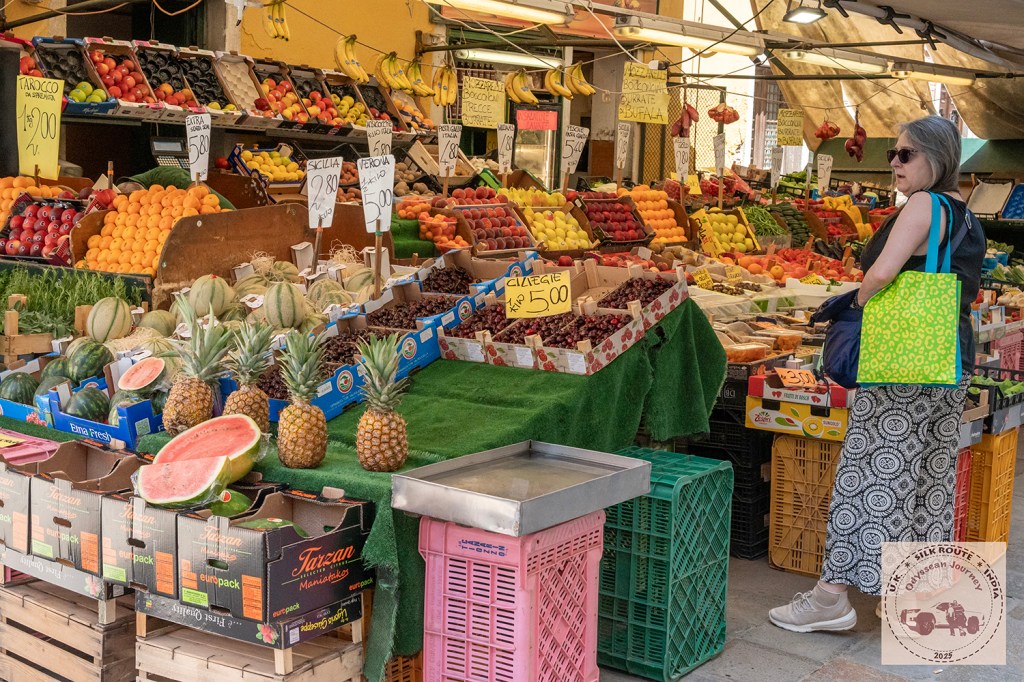
But for us, Venice was never only about canals and cafés.
Odyssean Journey had followed the echoes of the Silk Roads across Europe, and nowhere in the west felt more connected to that history than Venice.
For centuries, Venetian merchants traded silk, spices and stories between East and West. And hidden behind an unassuming doorway, we found that legacy still alive.
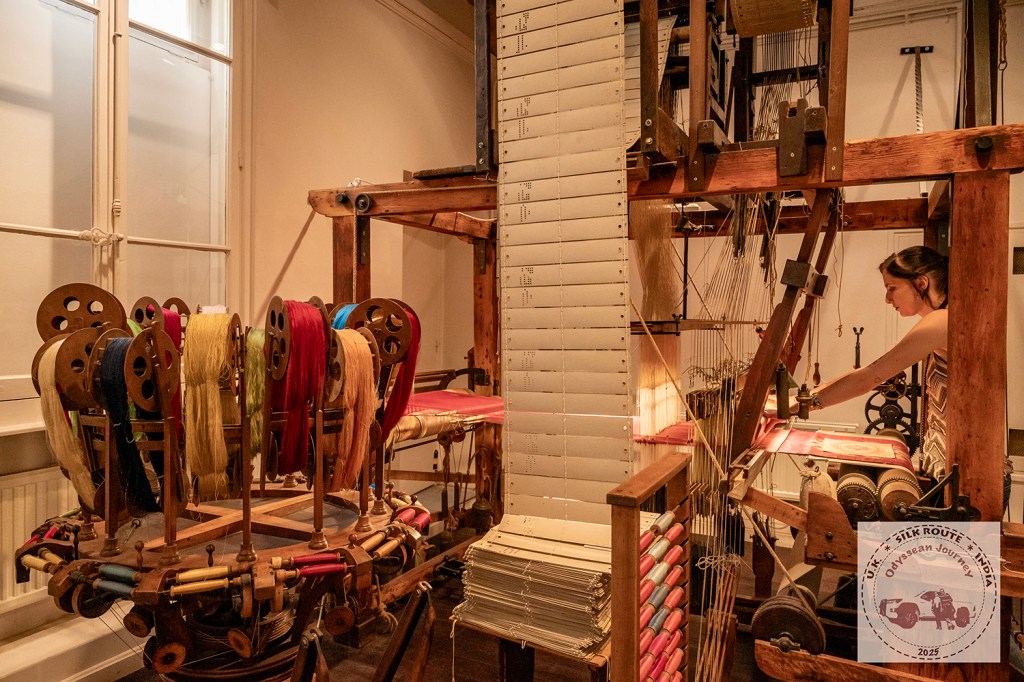
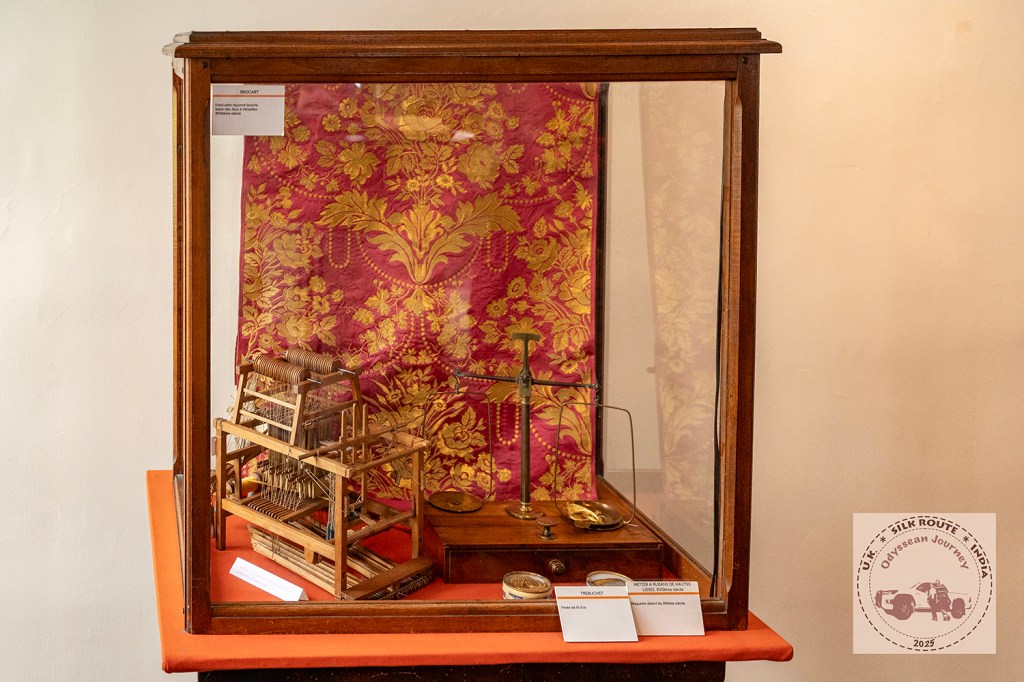
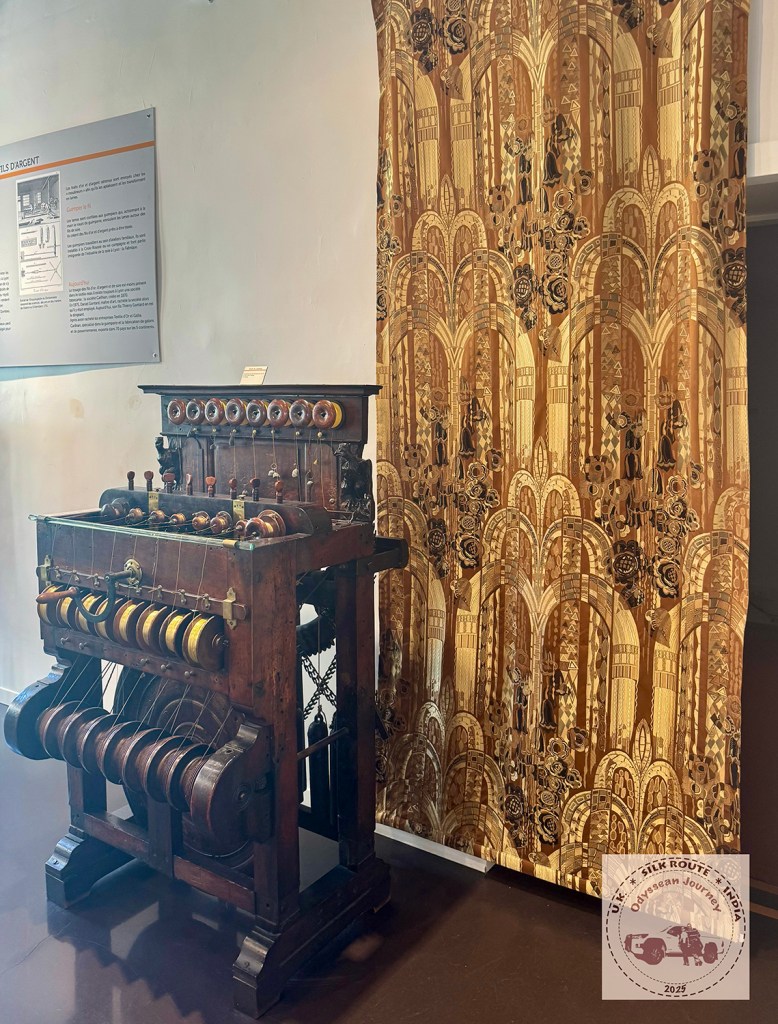
At Luigi Bevilacqua, ancient wooden looms continue weaving velvet and silk by hand, exactly as they have for generations.
The room creaked with history. Watching them felt less like visiting a workshop and more like stepping into another century.
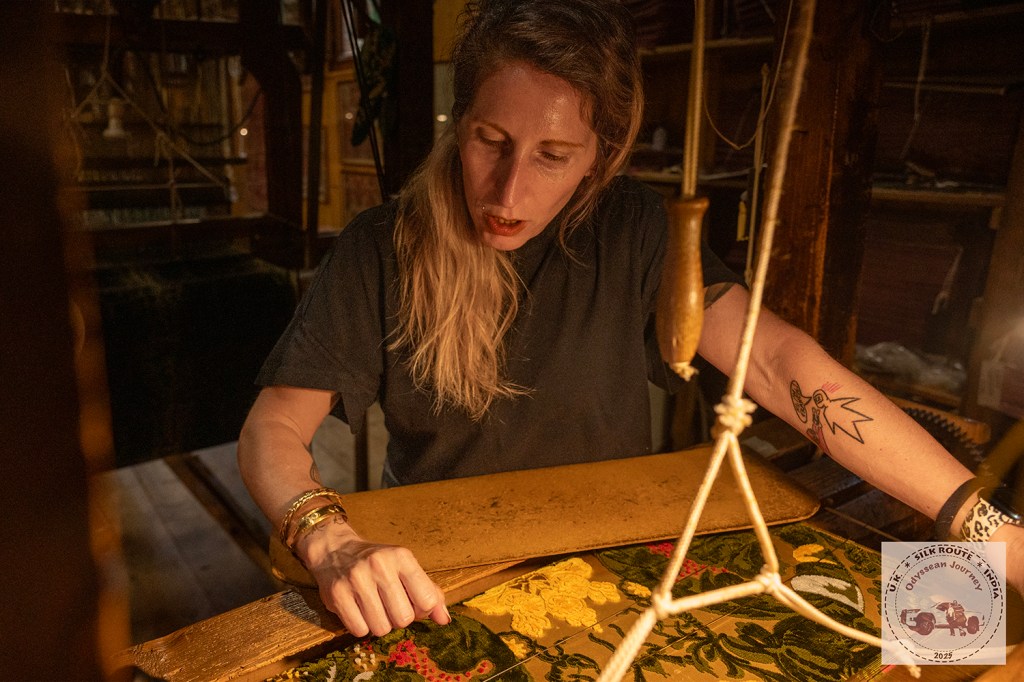
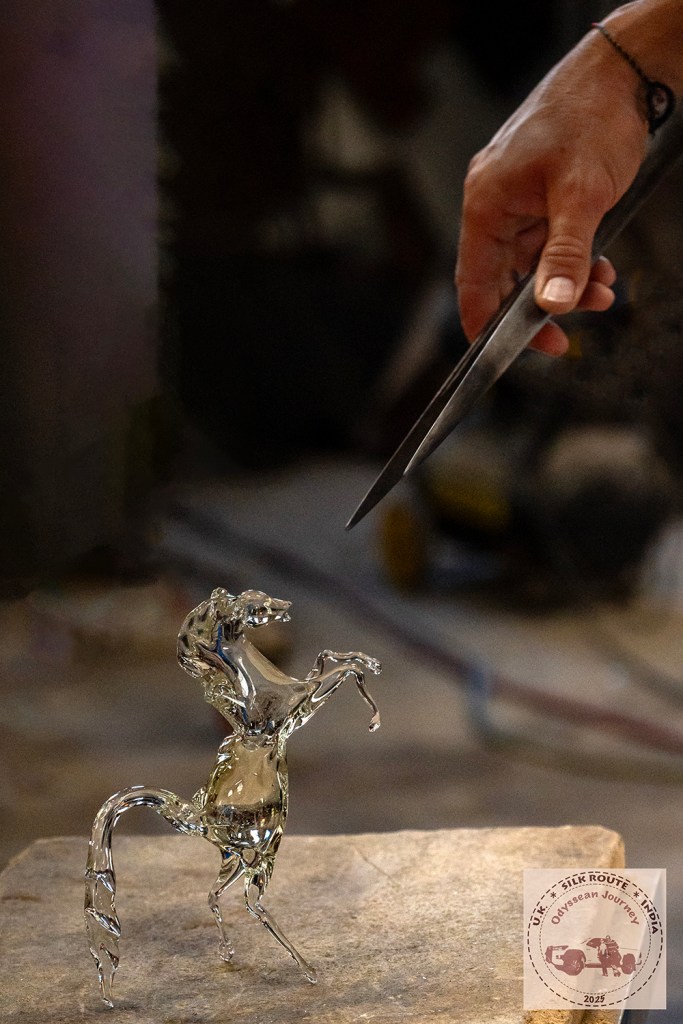
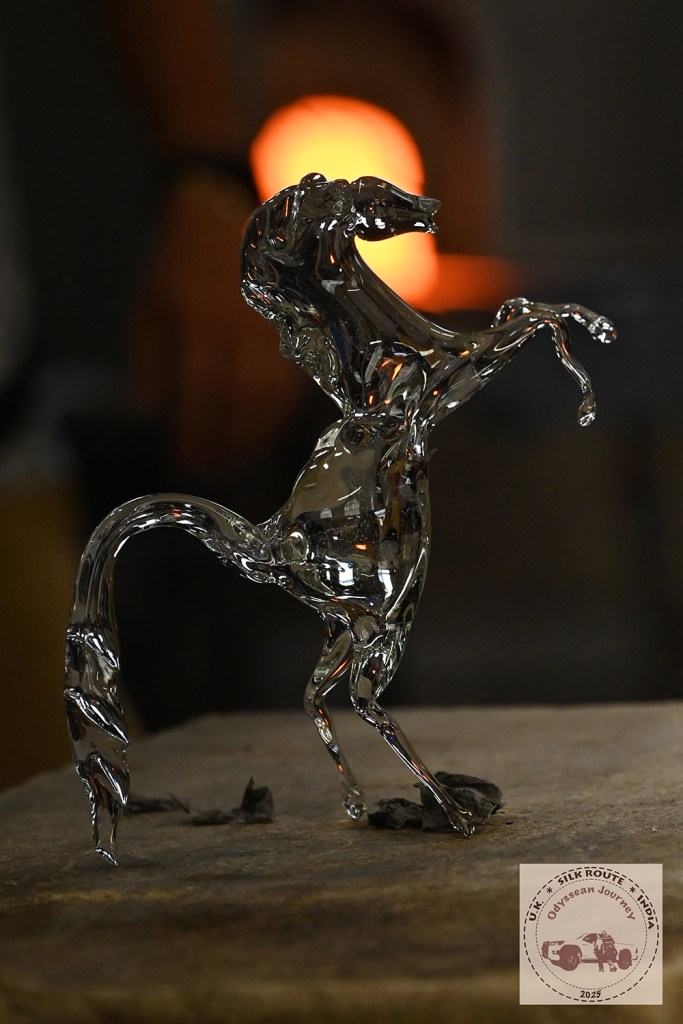
From the soft shimmer of silk, Venice led us to another ancient craft of light and patience — Murano glass- which felt like Venice captured in fire and colour.
Watching the glassmakers shape molten glass, we saw patience, skill and danger working together.
And then, inevitably, there was Marco Polo.
Venice still carries his shadow everywhere. Centuries ago he departed this watery republic and travelled eastward along the Silk Roads toward Asia. We had arrived from the opposite direction, carrying our own modern expedition across continents in our Toyota Hilux, Chetak.
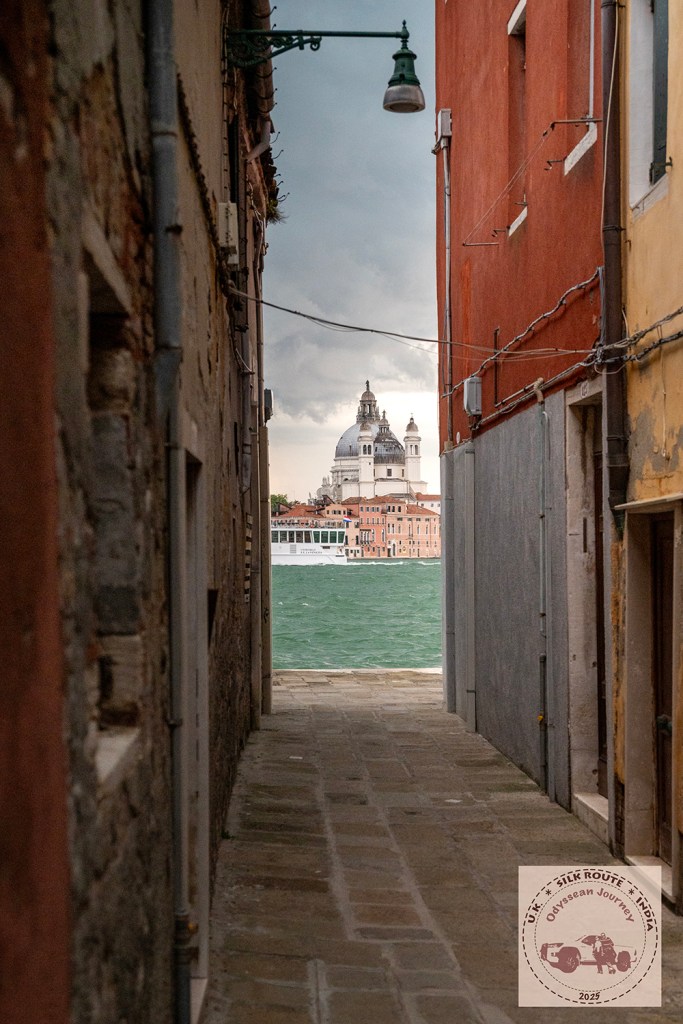
A casual search about Marco Polo’s residence brought us to a narrow alleyway and local knowledge helped us rectify our mistake. This was a B&B with that name but not “His Residence” !!
Marco Polo’s original Venetian residence no longer stands. It was in the Corte del Milion, near San Giovanni Crisostomo. The old Polo family house was destroyed by fire in 1597, but Venice keeps its memory quietly — in a courtyard, an old arch, and an opera house standing where one of history’s greatest journeys once came home.
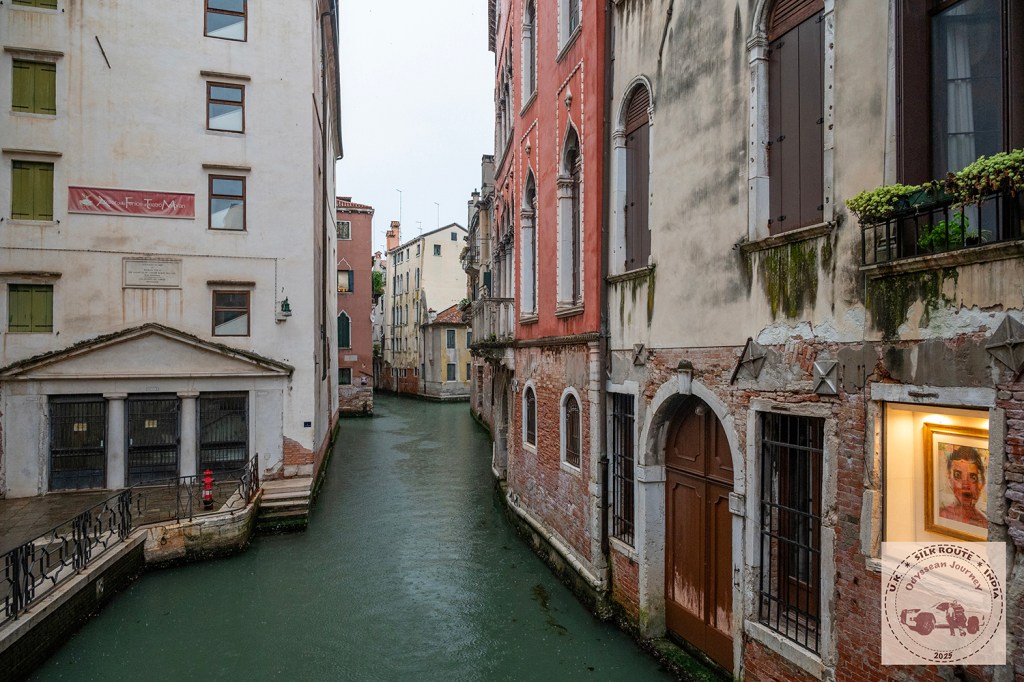
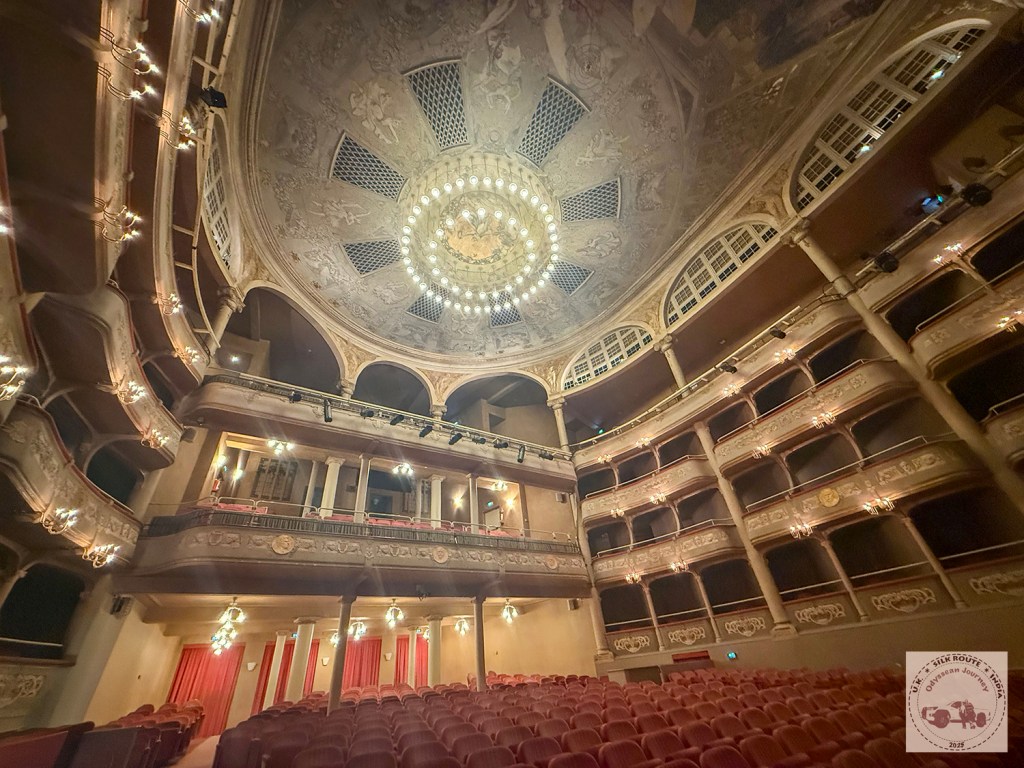
Shaped by its history, Venice never stops to amuse its visitors.
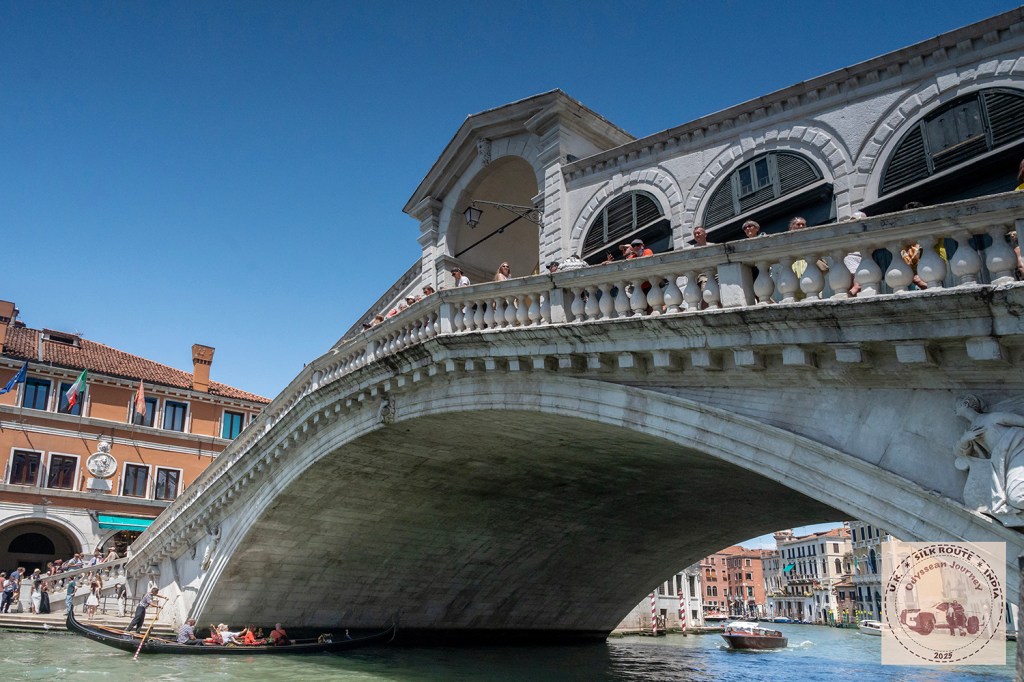
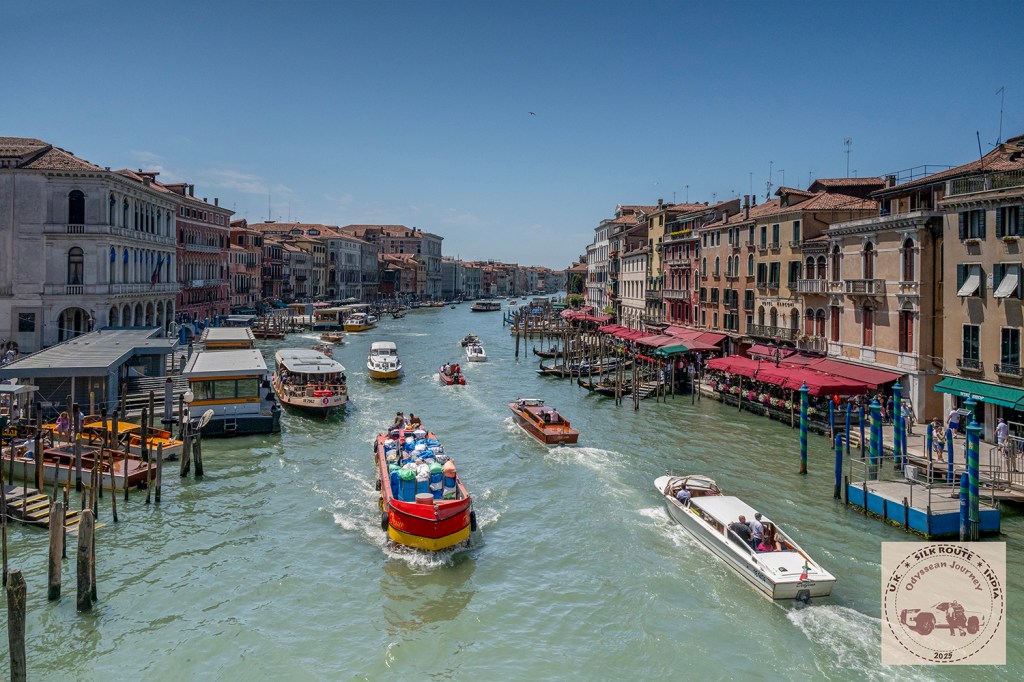
A perfect blend of touristy and real Venice.
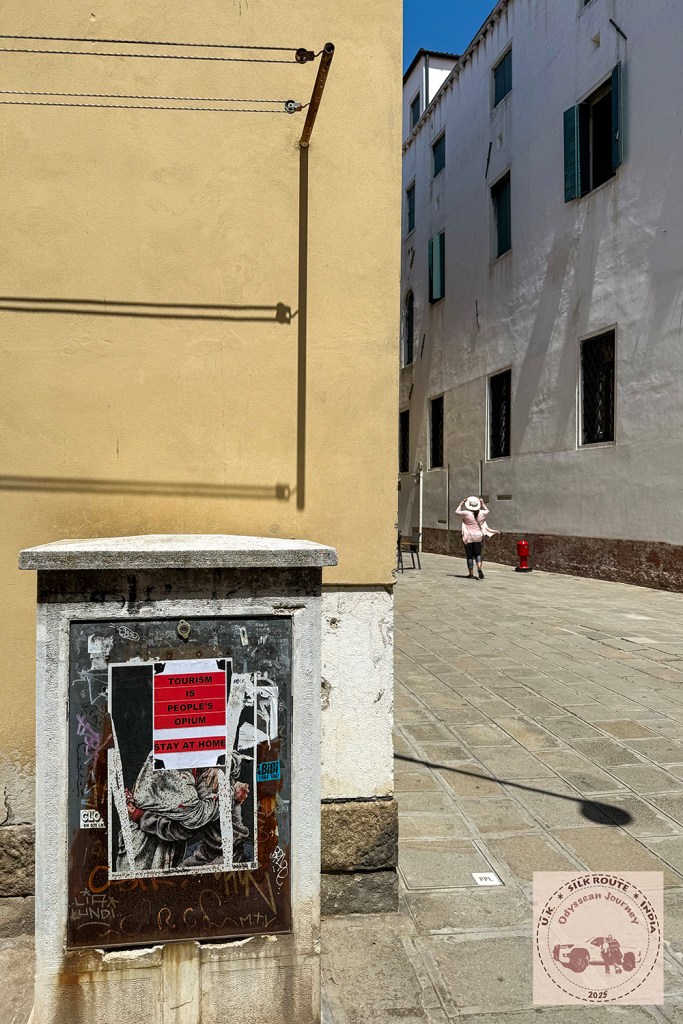
This warning poster did hit me hard! And then the weather changed.
The bright Mediterranean light disappeared behind bruised clouds. The lagoon darkened. Wind whipped across the water and tourists vanished beneath umbrellas with remarkable speed.
Venice somehow became even more beautiful.
Rain polished the stones silver. Church domes faded into mist. Gondolas rocked gently against empty moorings as thunder rolled somewhere beyond the lagoon.
The city felt eternal.
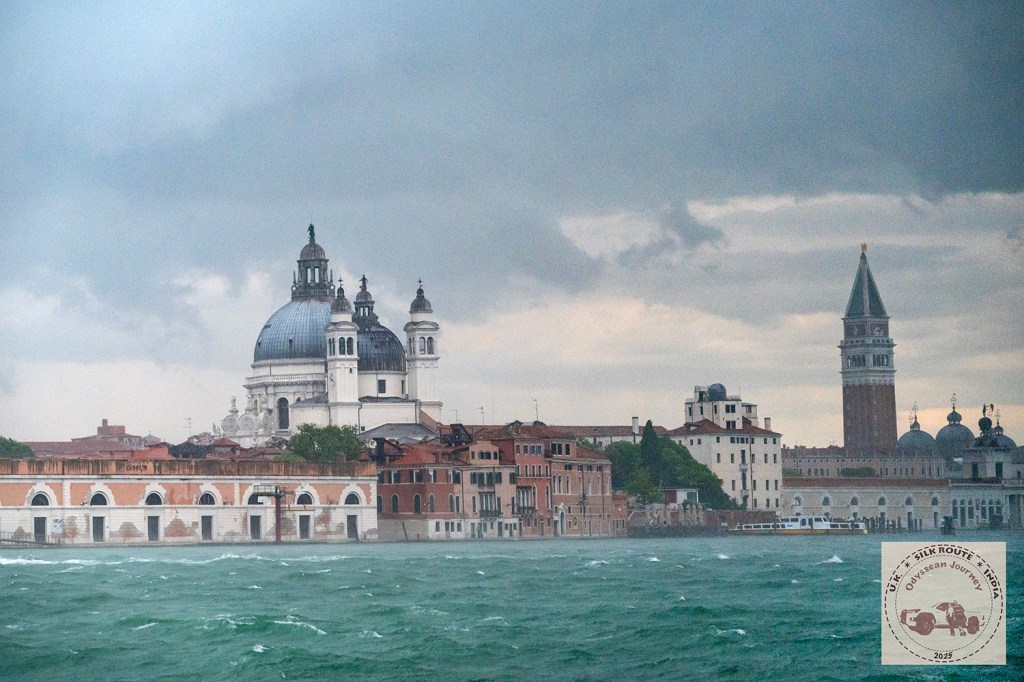
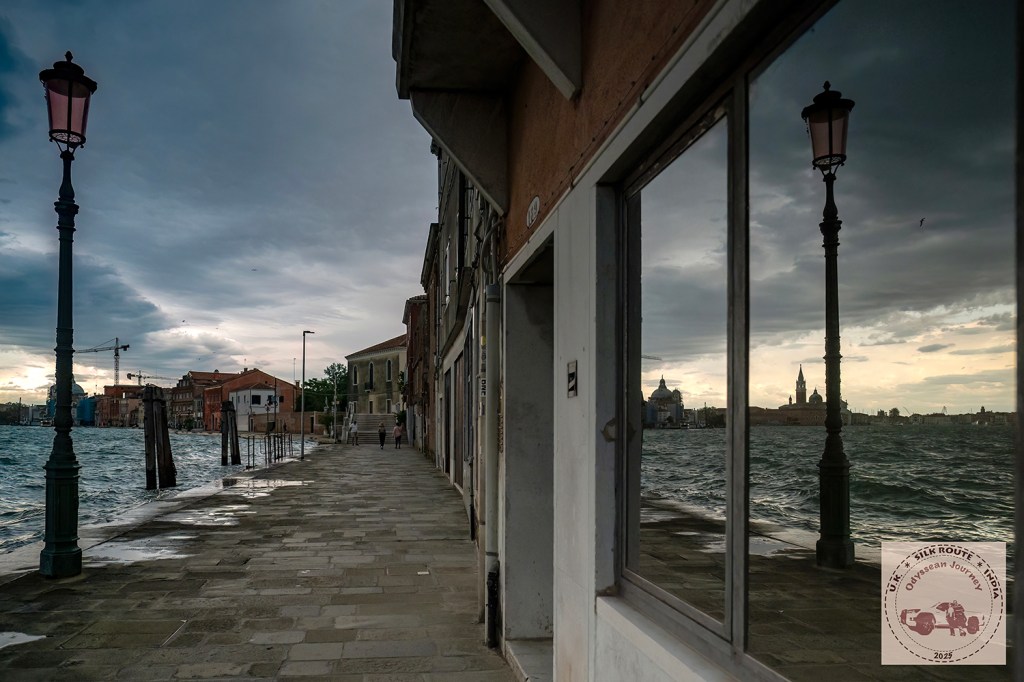
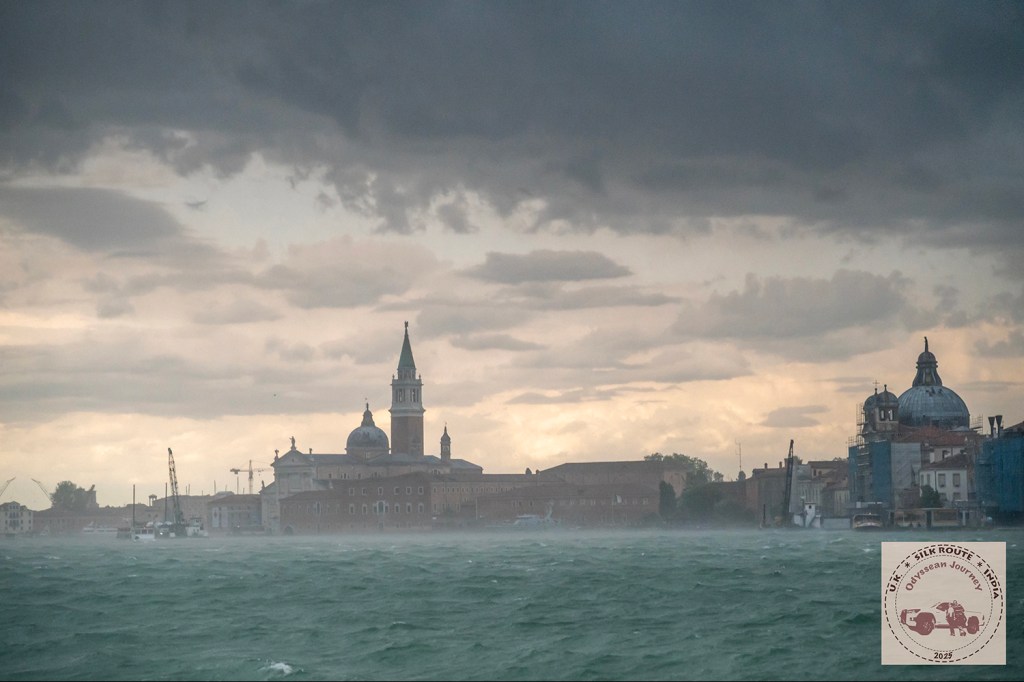
We survived that storm, like Venice did innumerable times.
It was high time to return behind the wheels of Chetak for the next chapter of our Odyssean Journey.