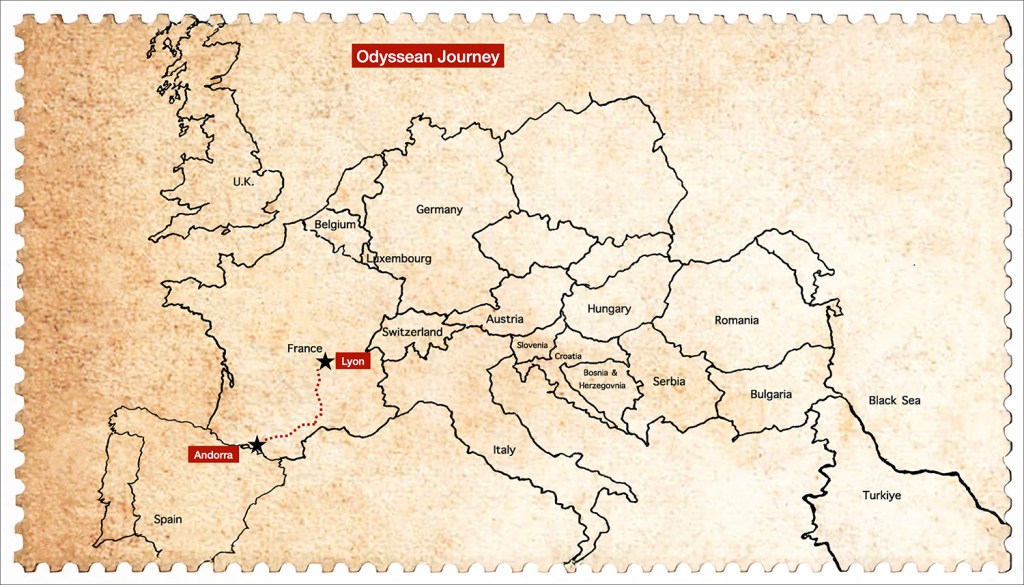
On Day 5 of our Odyssean Journey, we reached Lyon from Andorra along A9 and then A7 covering about 650km over 8 hours. We were carrying the usual signs of a long road journey: tired legs, hungry stomachs and half-folded maps. We decided to stay off the city in the pleasant Camping Des Eydoches, a mere 80 odd km from the Maison des Canuts, the museum and a workshop, which shares and continues the proud history of silk making in Lyon, our prime destination for Day 6.
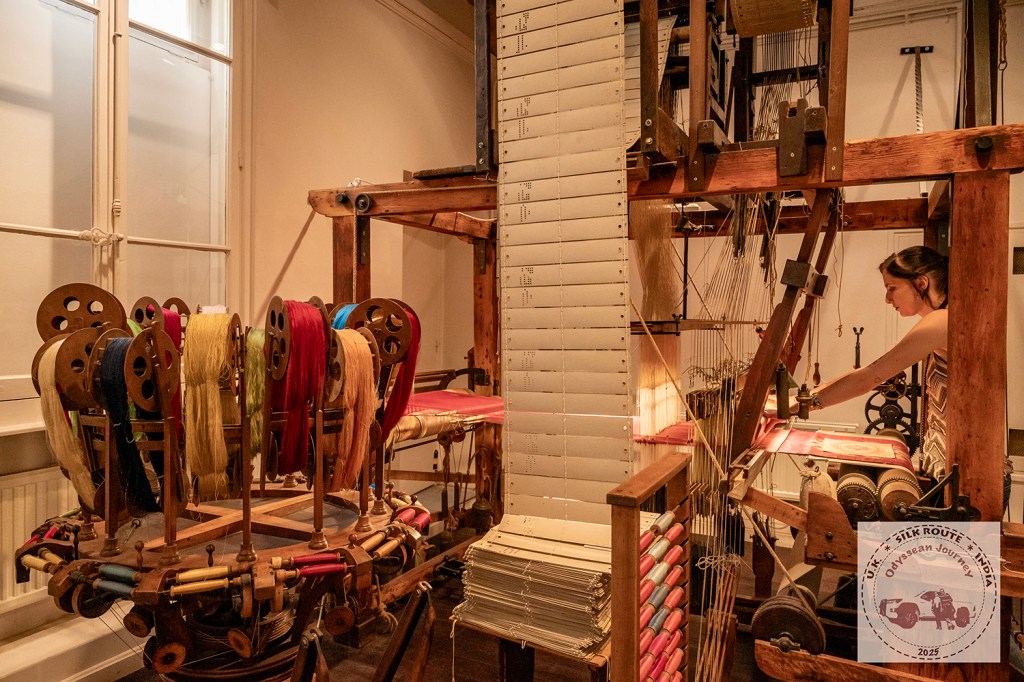
The silk museum is intimate, wooden, and quietly moving but not grand in the loud, marble-floored sense. It. The looms stand like old witnesses. Spools of thread, punched cards, tools and silk samples fill the rooms. It feels less like a museum and more like a preserved workshop, where the workers have just stepped out for lunch and might return at any moment.
Lyon’s silk story began in 1536, when King Francis I granted the city the privilege of weaving silk and other noble materials. Over time, Lyon became one of Europe’s great silk capitals. Its silk industry, known as La Fabrique, involved merchants, designers, dyers, spinners, weavers, apprentices and thousands of looms.
At the heart of this world were the canuts — Lyon’s master silk weavers. Many worked from home, with their families and apprentices, living and labouring in the same space. Their tools were simple but precise: shuttles, combs, bobbins, scissors, oil lamps, tweezers and measuring instruments. Looking at them, one realises that silk was never just “made”. It was calculated, threaded, watched, corrected and patiently brought into being.
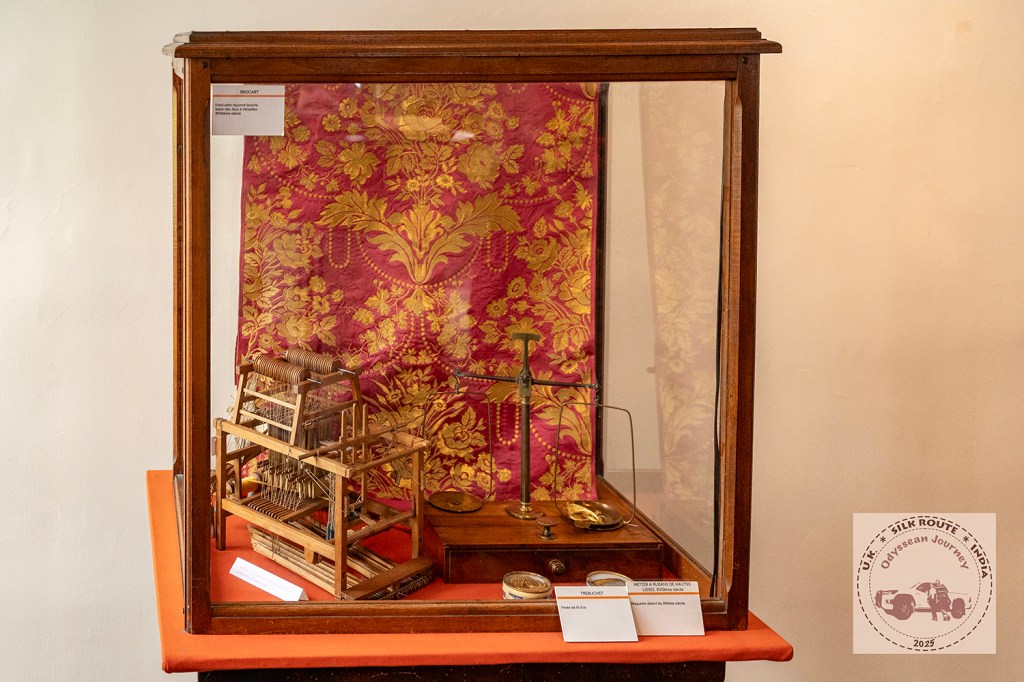
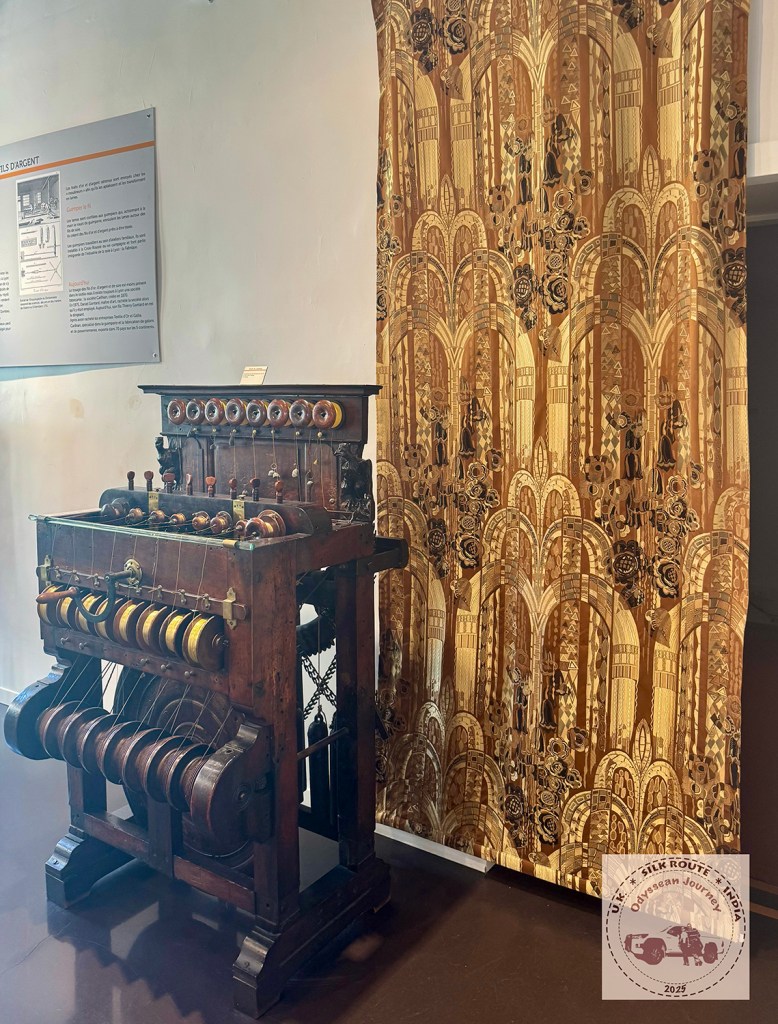
The great figure in the museum is Joseph-Marie Jacquard, born in Lyon in 1752, the son of a master weaver. His famous loom used punched cards to control complex patterns. A hole meant one instruction; no hole meant another. In that simple logic lay the early idea of programmability.
Standing beside the Jacquard loom, it is striking to think that the digital world has one of its ancestors in the textile world. Before computers had code, looms had cards and silk carried patterns way before screens started displaying patterns.
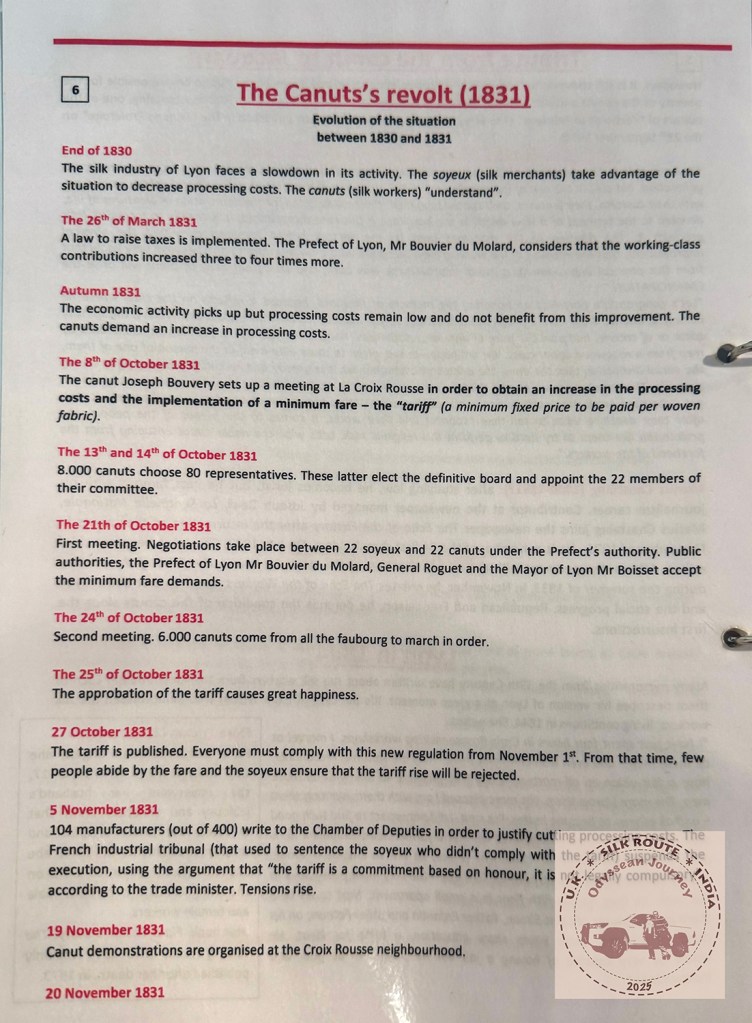
But Lyon’s silk history is not only about beauty and is also about labour. The canuts worked hard, often under difficult financial pressure. Payment depended on the type of weave, the difficulty of the pattern and agreements with the silk merchants, known as soyeux.
In 1831, after falling wages and disputes over a minimum tariff, the canuts rose in revolt. Their motto became famous: “Live working, or die fighting.” A second revolt followed in 1834, known as the “bloody week”. The museum tells this story with quiet seriousness. Silk may look soft and elegant, but in Lyon it also carries the memory of struggle and one of the earliest workers’ uprisings of the industrial age.
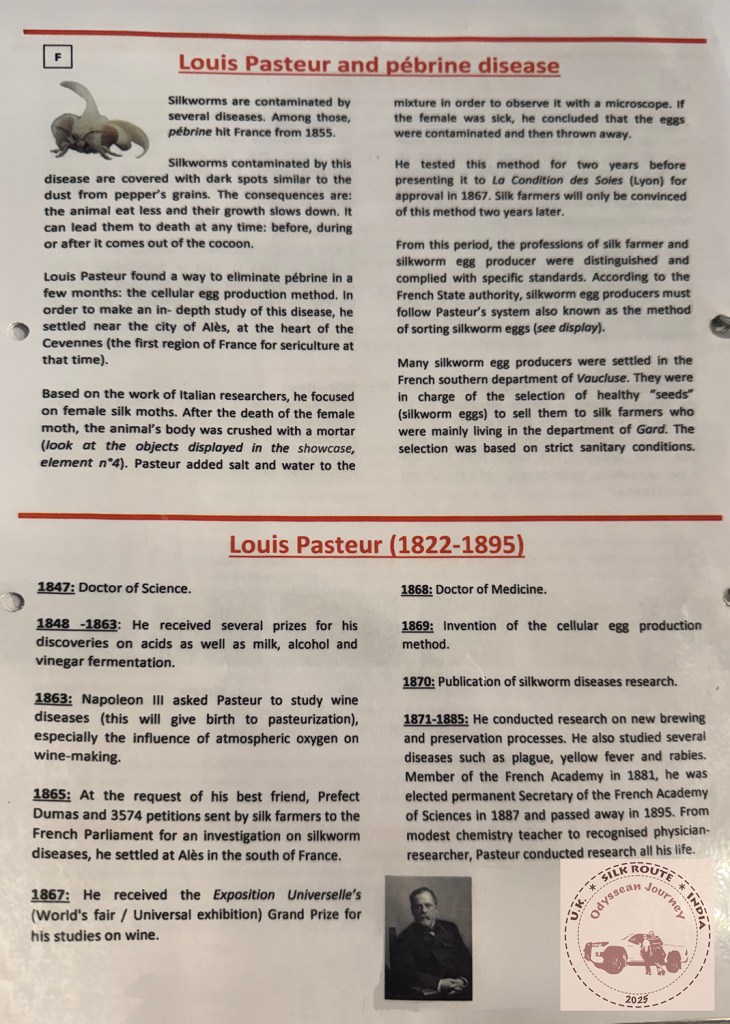
There is also a scientific thread to the story. In the 19th century, French silkworms were devastated by pébrine disease. Louis Pasteur helped save sericulture by developing a method to identify healthy silkworm eggs. The museum also explains how silk was carefully weighed and conditioned, because silk absorbs water and was sold by weight. Even romance, it seems, required regulation.
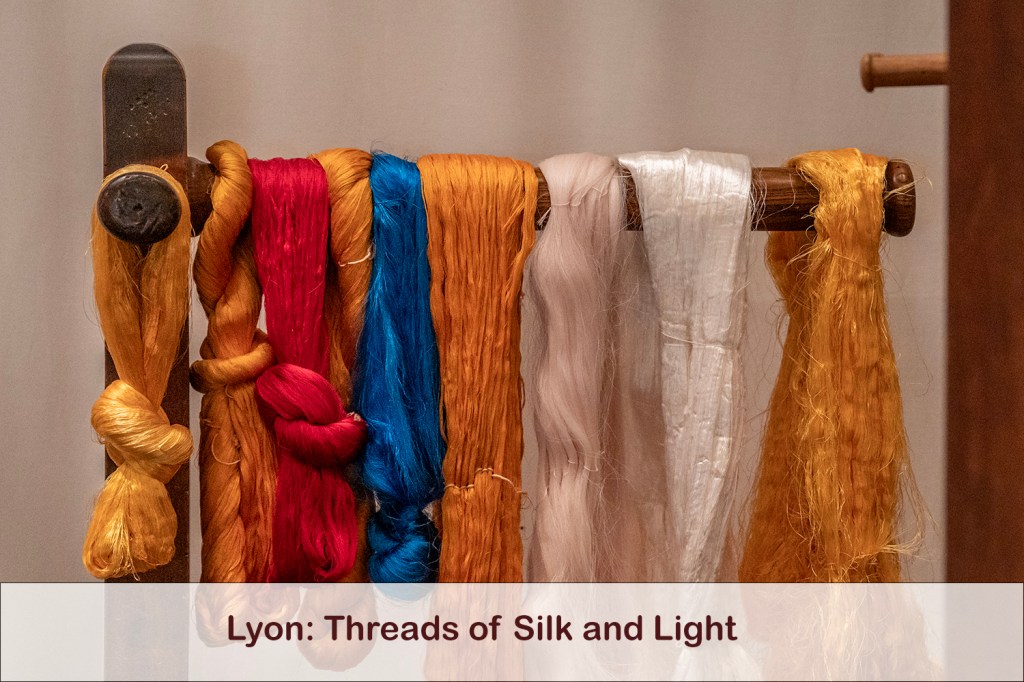
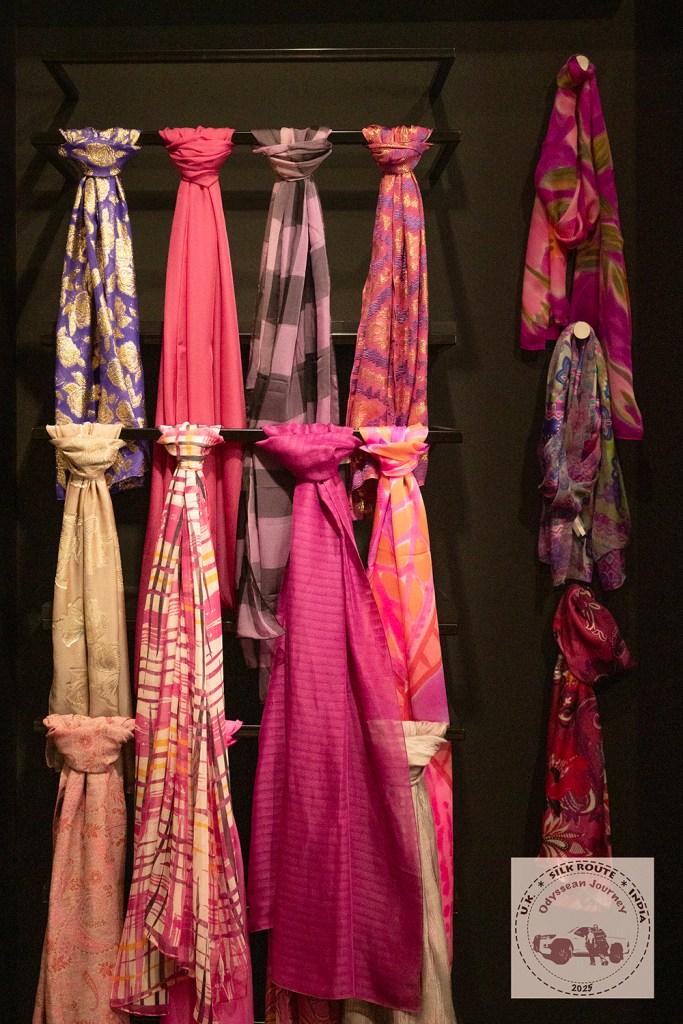
The silk shop brought the story into the present. Shelves of scarves glowed in pink, orange, green and gold. These were not museum relics but living descendants of Lyon’s textile imagination. Modern production may be digital, global and faster than ever, but the essential questions remain the same: pattern, texture, colour, quality, and the human desire to turn thread into beauty.
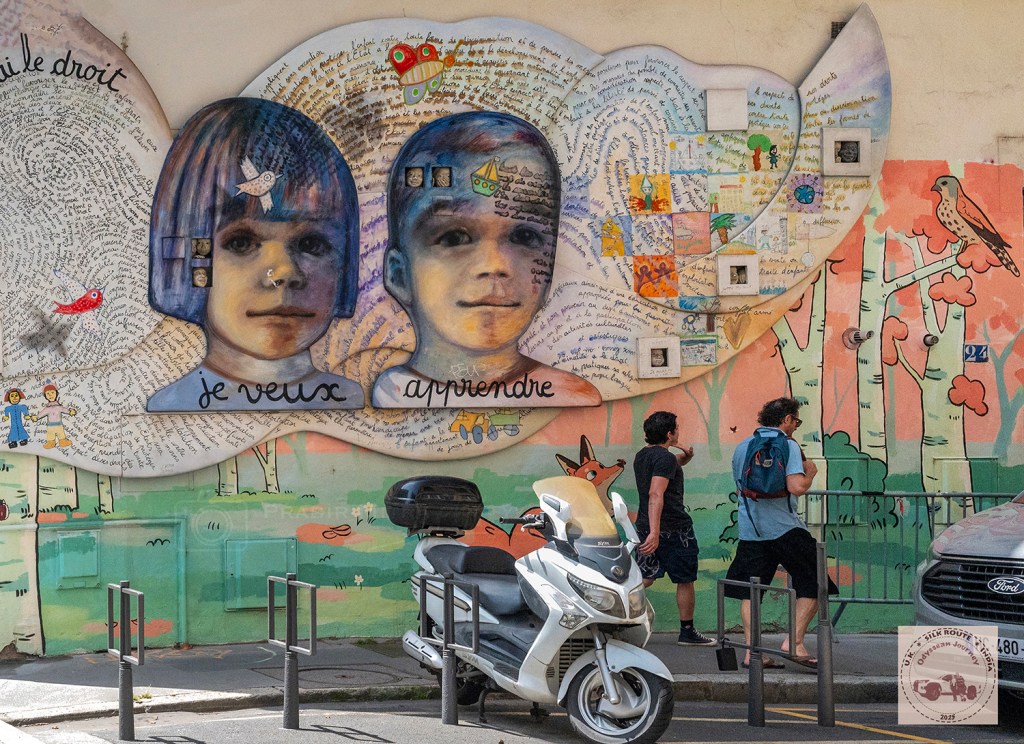
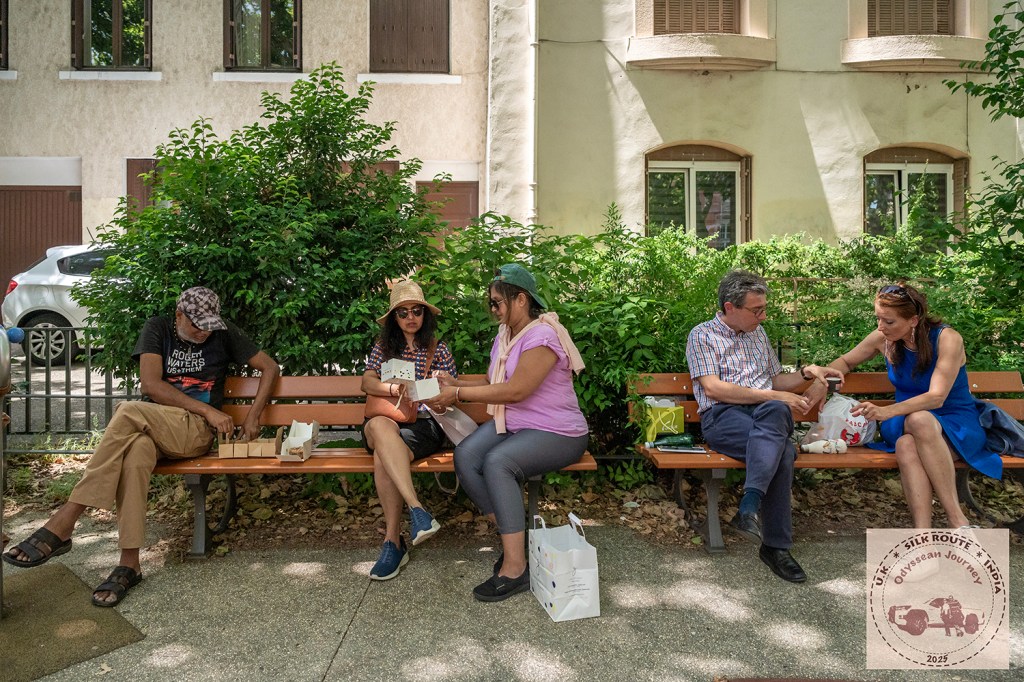
What made the visit especially memorable was how the old silk world spilled naturally into modern Lyon. After the museum, we stepped into the sunshine, sat on a bench, opened our little packets of food and watched the city go by. Around us were murals, scooters, shop windows and people getting on with their ordinary day.
The contrast was lovely. Inside, there had been looms, revolts and centuries of craft. Outside, there was a red scooter glowing in the street, a mural saying “je veux apprendre” — I want to learn — and four travellers happily surrendering to lunch.
For us, Lyon’s silk museum became more than a stop on the itinerary. It connected many strands of our journey: the Silk Road, European craft, labour history, technology, science and the simple pleasure of travelling together.
We entered expecting to see silk. We left having seen a city through its threads — its elegance, its hardship, its invention and its pride.
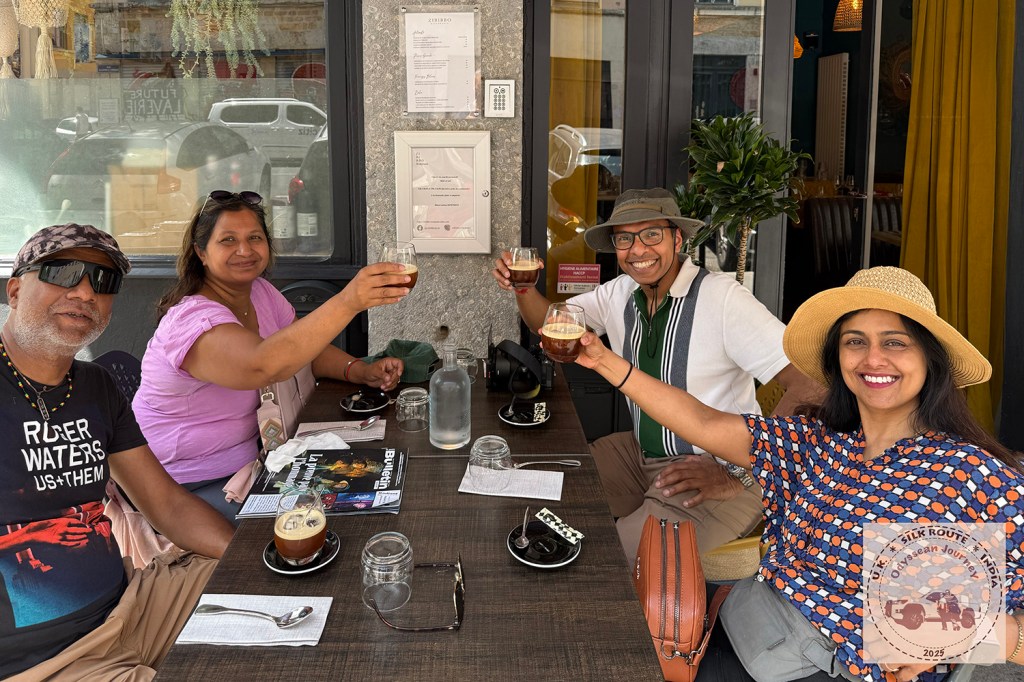
Later, over coffee, we raised our glasses to Lyon. Not dramatically, not ceremonially, but with the quiet satisfaction of travellers who had found something richer than expected.
Silk, after all, is never only fabric. It is memory woven into light.
Our journey would lead us from the annals of the silk trade into the remarkable story of an extraordinary woman. Guess where ??
 odysseanjourney.com